胡壮麟《语言学教程》考研考点讲义.pdf
- 文件大小: 2.15MB
- 文件类型: pdf
- 上传日期: 2025-08-24
- 下载次数: 0
概要信息:
《语言学教程》考点精讲及复习思路
1
第1章 语言学导论
本课程使用参考教材
语言学教程(第三版)(英文版)
作者:胡壮麟
出版社:北京大学出版社
出版日期:2006年9月1日
版次:第三版 英文版
第三版 中文版 第四版 英文版 作者:胡壮麟 李战子
北京大学出版社 北京大学出版社 北京大学出版社
时间:2008-4-1 出版时间:2011-3-1 出版时间:2004-7-1
2
Chapter1 InvitationstoLinguistics
一、考情分析
本章的基本概念如语言的基本特征、语言的功能以及语言学的一些重要区分如描写
与规定、共时与历时、语言与言语、语言能力与语言运用都是历届考研中的必考题,考试
形式包括名词解释、填空、选择、正误判断以及简答题,因此考生应熟练掌握。
二、重难点精讲
1.Whatislanguage?
Language“isnottobeconfusedwithhumanspeech,ofwhichitisonlyadefinitepart,
thoughcertainlyanessentialone.Itisbothasocialproductofthefacultyofspeechandacol
lectionofnecessaryconventionsthathavebeenadoptedbyasocialbodytopermitindividuals
toexercisethatfaculty”.
———FerdinanddeSaussure(1857-1913):CourseinGeneralLinguistics(1916)
Languageisapurelyhumanandnoninstinctivemethodofcommunicatingideas,emo
tionsanddesiresbymeansofvoluntarilyproducedsymbols.
———EdwardSapir(萨丕尔 18841939):Language:AnIntroductiontotheStudyof
Speech(1921)
Languageisasystemofarbitraryvocalsymbolsusedforhumancommunication.
———RonaldWardhaugh:IntroductiontoLinguistics(1977)
Alanguageisasystemofarbitraryvocalsymbolsbymeansofwhichthemembersofaso
cietyinteractintermsoftheirtotalculture.
———GeorgeTrager:TheFieldofLinguistics(1949)
“FromnowonIwilconsiderlanguagetobeaset(finiteorinfinite)ofsentences,each
finiteinlengthandconstructedoutofafinitesetofelements.”
———NoamChomsky(1928-):SyntacticStructures(1957)
Languageis“theinstitutionwherebyhumanscommunicateandinteractwitheachotherby
《语言学教程》考点精讲及复习思路
3
meansofhabitualyusedoralauditoryarbitrarysymbols.”
———RobertA.Hal(1911-1997):IntroductoryLinguistics(1964)
Alanguageisasystemformeanings.
!
Haliday(韩礼德1925-)
Alanguageisasystemformeanings.
!
Haliday(韩礼德1925-)
Weshaldefinelanguageas“meaningpotential”:thatis,assetsofoptions,oralterna
tives,inmeaning,thatareavailabletothespeakerhearer.
!
Haliday
“爥inasensealdefinitions[oflanguage]are,bythemselves,inadequate,since,if
theyaretobemorethantrivialanduninformative,theymustpresuppose爥somegeneraltheo
ryoflanguageandoflinguisticanalysis.”
———R.H.Robins(1921-2000):GeneralLinguistics(1989)
Languageisaformofhumancommunicationbymeansofasystemofsymbolsprincipaly
transmitedbyvocalsounds.
———StuartC.Poole:AnIntroductiontoLinguistics(1999)
Languageisameansofverbalcommunication.
———HuZhuanglin:Linguistics:ACourseBook
“Languageisasystemofarbitraryvocalsymbolsusedforhumancommunication.”
Itisasystem,sincelinguisticelementsarearangedsystematicaly,ratherthanrandom
ly.Arbitrary,inthesensethatthereisusualynointrinsicconnectionbetweenawork(like
“book”)andtheobjectitrefersto.Thisexplainsandisexplainedbythefactthatdiferent
languageshavediferent“books”:“book”inEnglish,“livre”inFrench,书 inChinese,
“check”inKorean.
Itissymbolic,becausewordsareassociatedwithobjects,actions,ideasetc.bynothing
butconvention.Namely,peopleusethesoundsorvocalformstosymbolizewhattheywishto
referto.
Itisvocal,becausesoundorspeechistheprimarymediumforalhumanlanguages,de
velopedor“new”.Writingsystemscamemuchlaterthanthespokenforms.Thefactthat
smalchildrenlearnandcanonlylearntospeak(andlisten)beforetheywrite(andread)al
soindicatesthatlanguageisprimarilyvocal,ratherthanwriten.
4
Theterm“human”inthedefinitionismeanttospecifythatlanguageishumanspecific.
2.Designfeaturesoflanguage语言的本质特征
Designfeatures:aconceptintroducedbyC.F.Hocketinthe1960sofasetofkey
propertiesoflanguagenotsharedornotknowntobeshared,asaset,withsystemsofcommu
nicationinanyotherspecies.Theirnumberandnamesvaryfromoneaccounttoanother;but
alinclude,asamongthemostimportant,thepropertiesofduality,arbitrariness,andproductivity.
CharlesFrancisHocket(January17,1916
!
November3,2000)wasanAmericanlin
guistwhodevelopedmanyinfluentialideasinAmericanstructuralistlinguistics.Herepresentsthe
postBloomfieldianphaseofstructuralismoftenreferedtoas"distributionalism"or"taxonomic
structuralism".HisacademiccareerspannedoverhalfacenturyatCornelandRiceuniversities.
OneofHocket’smostimportantcontributionswashisdevelopmentofthedesignfeature
approachtocomparativelinguisticswhereheatemptedtodistinguishthesimilaritiesand
diferencesamonganimalcommunicationsystemsandhumanlanguage.
Thefeaturesthatdefineourhumanlanguagescanbecaleddesignfeatureswhichcandis
tinguishhumanlanguagefromanyanimalsystemofcommunication.Theyarearbitrariness,
duality,productivity,displacement,culturaltransmissionandinterchangeability.
“Nomaterhoweloquentlyadogmaybark,hecannottelyouthathisparentswerepoor
buthonest.”
———BertrandRussel(1872-1970)
1.Arbitrariness(任意性)
Arbitrariness:putforwardbySaussure
Arbitrarinessmeansthattheformsoflinguisticsignsbearnonaturalrelationshiptotheir
meanings.
e.g.书 booklivre
What’sinaname?thatwhichwecalarose
Byanyothernamewouldsmelassweet.
!
Shakespeare(莎士比亚1564-1616)
名无固宜,约之以命,约定俗成谓之宜,异于约则谓之不宜。——— 《荀子·正名》
Diferentlevelsofarbitrariness:
(1)Arbitraryrelationshipbetweenthesoundofamorphemeanditsmeaning,evenwith
onomatopoeicwords:
ThedogbarksbowwowinEnglishbut“汪汪汪”inChinese.
《语言学教程》考点精讲及复习思路
5
Onomatopoeia:wordsthatsoundlikethesoundstheydescribe.Diferentlevelsofarbitrar
iness:
(2)Arbitrarinessatthesyntacticlevel:languageisnotarbitraryatthesyntacticlevel.
(a)Hecameinandsatdown.
(b)Hesatdownandcamein.
(c)Hesatdownafterhecamein.
Diferentlevelsofarbitrariness:
(3)arbitrarinessandconvention:Thelinkbetweenalinguisticsignanditsmeaningisa
materofconvention.
Arbitrarinessoflanguagemakesitpotentialycreative,andconventionalityoflanguage
makeslearningalanguagelaborious.
2.Duality(二重性)
“Bydualityismeantthepropertyofhavingtwolevelsofstructures,suchthatunitsofthe
primarylevelarecomposedofelementsofthesecondarylevelandeachofthetwolevelshasits
ownprinciplesoforganization.”(Lyons,1981:20)
Primaryunits‘words’(meaningful)consistofsecondaryunits‘sounds’(meaningless).
Languageconsistsoftwolevelsofstructures.Thelower(secondary)levelisadefinite
setofmeaninglesssoundswhichcombinetoformmeaningfulunits(morphemes,words,such
ashe,left)whichconstituteahigher(primary)level.
AsBolingerandSearsputit,“Stratification—thisorganizationoflevelsonlevels—isthe
physicalmanifestationofthe‘infiniteuseoffinitemeans’,thetraitthatmostdistinguishes
humancommunicationandthatprovidesitstremendousresourcefulness.”(1981:3-4)
e.g.Tensofthousandsofwordsareformedoutofasmalsetofsounds,around40inthe
caseoftheEnglishlanguage.
3.Creativity(创造性)
Becauseofdualitythespeakerisabletocombinethebasiclinguisticunitstoformaninfi
nitesetofsentences,mostofwhichareneverproducedorheard.
Recursivenessreferstotherulewhichcanbeappliedrepeatedlywithoutanydefinitelim
it.Therecursivenatureoflanguageprovidesatheoreticalbasisforthepossibilityofcreating
endlesssentences.
e.g.Heboughtabookwhichwaswritenbyateacherwhotaughtinaschoolwhichwas
6
knownforitsgraduateswho爥
4.Displacement(移位性)
Displacementmeansthathumanlanguagesenabletheiruserstosymbolizeobjects,events
andconceptswhicharenotpresent(intimeandspace)atthemomentofconversation.
Onecantalkaboutthingsthatarenotpresent,aseasilyashedoesthingspresent.In
otherwords,onecanrefertorealandunrealthings,thingsofthepast,ofthepresent,ofthe
future.
Displacementbenefitshumanbeingsbygivingusthepowertohandlegeneralizationsand
abstractions.Oncewecantalkaboutphysicalydistantthing,weacquiretheabilitytounder
standconceptswhichdenote“nonthings”,suchastruthandbeauty.5.Culturaltransmission
(文化传递)
Thismeansthatlanguageisnotbiologicalytransmitedfromgenerationtogeneration,but
thatthedetailsofthelinguisticsystemmustbelearnedanewbyeachspeaker.
Itistruethatthecapacityforlanguageinhumanbeings(N.Chomskycaledit“language
acquisitiondevice”,orLAD)hasageneticbasis,buttheparticularlanguageapersonlearns
tospeakisaculturaloneotherthanageneticonelikethedog’sbarkingsystem.
Ifahumanbeingisbroughtupinisolationhecannotacquirelanguage.TheWolfChild
rearedbythepackofwolvesturnedouttospeakthewolf’sroaring“tongue”whenhewas
saved.Helearnedthereafter,withnosmaldificulty,theABCofacertainhumanlanguage.
6.Interchangeability(互换性)
Interchangeabilitymeansthatanyhumanbeingcanbebothaproducerandareceiverof
messages.Wecansay,andonotheroccasionscanreceiveandunderstand,forexample,
“Pleasedosomethingtomakemehappy.”
1.4Originoflanguage
1.Thebowwowtheory
Inprimitivetimespeopleimitatedthesoundsoftheanimalcalsinthewildenvironment
theylivedandspeechdevelopedfromthat.
2.Thepoohpoohtheory
Inthehardlifeofourprimitiveancestors,theyuterinstinctivesoundsofpains,anger
andjoywhichgradualydevelopedintolanguage.
3.The“yoheho”theory
《语言学教程》考点精讲及复习思路
7
Asprimitivepeopleworkedtogether,theyproducedsomerhythmicgruntswhichgradualy
developedintochantsandthenintolanguage.
1.5Functionsoflanguage
AsisproposedbyJacobson,languagehassixfunctions:
1.Referential(所指功能):toconveymessageandinformation;
2.Poetic(诗歌功能):toindulgeinlanguageforitsownsake;为了语言而使用语言
3.Emotive(感情功能):toexpressatitudes,feelingsandemotions;
4.Conative(意动功能):topersuadeandinfluenceothersthroughcommandsandrequests;
5.Phatic(寒暄功能):toestablishcommunionwithothers;
6.Metalingual(元语言功能):toclearupintentions,wordsandmeanings.解释意图及语意
Haliday(1994)proposesatheoryofmetafunctionsoflanguage.Itmeansthatlanguage
hasthreemetafunctions:
1.Ideationalfunction(概念功能):toconveynewinformation,tocommunicateacontent
thatisunknowntothehearer;
2.Interpersonalfunction(人际功能):embodyingaluseoflanguagetoexpresssocial
andpersonalrelationships;
Haliday(1994)proposesatheoryofmetafunctionsoflanguage.Itmeansthatlanguage
hasthreemetafunctions:
3.Textualfunction(语篇功能):referingtothefactthatlanguagehasmechanismsto
makeanystretchofspokenandwritendiscourseintoacoherentandunifiedtextandmakea
livingpassagediferentfromarandomlistofsentences.
AccordingtoHuZhuanglin,languagehasatleastsevenfunctions:
1.Informative(信息功能)
Theinformativefunctionmeanslanguageistheinstrumentofthoughtandpeopleoftenuse
ittocommunicatenewinformation(alternativelytermedideationalfunctioninHalidayan
framework).
2.Interpersonalfunction(人际功能)
Theinterpersonalfunctionmeanspeoplecanuselanguagetoestablishandmaintaintheir
statusinasociety.Forexample,thewaysinwhichpeopleaddressothersandrefertothem
selves(e.g.DearSir,DearProfessor,Johnny,yours,yourobedientservant)indicatethe
variousgradesofinterpersonalrelations.
8
3.Performative(行事功能)
Theperformativefunctionoflanguageisprimarilytochangethesocialstatusofpersons,
asinmariageceremonies,thesentencingofcriminals,theblessingofchildren,thenamingof
ashipatalaunchingceremony,andthecursingofenemies.Forexample,Inowdeclarethe
meetingopen.Ibetyoutwopoundsitwilraintomorow.
4.Emotivefunction(情感功能)
Theemotivefunctionisoneofthemostpowerfulusesoflanguagebecauseitissocrucial
inchangingtheemotionalstatusofanaudiencefororagainstsomeoneorsomething.
5.Phaticcommunion(寒暄功能)
Thephaticcommunionmeanspeoplealwaysusesomesmal,seeminglymeaninglessex
pressionssuchasGoodmorning,Godblessyou,Niceday,etc.,tomaintainacomfortable
relationshipbetweenpeoplewithoutanyfactualcontent.
6.Recreationalfunction(娱乐功能)
Therecreationalfunctionmeanspeopleuselanguageforthesheerjoyofusingit,suchas
ababy’sbabblingorachanter’schanting.
7.Metalingualfunction(元语言功能)
Themetalingualfunctionmeanslanguagecanbeusedtotalkaboutitself.E.g.Icanuse
theword“book”totalkaboutabook,andIcanalsousetheexpression“thewordbook”to
talkaboutthesign“book”itself.Forinstance,insteadofsayingThelionchasedtheuni
cornalroundthetown,theysayAlaroundthetownthelionchasedtheunicorn.
1.6WhatisLinguistics?
Linguisticsisusualydefinedasthescientificstudyofhumanlanguage.Itstudiesnotjust
onelanguageofanyonecommunity,butthelanguageofalhumanbeings.
1.7Mainbranchesoflinguistics
1.Phonetics语音学
Thestudyofthenature,production,andperceptionofsoundsofspeech,inabstraction
fromthephonologyofanyspecificlanguage.Variouslydividedintoacousticphonetics,articu
latoryphonetics,andauditoryphonetics.(Thebranchoflinguisticswhichstudiesthephysical
characteristicsofspeechsoundsandprovidesmethodsfortheirdescription,classification,and
transcription.)
《语言学教程》考点精讲及复习思路
9
2.Phonology音系学
Phonologystudiestherulesgoverningthestructure,distribution,andsequencingof
speechsoundsandtheshapeofsylables.(Phonologyidentifiesthesetofspeechsoundsfor
eachlanguage,howtheyarearangedtoformmeaningfulunits,andthefunctionofeach
sound.Phonologyrevealswhatthepossiblecombinationsofsoundsinalanguageareandex
plainswhycertainwordstaketheformtheydo.)
Phoneticsisthestudyofspeechsoundsthatthehumanvoiceiscapableofcreatingwhere
asphonologyisthestudyofasubsetofthosesoundsthatconstitutelanguageandmeaning.
Theformerfocusesonchaoswhilethelaterfocusesonorder.
3.Morphology形态学
Morphologyisconcernedwiththeinternalorganizationofwords.Itstudiestheminimalu
nitsofmeaning— morphemesandwordformationprocesses.
4.Syntax句法学
Syntaxreferstotherulesgoverningthewaywordsarecombinedtoformsentencesina
language,orsimply,thestudyoftheformationofsentences.
5.Semantics语义学
Semanticsexamineshowmeaningisencodedinalanguage.
6.Pragmatics语用学
Pragmaticsisthestudyofmeaningincontext.Itisconcernedwiththewaylanguageis
usedtocommunicateratherthanwiththewaylanguageisinternalystructured.
1.8Macrolinguistics
1.Psycholinguistics心理语言学
Psycholinguisticsinvestigatestheinterelationoflanguageandmind,inprocessingand
producinguterancesandinlanguageacquisition.
Anystudyoflanguageinorfromtheviewpointofpsychology.Appliedsincethe1960sto
twomainfields:theempiricalstudyofthedevelopmentoflanguageinchildren(developmen
talpsycholinguistics);andtheinvestigationthroughexperimentsofthepsychologicalmecha
nismsfortheproductionandunderstandingofspeech(experimentalpsycholinguistics).
2.Sociolinguistics社会语言学
Sociolinguisticsisatermwhichcoversavarietyofdiferentinterestsinlanguageandsoci
ety,includingthesocialfunctionsoflanguageandthesocialcharacteristicsofitsusers.
10
Sociolinguisticsisthestudyofthecharacteristicsoflanguagevarieties,thecharacteristics
oftheirfunctions,andthecharacteristicsoftheirspeakersasthesethreeconstantlyinteract
andchangewithinaspeechcommunity.
Forexample,Labovstudiesthecorelationsbetweenlinguisticvariables(e.g.thepre
cisephoneticqualityofavowel,ortheabsenceofacertainelementinaconstruction)and
nonlinguisticsvariablessuchasthesocialclassofspeakers,theirage,sex,etc.
3.Anthropologicallinguistics人类语言学
Itusesthetheoriesandmethodsofanthropologytostudylanguagevariationandlanguage
useinrelationtotheculturalpaternsandbeliefsofman.e.g.thestudyoflesserknownlan
guagesthroughfieldwork;emergenceoflanguage;ancestrallanguage
4.Computationallinguistics计算语言学
Theuseofcomputerstoprocessorproducehumanlanguage(alsoknownas“naturallan
guage”,todistinguishitfromcomputerlanguages).e.g.machinetranslation.
1.9Importantdistinctionsinlinguistics
1.Descriptivevs.prescriptive描写vs.规定
Tosaythatlinguisticsisadescriptivescienceistosaythatthelinguisttriestodiscover
andrecordtherulestowhichthemembersofalanguagecommunityactualyconformanddoes
notseektoimposeuponthemotherrules,ornorms,ofcorectness.
1.Descriptivevs.prescriptive描写vs.规定
Prescriptivelinguisticsaimstolaydownrulesforthecorectuseoflanguageandsetle
thedisputesoverusageonceandforal.
Forexample,“Don’tsayX.”isaprescriptivecommand;“Peopledon’tsayX.”isa
descriptivestatement.Thedistinctionliesinprescribinghowthingsoughttobeanddescribing
howthingsare.Inthe18thcentury,althemainEuropeanlanguageswerestudiedprescrip
tively.However,modernlinguisticsismostlydescriptivebecausethenatureoflinguisticsasa
sciencedeterminesitspreoccupationwithdescriptioninsteadofprescription.
2.Synchronicvs.diachronic共时vs.历时
Thestudyoflanguageasitexistsataparticularpointintimeissynchronic.E.g.A
GrammarofAncientChinese;Thestudyoflanguageasitchangesthroughtimeisdiachronic.
E.g.FromOldEnglishtoStandardEnglish.
3.Langue&parole语言vs.言语
《语言学教程》考点精讲及复习思路
11
F.deSaussurerefers“langue”totheabstractlinguisticsystemsharedbyalthemem
bersofaspeechcommunityandrefers“parole”totheactualoractualizedlanguage,orthere
alizationoflangue.
Whatalinguistoughttodo,accordingtoSaussure,istoabstractlanguefrominstancesof
parole,i.e.todiscovertheregularitiesgoverningalinstancesofparoleandmakethanthe
subjectoflinguistics.Thelangueparoledistinctionisofgreatimportance,whichcastsgreat
influenceon
4.Competencevs.performance语言能力vs.语言运用
AccordingtoChomsky,alanguageuser’sunderlyingknowledgeaboutthesystemofrules
iscaledthelinguisticcompetence,andtheactualuseoflanguageinconcretesituationsis
caledperformance.Competenceenablesaspeakertoproduceandunderstandandindefinite
numberofsentencesandtorecognizegrammaticalmistakesandambiguities.
Aspeaker’scompetenceisstablewhilehisperformanceisofteninfluencedbypsycholog
icalandsocialfactors.Slipsofthetongue,falsestarts,unnecessarypauses,amongother
things,albelongtotheimperfectionofperformance.Soaspeaker’sperformancedoesnotal
waysmatchhissupposedcompetence.Chomskybelievesthatlinguistsoughttostudycompe
tence,ratherthanperformance.
Chomsky’scompetenceperformancedistinctionisnotexactlythesameas,thoughsimilar
to,Saussure’slangueparoledistinction.Langueisasocialproductandasetofconventions
ofacommunity,whilecompetenceisdeemedasapropertyofmindofeachindividual.Saus
surelooksatlanguagemorefromasociologicalorsociolinguisticpointofviewthanChomsky
sincethelaterdealswithhisissuespsychologicalyorpsycholinguisticaly.
Saussureregardslangueasasystemicinventoryofitems;Chomsky,influencedbyHum
boldt,Wilhelmvon(洪堡特1767-1835),referstocompetenceasasystemofgenerative
process.(infiniteuseoffinitemeans)
Communicativecompetence:Theabilitynotonlytoformgrammaticalycorectsentences
butalsotousethesesentencesappropriately(e.g.knowinghowtobeginandendaconversa
tion;howtothank,apologize,request,invite,etc.;whattopicsaretabooed;howtousedif
ferentaddressforms称呼语withdiferentpersonsandindiferentsituations.
CommunicativecompetenceisproposedbyD.H.Hymes(海姆斯),whotakesintoac
countthesocioculturalfactorsoflanguageandemphasizesthevariouswaysofspeaking.He
12
criticizestheChomskyannotionoflinguisticcompetenceas“aGardenofEdenview”,arguing
thatthereisdiferentialcompetencewithinaheterogeneousspeechcommunity,bothundoubt
edlyshapedbyacculturation.ButChomskyinsiststhat:
Linguistictheoryisconcernedprimarilywithanidealspeakerlistener,inacompletely
homogeneousspeechcommunity,whoknowsitslanguageperfectlyandisunafectedbysuch
grammaticalyirelevantconditionsasmemorylimitations,distractions,shiftsofatentionand
interest,anderors(randomorcharacteristic)inapplyinghisknowledgeofthelanguagein
actualperformance.
《语言学教程》考点精讲及复习思路
13
Chapter2 SpeechSounds语音
一、考情分析
本章内容是历届考研都必考的内容,也是广大考生失分最多的内容,原因是语音学
对考生来讲比较生僻,难度大,另外考生也不愿花过多的时间来学习。考试内容涉及基
本概念、辅音和元音的识别,因此,应熟练掌握语音学与音系学、言语器官、发音方式、发
音器官、音位变体等重要概念。
二、重难点精讲
1.Phonetics语音学 andPhonology音系学
Twomajorareasofstudyingspeechsounds:
(1)Phonetics:phoneticsstudieshowspeechsoundsareproduced,transmited,andper
ceived.
Aspeechsoundgoesthroughathreestepprocess,asshownbelow:
SpeechTransmission(soundwaves)
SpeechProduction----------------→SpeechPerception
(1) (B)
Theprocessofspeechproductionandperception
Thestudyofsoundsisdividedintothreemainareas,eachdealingwithonepartofthe
process:
a.Articulatoryphonetics
!
thestudyoftheproductionofspeechsounds发音语音学
b.Acousticphonetics
!
thestudyofthephysicalpropertiesofthesoundsproducedin
speech声学语音学
c.Auditoryphonetics
!
thestudyofperceptionofspeechsounds听觉语音学
(2)Phonology:thestudyofthesoundpaternsandsoundsystemsoflanguages.Itaimsto
“discovertheprinciplesthatgovernthewaysoundsareorganizedinlanguages,andtoexplain
14
thevariationsthatoccur”.Itislanguagespecific.
Thethreestepsofdoingphonology:
a.Weanalyzeanindividuallanguageinordertodetermineitsphonologicalstructure,i.
e.whichsoundunitsareusedandhowtheyareputtogether;
b.Thenwecomparethepropertiesofsoundsystemsindiferentlanguagesinorderto
makehypothesesabouttherulesthatunderlietheuseofsoundsinthem;
c.Ultimatelyweaimtodiscovertherulesthatunderliethesoundpaternsofallanguages.
2.Speechorgans言语器官
Speechorgans,alsoknownasvocalorgans,arethosepartsofthehumanbodyinvolvedin
theproductionofspeech.Thespeechorganscanbeconsideredasconsistingofthreeparts:
theinitiatoroftheairstream,theproducerofvoiceandtheresonatingcavities.
trachea[′treIki]windpipe气管
pharynx[′friks]throat咽thepassagetothestomachandlungs;inthefrontpartofthe
neckbelowthechinandabovethecolarbone
bronchiole[′brksiul]细支气管
bronchi[′brki]支气管
larynx[′lrIks]喉,喉头Yourlarynxisthetoppartofthepassagethatleadsfromyour
throattoyourlungsandcontainsyourvocalcords.
palate[′plIt]腭 Yourpalateisthetoppartoftheinsideofyourmouth.
alveolar[英][l′vil,lvi′ul][美][l′vil]齿龈音 aconsonantarticulated
withthetipofthetonguenearthealveolarridge(齿龈)同义词:alveolarconsonant,
dentalconsonant
uvula[′ju:vjul]小舌asmalpendantfleshylobeatthebackofthesoftpalate
mandible[′mndibl](人、动物的)下颌骨 Amandibleistheboneinthelowerjawofa
personoranimal.
coronal[′krnl]冠,花冠,冠状物
dorsal[′d:sl]背的;脊的;背部的;背面的
velar[′vi:l]软颚音;软颚的
velum[′vi:lm]softpalate软腭
《语言学教程》考点精讲及复习思路
15
Speechproduction:
Thepharynx,mouthandnoseformthethreecavitiesofthevocaltract声道三腔.Speech
soundsareproducedwithanairstreamastheirsourcesofenergy.Theairstreamcomesfrom
thelungs.Itisforcedoutofthelungsandthenpassesthroughthebronchiolesandbronchiin
tothetrachea.Thentheairismodifiedatvariouspointsinvariouswaysinthelarynx,andin
theoralandnasalcavities.
Theorgansinsidetheoralcavity
Thecontentsofthemouth:
Theupperpartofthemouth:theupperlip,theupperteeth,thealveolarridge,thehard
palate,thesoftpalate(thevelum)andtheuvula.
Thebotompartofthemouth:thelowerlip,thelowerteeth,thetongue,andthemandi
ble(thelowerjaw).
Thetongue:thetip,theblade,thefront,thebackandtheroot.Insidethethroat:
pharynx(theupperpart)andthelarynx(thelowerpart)
Thelarynxisatthetopofthetrachea.Thefrontofthelarynxisprotrudinginmalesand
knownasthe“Adam’sApple).Thelarynxcontainsthevocalcords(vocalfolds/vocalbands).
Thevocalcordscanbeeither(a)apart,(b)closetogether,or(c)totalyclosed.
(a)Whenthevocalfoldsareapart,theaircanpassthrougheasilyandthesoundpro
ducedissaidtobevoiceless.Consonants[p,s,t]areproducedinthisway.
(b)Whentheyareclosetogether,theairstreamcausesthemtovibrateagainsteachother
andtheresultantsoundissaidtobevoiced.[b,z,d]arevoicedconsonants.
(c)Whentheyaretotalyclosed,noaircanpassbetweenthem.Theresultofthisges
tureistheglotalstop[?].
Thepharyngeal[′frin′i:l]cavity咽腔
Theoralcavity口腔
Thenasalcavity鼻腔
其他部位:
16
1.Lips唇
2.teeth齿
3.teethridge(alveolus[l′vils])齿龈
4.hardpalate硬腭
5.softpalate(velum)软腭
6.uvula小舌
7.tipoftongue舌尖
8.bladeoftongue舌面
9.backoftongue舌后
10.vocalcords声带
pharynx,larynx,trachea(windpipe),lung
3.Whatisorthographicrepresentationofspeechsounds?
ThestandardizedandinternationalyacceptedsystemofphonetictranscriptionistheIn
ternationalPhoneticAlphabet(IPA)国际音标.
In1886,thePhoneticTeachers’Associationwasinauguratedbyasmalgroupoflan
guageteachersinFrancewhohadfoundthepracticeofphoneticsusefulintheirteachingand
wishedtopopularizetheirmethods.
ItwaschangedtoitspresenttitleoftheInternationalPhoneticAssociation(IPA)
in1897.
TheideaofestablishingaphoneticalphabetwasfirstproposedbytheDanishgrammarian
andphoneticianOtoJespersen(1860-1943)in1886,andthefirstversionoftheInterna
tionalPhoneticAlphabet(theIPAchart)waspublishedinAugust1888.
Itsmainprinciples:
Thereshouldbeaseparateleterforeachdistinctivesound,andthatthesamesymbol
shouldbeusedforthatsoundinanylanguageinwhichitappears.
ThealphabetwastoconsistofasmanyRomanalphabetletersaspossible,usingnewlet
tersanddiacritics变音符 onlywhenabsolutelynecessary.
Therearetwocategoriesbroadtranscription宽式音标 whichisusedindictionaryand
textbookforgeneralpurpose,withoutdiacritics,andnarowtranscription窄式音标 whichis
usedbyphoneticianforcarefulstudy,withdiacritics.
《语言学教程》考点精讲及复习思路
17
4.Consonantsandvowels
Thesoundsegments(speechsounds)areclassifiedintoconsonants辅音/子音 andvow
els元音/母音.Consonantsareproducedbyobstructingtheairstreamatsomepointofthevo
caltract(声道).Vowelsareproducedwiththeairstreampassingthroughthevocaltractwith
outobstruction.Thedistinctionbetweenvowelsandconsonantsliesintheobstructionofair
stream.
1.Consonants
Thecategoriesofconsonantareestablishedonthebasisofseveralfactors.Themostim
portantofthesefactorsare:
1.1mannerofarticulation:theactualrelationshipbetweenthearticulatorsandthusthe
wayinwhichtheairpassesthroughcertainpartsofthevocaltract;
1.2placeofarticulation:whereinthevocaltractthereisapproximation,narowing,or
theobstructionoftheair.
1.3voicing:whetherthevocalcordsarevibratingornot.Voicedandunvoiced.
1.1themannerofarticulation
Thewaysinwhicharticulationcanbeaccomplished:
(a)Thearticulatorsmaycloseoftheoraltractforaninstantorarelativelylongperiod;
(b)Theymaynarowthespaceconsiderably;
(c)Theymaysimplymodifytheshapeofthetractbyapproachingeachother.
(1)Stop(plosive)闭塞音:completeclosureofthearticulatorsisinvolvedsothatthe
airstreamcannotescapethroughthemouth.
Threephaseintheproductionofastop:
(a)Theclosingphase:thearticulatorscometogether;
(b)Theholdorcompressionphase:theairiscompressedbehindtheclosure;
(c)Thereleasephase:thearticulatorsformingtheobstructioncomerapidlyapartandthe
airissuddenlyreleased.
[p,b,t,d,k,g]
(2)Fricative摩擦音:africativeisproducedwhenthereiscloseapproximationoftwoar
ticulatorsothattheairstreamispartialyobstructedandturbulentairflowisproduced.[f]/
[v],[s]/[z],[∫]/[з],[θ]/[δ],[h]
(3)Africate塞擦音:africatesinvolvemorethanoneofthesemannersofarticulationin
18
thattheyconsistofastopfolowedimmediatelyafterwardsbyafricativeatthesameplaceof
articulation.[t∫]/[dз]
(4)Nasal:iftheairisstoppedintheoralcavitybutthesoftpalateisdownsothatitcan
gooutthroughthenasalcavity,thesoundproducedisanasalstop.[m,n,η].
(5)Approximant近音:thisisanarticulationinwhichonearticulatorisclosetoanother,
butthedistanceisinsuficienttocausefriction.[w,r,j]
(6)Lateral边音:theobstructionoftheairstreamisatapointalongthecenteroftheoral
tract,withincompleteclosurebetweenoneorbothsidesofthetongueandtheroofofthe
mouth.[l]
(7)Tril颤音:atrilisproducedwhenanarticulatorissetvibratingbytheairstream.
(8)Tap一次接触音andflap闪音:whenthetonguemakesasingletapagainstthealve
olarridgetoproduceonlyonevibration,thesoundiscaledatap.
Theflapispronouncedwiththetipofthetonguecurledupandbackinaretroflexgesture
andthenstrikingtheroofofthemouthinthepostalveolarregionasitreturnstoitsposition
behindthelowerfrontteeth.
1.2theplaceofarticulation
Thepointwhereaconsonantismade.
ElevenplacesofarticulationaredistinguishedontheIPAchart.
(1)Bilabial双唇音:labialadj.唇的;唇音的n.唇音
Bilabialconsonantsaremadewiththetwolips.[p,b,m,w]
(2)Labiodental唇齿音:thesearemadewiththelowerlipandtheupperfrontteeth.[f,v]
(3)Dental齿音:dentalsoundsaremadebythetongueliporbladeandtheupperfront
teeth.[θ,δ]
(4)Alveolar齿龈音:alveolarsaremadewiththetonguetiporbladeandthealveolar
ridge.[t,d,s,z,n,l,r]
(5)Postalveolar后齿龈音:thesearemadewiththetonguebladeandthebackofthe
alveolarridge.Thisplaceismidwaybetweentheplacesofarticulationforpalatalsandalveo
lars,andforthisreasontheyarereferedtoaspalatoalveolarfricatives.[∫,з;t∫,dз]
(6)Retroflex卷舌音:retroflexsoundsaremadewiththetonguetiporbladecurledback
sothattheundersideofthetonguetiporbladeformsastricturewiththebackofthealveolar
ridgeorthehardpalate.
《语言学教程》考点精讲及复习思路
19
(7)Palatal颚音:palatalsoundsaremadewiththefrontofthetongueandthehardpal
ate.[j]
(8)Velar软腭音:velarsaremadewiththebackofthetongueraisedtotouchthevelum.
[k,g,η]
(9)Uvular:uvularsaremadewiththebackofthetongueandtheuvula.
(10)Pharyngeal咽头音:pharyngealsoundsaremadewiththerootofthetongueandthe
walsofthepharynx.阿拉伯语有咽头摩擦音。
(11)Glotal喉音:glotalsoundsaremadewiththetwopiecesofvocalfoldspushedto
wardseachother.[h]isaglotalfricative.
Theglotalstop[?]isformedbybringingtogetherthevocalfolds,buildinguppressure
behindthemasforastopandthenreleasingthevocalfolds.Itismoreofthelackofsound
thanasound.
1.3.voicing:altheEnglishnasalsandapproximantsarenormalyvoiced.[b,v,δ,z]
arevoicedand[p,f,θ,s]areunvoiced.
1.4.TheconsonantsofEnglish
Inmanycasestherearetwosoundsthatsharethesameplaceandmannerofarticulation.
Thesepairsofconsonantsaredistinguishedbyvoicing,theoneappearingontheleftisvoice
lessandtheoneontherightisvoiced.
AchartofEnglishconsonants:
Therefore,theconsonantsofEnglishcanbedescribedinthefolowingway:
[p]voicelessbilabialstop
20
[b]voicedbilabialstop
[s]voicelessalveolarfricative
[z]voicedalveolarfricative
[m]bilabialnasal
[n]alveolarnasal
[l]alveolarlateral
[j]palatalapproximant
[h]glotalfricative
[r]alveolarapproximant
Moregeneraltermsforsomegroupingsofsounds:
Labials:bilabialsandlabiodentals
Coronals:dentals,alveolars,palatealveolarsandpalatals
Dorsals:velars,thesoundswhichinvolvethedorsum
Obstruents阻塞音:plosives,africatesandfricatives(becausetheirproductionobstructs
theairflow)
Sonorants响音:nasalsandapproximants
2.Vowels
2.1Thesystemofcardinalvowels
Cardinalvowelsareasetofvowelqualitiesarbitrarilydefined,fixedandunchanging,in
tendedtoprovideaframeofreferenceforthedescriptionoftheactualvowelsofexistinglanguages.
2.2Fourcriteriaofvoweldescription
a)thepartofthetonguethatisraised:front,central,back;
b)theheightthetongueraising:high,mid(oftendividedintomidhighandmidlow),
low;orthemouthopenness:close,closemid,openmid,open;
c)thelengthortensenessofthevowel:longvs.short,ortensevs.lax;
d)liprounding:roundedvs.unroundedorspread.
3.Vowelglides
Pure(monophthong)vowels:vowelswhichareproducedwithoutanynoticeablechange
invowelquality.
Vowelglides:Vowelswherethereisanaudiblechangeofquality.
Diphthong:Avowelwhichisusualyconsideredasonedistinctivevowelofaparticular
《语言学教程》考点精讲及复习思路
21
languagebutrealyinvolvestwovowels,withonevowelglidingtotheother.
Triphthongs:theyarerealydiphthongsfolowedbytheschwa[].
Tensevowel紧元音:Articulatedwithmoreefortinthemusclesofthevocalcords.
Laxvowel松元音:Articulatedwithlessefortinthemusclesofthevocalcords.
thetranscriptionofRPvowels:
ClassificationofRPandGApurevowels:
5.Phone,phonemeandalophone
(1)Aphone音素;音子 meansaphoneticunitorsegment.Thespeechsoundswehear
andproduceduringlinguisticcommunicationarealphones.Phonesdonotnecessarilydistin
guishmeaning.Theyarewritenbetweensquarebrackets.Thus,[p,ph,t,th,k,kh]re
presentsixphones.
(2)Aphoneme音位 isaphonologicalunit;itisaunitofdistinctivevalue;anabstract
unit,notaparticularsound,butitisrepresentedbyacertainphoneincertainphoneticcon
text.Thesmalestphoneticunitinalanguagethatiscapableofconveyingadistinctionin
meaning,asthemofmatandthebofbatinEnglish.Itiswritenbetweenslashes.Thenum
berofphonemesvariesfromonelanguagetoanother.Englishisoftenconsideredtohave44
phonemes:24consonantsand20vowels.InEnglish,[p,ph,t,th,k,kh]corespondto
22
threephonemes,/p,t,k/.
Atranscriptionwhichincludesphoneticdetailaboutthepronunciationofindividual
phonesandwriteninsquarebrackets,isreferedtoasanarowtranscription.Thenotionof
‘narowtranscription’isarelativeone.
(3)Alophones音位变体arethephonesthatcanrepresentaphonemeindiferentpho
neticenvironments.Theterm‘alophone’isbasedonaGreekexpressionmeaning‘diferent
sound’.Itisapredictablephoneticvariantofaphoneme.Forexample,theaspiratedtof
top,theunaspiratedtofstoparealophonesoftheEnglishphonemet.
6.Phonemiccontrast,complementarydistribution,minimalpair音位对立、互补分布、最
小对立体
(1)Phonemiccontrastmeansdiferentordistinctivephonemesareinphonemiccontrast,
e.g./b/and/p/in[but]and[put].
(2)Complementarydistributionmeansalophonesofthesamephonemeareincomple
mentarydistribution.Theydonotdistinguishmeaning.theyoccurindiferentphoneticcon
texts,e.g.dark[l]andclear[l],aspirated[p]andunaspirated[p].
(3)Minimalpair:Minimalpairmeanswhentwodiferentformsareidentical(thesame)
ineverywayexceptforonesoundsegmentwhichoccursinthesameplaceinthestrings,the
twosoundcombinationsaresaidtoformaminimalpair,e.g.bitandpit.Byidentifyingthe
minimalpairsofalanguage,aphonologistcanfindoutwhichsoundsubstitutionscausedifer
encesofmeaning.
7.Freevariants自由变体:forexample,thefinalconsonantofcupmaynotbereleased
bysomespeakerssothereisnoaudiblesoundattheendofthisword.Thediferencemaybe
causedbydialectorpersonalhabit,insteadofbyanydistributionrule.Suchaphenomenonis
caledfreevariation.Itisoftenfoundinregionaldiferences.E.g.either,direction.
8.Phonologicalprocessesandphonologicalrules
Coarticulation协同发音:
Incontinuousstreamofspeech,soundsshowtheinfluenceoftheirneighbors.Thesimul
taneousoroverlappingarticulationoftwosuccessivesoundsiscaledcoarticulation.Ifthe
soundbecomesmorelikethefolowingsound,itisknownasAnticipatorycoarticulation逆化
协同发音,e.g.lamb,seat,soup,sweet;Ifthesounddisplaystheinfluenceofthepreced
ingsound,itisPerseverativecoarticulation重复性协同发音,e.g.map.
《语言学教程》考点精讲及复习思路
23
Nasalization:Changeorprocessbywhichvowelsorconsonantsbecomenasal.
Assimilation同化:aprocessbywhichonesoundtakesonsomeoralthecharacteristics
ofaneighboringsound.Assimilationisoftenusedsynonymouswithcoarticulation.Ifafolow
ingsoundinfluencesaprecedingsound,itisregressiveassimilation逆同化:e.g.can,tan,
tenth,ninth,sink,mink,goosebery,raspbery,cupboard,fivepence,haveto,usedto,
pancake,sunglass.Progressiveassimilation顺同化 istheconverseprocess,inwhichapre
cedingsoundinfluencesafolowingsound,e.g.works,words,pears,writes,rides,eyes,
laughed,loved,played.
Thechangesinassimilation,nasalization,dentalization,andvelarizationarealphonolog
icalprocessesinwhichatargetorafectedsegmentundergoesastructuralchangeincertain
environmentsorcontexts.Ineachprocessthechangeisconditionedortriggeredbyafolowing
soundor,inthecaseofprogressiveassimilation,aprecedingsound.Consequently,wecan
saythatanyphonologicalprocessmusthavethreeaspectstoit:asetofsoundstoundergothe
process;asetofsoundsproducedbytheprocess;asetofsituationsinwhichtheprocessap
plies.
Wecanrepresenttheprocessbymansofanarow:voicedfricative→ voiceless/
voiceless.Thisisaphonologicalrule.Theslash(/)specifiestheenvi
ronmentinwhichthechangetakesplace.Thebar(caledthefocusbar)indicatestheposition
ofthetargetsegment.Sotherulereads:avoicedfricativeistransformedintothecorespond
ingvoicelesssoundwhenitappearsbeforeavoicelesssound.
Somerulesofphonology:
Sequentialrules,assimilationrulesanddeletionrules
Sequentialrulesaretherulesthatgovernthecombinationofsoundsinaparticularlan
guage,e.g.inEnglish,“kbil”mightpossiblyformblik,klib,bilk,kilb.Ifawordbegins
witha[l]ora[r],thenthenextsoundmustbeavowel.Ifthreeconsonantsshouldcluster
togetheratthebeginningofaword,thecombinationshouldobeythefolowingthreerules,e.
g.spring,strict,square,splendid,scream.
a)Thefirstphonememustbe/s/,
b)Thesecondphonememustbe/p/or/t/or/k/,
c)Thethirdphonememustbe/l/or/r/or/w/.
Assimilationrulemeansassimilatesonesoundtoanotherby“copying”afeatureofase
24
quentialphoneme,thusmakingthetwophonessimilar,e.g./i:/isnasalizedinwordslike
been,andgreen.
Deletiontelsuswhenasoundistobedeletedalthoughitisorthographicalyrepresented,
e.g.design,paradigm,thereisno[g]sound;butthe[g]soundispronouncedintheircor
respondingformssignature,designation,paradigmatic.
Epenthesis[e′penθisis]插音;增音:Theinsertionofavowelorconsonantbetweensounds.
9.DistinctiveFeature区别性特征:Aphoneticfeaturewhichdistinguishonephonologi
calunit,especialyonephoneme,fromanother.E.g.voiceisadistinctivefeatureinEng
lish,sincee.g.bitandpit,butvoiceisnotinAustralia.
Binaryfeature:Apropertyofaphonemeorawordwhichcanbeusedtodescribethepho
nemeorword.Abinaryfeatureiseitherpresentorabsent.Binaryfeaturesarealsousedtode
scribethesemanticpropertiesofwords.
10.Suprasegmentalfeatures超音段特征:Suprasegmentalfeaturesarethephonemicfea
turesthatoccurabovethelevelofthesegments(largerthanphoneme).Theprincipalsupra
segmentalsarestress,tone,andintonation.
(1)Thesylablestructure
Sylable音节:Aphonologicalunitconsistingofavowelorotherunitthatcanbepro
ducedinisolation.Asylablemusthaveanucleus音节核orpeak节峰.Wecandivideasyl
lableintotwoparts,therhyme(orrime韵;韵脚)andtheonset节首辅音.Asthevowel
withintherhymeisthenucleus,theconsonants(s)afteritisthecoda节尾辅音.Asylable
thathasnocodaisanopensylable,whileasylablewithcodaisaclosedsylable.TheGreek
leterσ(sigma)isusedtorepresentasylable,e.g.clasp
《语言学教程》考点精讲及复习思路
25
Chapter3 Lexicon(词汇)
1.Whatisaword?
WORDisaunitofexpressionthathasuniversalintuitiverecognitionbynativespeakers,
whetheritisexpressedinspokenorwritenform.
(1)Threesensesof“word”
1)Aphysicalydefinableunit(自然的可界定单位)
2)Wordbothasageneraltermandasaspecificterm
3)Wordisagrammaticalunit
(2)Threecharacteristicsofword
1)Stability
2)Relativeuninteruptibility相对连续性
Byuninteruptibility,wemeanthatnewelementsshouldnotbeinsertedintoaword,e
venwhenthereareseveralpartsinaword.
3)Aminimalfreeform:LeonardBloomfield:sentence“themaximumfreeform”;word
“theminimumfreeform”
(3)Classificationofwords
1)Variableandinvariablewords可变化词/不变词
Variablewordshaveinflectivechanges,i.e.thesamewordmayhavediferentgrammati
calformsbutpartofthewordremainsrelativelyconstant.E.g.folow,folows,folowing,fol
lowed;book,books.
Invariablewordsrefertothosewordssuchassince,when,seldom,through,helo.They
donothaveinflectiveendings.
2)Grammaticalwordsandlexicalwords语法词/词汇词 orFunctionalwords/Content
words功能词/实义词:
Thosewhichmainlyworkforconstructinggroup,phrase,clause,clausecomplex,ore
ventextaregrammaticalwords,suchasconjunctions,prepositions,articles,pronouns.
Thosewhichmainlyworkforreferingtosubstance,actionandquality,suchasnouns,
26
verbs,adverbs,adjectives,arelexicalwords.
3)Closedclasswordsandopenclasswords封闭类/开放类
Awordthatbelongstotheclosedclassisonewhosemembershipisfixedorlimited,such
aspronouns,prepositions,conjunctions,articles,andothers.
Theopenclassisonewhosemembershipisinprincipleinfiniteorunlimited.Newmem
bersareconstantlyandcontinualybeingaddedtothelexicon.Nouns,verbs,adjectivesand
manyadverbsarealopenclassitems.
Butpreposition:regarding,withregardto,asregards,inregardto(of),asfor,asto,
concerning,involving,throughout,outof,accordingto;auxiliaryverbsarerelativelyclosed
innumber.
4)Wordclass:partofspeech词类 noun,pronoun,adjective,verb,adverb,preposi
tion/postposition/adposition,conjunction,interjection,article
Newlyintroducedcategories:
i.Particles:小品词;语助词 theinfinitivemarker“to”,thenegativemarker“not”,
makeup,handin
i.Auxiliaries:助动词Auxiliariesusedtoberegardedasverbs.Becauseoftheirunique
properties,whichonecouldhardlyexpectofaverb,linguiststodaytendtodefinethemasa
separatewordclass.
ii.Proform代词形式;替代形式:
ProadjectiveYourappleissweet.Soismine.
Proverb HespeaksEnglishbeterthanshedoes.
Proadverb Youhopeyou’lpassandIhopesotoo.
Prolocative He’shidingthere,behindthetree.
iv.Determiners限定词
Predeterminers:al,both,half,double,twice,threetimes,onethird,onefifth
Centraldeterminers:the,a/an,this,that,these,those,every,each,some,any,no,
either,neither,my,our,your,his,her,its,their
Postdeterminers:cardinalnumerals,ordinalnumerals,generalordinalslikenext,last,
past,(an)other,additional;andotherquantifierslikemany,(a)few,several,much,lit
tle,alotof,plentyof,agreatdealof,agreatnumberof
e.g.theiraltrouble,fivethealboys,albothgirls,thethisboy,thefirst
27
twodays,anotherthreeweeks
2.TheformationofWord
(1)Morphemeandmorphology
1)Morpheme:thesmalestunitoflanguageintermsoftherelationshipbetweenexpres
sionandcontent,aunitthatcannotbedividedintofurthersmalerunitswithoutdestroyingor
drasticalyalteringthemeaning,whetheritislexicalorgrammatical.
2)Morphologystudiestheinternalstructureofwords,andtherulesbywhichwordsare
formed.
(2)Typesofmorphemes
1)Freemorphemeandboundmorpheme
Freemorphemes:Thosewhichmayoccuralone,thatis,thosewhichmayconstitute
wordsbythemselves,arefreemorphemes.
Boundmorphemes:Thosewhichmustappearwithatleastanothermorphemearecaled
boundmorphemes.
2)Root,afixandstem
Arootisthebaseformofawordthatcannotbefurtheranalyzed.Anafixisthecolec
tivetermforthetypeofformativethatcanbeusedonlywhenaddedtoanothermorpheme.A
stemisanymorphemeorcombinationofmorphemestowhichaninflectionalafixcanbeadded.
Arootisthebaseformofawordthatcannotfurtherbeanalyzedwithouttotallossofiden
tity.Thatistosay,itisthatpartofthewordleftwhenaltheafixesareremoved.Intheword
internationalism,aftertheremovalofinter,alandism,whatisleftistherootnation.Al
wordscontainarootmorpheme.Arootmaybefreeorbound.E.g.blackinblackbird,black
boardandblacksmith;ceiveinreceive,conceiveandperceive.AfewEnglishrootsmayhave
bothfreeandboundvariants.E.g.thewordsleepisafreerootmorpheme,whereasslepin
thepasttenseformsleptcannotexistbyitself,andthereforebound.Astemisanymorpheme
orcombinationofmorphemestowhichaninflectionalafixcanbeadded.E.g.friendin
friendsandfriendshipinfriendshipsarebothstems.Theformershowsthatastemcanbee
quivalenttoaroot,whereasthelatershowsthatastemmaycontainarootandaderivational
afix.
3)Inflectionalafixandderivationalafix
Inflectionisthemanifestationofgrammaticalrelationshipsthroughtheadditionofinflec
28
tionalafixes,suchasnumber,person,finiteness,aspectandcase,whichdonotchangethe
grammaticalclassofthestemstowhichtheyareatached.
Thedistinctionbetweeninflectionalafixesandderivationalafixesissometimesknownas
adistinctionbetweeninflectionalmorphemesandderivationalmorphemes.Wecantelthe
diferencebetweenthemwiththefolowingways:
(a)Inflectionalafixesveryoftenaddaminuteordelicategrammaticalmeaningtothe
stem.E.g.toys,walks,John’s,etc.Therefore,theyservetoproducediferentformsofa
singleword.Incontrast,derivationalafixesoftenchangethelexicalmeaning.E.g.cite,ci
tation,etc.
(b)Inflectionalafixesdon’tchangethewordclassofthewordtheyatachto,suchas
flower,flowers,whereasderivationalafixesmightormightnot,suchastherelationbetween
smalandsmalnessfortheformer,andthatbetweenbrotherandbrotherhoodforthelater.
(c)Inflectionalafixesareoftenconditionedbynonsemanticlinguisticfactorsoutsidethe
wordtheyatachtobutwithinthephraseorsentence.E.g.thechoiceoflikesin“Theboy
likestonavigateontheinternet.”isdeterminedbythesubjecttheboyinthesentence,
whereasderivationalafixesaremoreoftenbasedonsimplemeaningdistinctions.E.g.The
choiceofcleverandclevernessdependsonwhetherwewanttotalkabouttheproperty“clev
er”orwewanttotalkabout“thestateofbeingclever.”
(d)InEnglish,inflectionalafixesaremostlysufixes,whicharealwayswordfinal.E.
g.drums,walks,etc.Butderivationalafixescanbeprefixesorsufixes.E.g.depart,
teacher,etc.
(3)Inflectionandwordformation
Thetwofieldsthatmorphologyisconcernedwith:
Inflectionalmorphology(thestudyofinflections)andderivationalmorphology(thestudy
ofwordformation).
1)Inflection
Inflectionisthemanifestationofgrammaticalrelationshipsthroughtheadditionofinflec
tionalafixes,suchasnumber,person,finiteness,aspectandcase,whichdonotchangethe
grammaticalclassofthestemstowhichtheyareatached.
2)Wordformation
Wordformationreferstotheprocessofhowwordsareformed.Itcanbefurthersubclassi
29
fiedintothecompositionaltype(compound)andderivationaltype(derivation).
(a)Compound
Compoundsrefertothosewordsthatconsistofmorethanonelexicalmorpheme,orthe
waytojointwoseparatewordstoproduceasingleform,suchasicecream,sunrise,paper
bag,railway,restroom,simpleminded,weddingring,etc.
endocentriccompoundexocentriccompound
endocentric内向的,向心的 Bloomfield’stermforaconstructioninwhichatleastone
elementisofthesamesyntacticclassasthewhole.e.g.thatofrawmeat,whoseroleinlarger
constructionsislikethatofitssecondelementmeat;alsothatofmeatandfish,whoserole
couldbefiledbyeithermeatorfish.Alsousedofcompounds:e.g.blackbirdisendocentric
since,toputitinlaterterminology,itisahyponymofbird,whileblackcap(anotherspecies
ofsongbird)isnot,sinceitisnotahyponymofcap.
Anendocentricconstructionisonewhosedistributionisfunctionalyequivalenttooneof
itsconstituents,whichservesasthecenter,orhead,ofthewhole.Endocentricconstructions
maybefurtherdividedintoSubordinate(thereisonlyonehead,withtheheadbeingdominant
andtheotherconstituentsdependent)andCoordinate(therearemorethanonehead,bothare
ofequalsyntacticstatus)constructions.
exocentric外向的,离心的Bloomfield’stermforaconstructioninwhichnoelementisof
thesamesyntacticclassasthewhole.e.g.thoseofinGuangzhouorwroteabook.Alsoused
ofcompounds:e.g.pickpocketandhardbackareexocentriccompoundssince,toputitinlat
erterms,theyarenothyponymsofeitherpickorpocket,oreitherhardorback.
Anexocentricconstructionisaconstructionwhosedistributionisnotfunctionalyequiva
lenttoanyofitsconstituents.Thereisnonoticeablecenter,orhead,init.E.g.onthe
shelf,thewholeconstructionhasadiferentgrammaticalfunctionfromeitherofitsconstituents
onortheshelf.Otherexamples:ifheisgoing,thegirlsmiled.ButLatin,Italian,andSpan
ishcanleaveoutthesubjectwhenitisapronounandasingleverbcanstandasacomplete
sentence,sotheverbcanberegardedasthecenter,orhead.visitBil,layinthecorner,
readbooks,Heisintheroom.Heisin.(transitivevs.intransitive),Readingbooksisa
verygoodpastime.Heenjoysreadingbooks.Butisthereanelementwhichdeterminesthe
characterofthewholeconstruction?
Theheadofanominaloranadjectivalendocentriccompoundisdeverbal,thatis,itisde
30
rivedfromaverb.Consequently,itisalsocaledaverbalcompoundorasyntheticcompound.
Usualy,thefirstmemberisaparticipantoftheprocessverb.E.g.Nouns:selfcontrol,pain
kiler,etc.Adjectives:virussensitive,machinewashable,etc.Theexocentriccompounds
areformedbyV+N,V+A,andV+P,whereastheexocentriccomefromV+Nand
V+A.E.g.Nouns:playboy,cuthroat,etc.Adjectives:breakneck,walkin,etc.
(b)Derivation
Derivationshowstherelationbetweenrootsandsufixes.Incontrastwithinflections,der
ivationscanmakethewordclassoftheoriginalwordeitherchangedorunchanged.
(4)Sememevs.morphemeandphonemevs.morpheme
1)Sememevs.morpheme
Sememe:thesmalestcomponentofmeaning.义素.
e.g.themorpheme
!
shasonlyonesememe:PLURALITY,meaningmorethanone.
Therelationshipbetweensememeandmorpheme:
(a)Onemorphemevs.onesememe:less
(b)Onemorphemevs.morethanonesememe:a:await;ablush;asymmetry
(c)Onesememevs.morethanonemorpheme:thesememeofnoornon:il,ne,un.
(d)Morphemesthathavenospecificsememe:en
(e)Functionchangesinbothsememeandmorphemewithoutmorphemechange:progress
(verb/event)vs.progress(noun/thing).
2)Morphemevs.phoneme音位
Phonemeisthesmalestmeaningfulunitofsoundandmorphemeisthesmalestmeaning
fulunitingrammar.
morphophonology形态音系学 ormorphophonemics形态音位学:Morphophonologyisa
branchoflinguisticsreferingtotheanalysisandclassificationofthephonologicalfactorsthat
afecttheappearanceofmorphemes,andcorespondingly,thegrammaticalfactorsthatafect
theappearanceofphonemes.Itstudiestheinterelationshipbetweenphonologyandmorpholo
gy.Itisalsocaledmorphonologyormorphonemics.
(a)Asinglephonemevs.asinglemorpheme
Asinglephonememayrepresentasinglemorpheme,buttheyarenotidentical.e.g./z/
inwordslikegoes,boys,boy’s,raise
(b)Asinglemorphemevs.multiplephoneme
31
Morphemesmayalsoberepresentedbyphonologicalstructuresotherthanasinglemor
pheme.Theymaybemonophonemic,monosylabicorpolysylabic.E.g.dogs,lovely,tobacco
(c)Alomorph词/语素变体Oneofasetofformsthatrealizeamorpheme.
Somemorphemeshaveasingleforminalcontexts,suchasdog,cat.Inotherinstances,
amorphememayhavealternateshapesorphoneticforms.e.g.thevariousformsexpressing
themorphemepluralityinEnglish.(ornegativemorpheme:un,in,dis,a,butalomorph
isnotonlyrestrictedwithinafix.)Morpheme,likephoneme,asheldbyAmericanstructural
ists,isanabstractunit,butonahigherlevelofabstraction.Itconsistsofasequenceofclas
sesofphonemesandhaseitherlexicalorgrammaticalmeaning.Inmorphemictranscription,
morphemesintheabstractnotionareputbetweenbracketslike{}.
(d)Morphemicconditions
Morphemeshapesvaryaccordingtobothphonologicalconditionsandtotheconditionsof
theirown.
a)Phonologicalyconditioned
Theformorshapeofmorphemesmaybeconditionedbyphonologicalfactors.
e.g.injustice imperfect
ineficient important
infirm impossible(assimilation)
Assimilation:Assimilationreferstothechangeofasoundasaresultoftheinfluenceof
anadjacentsound,whichismorespecificalycaled“contact”or“contiguous”assimilation.
Dissimilation:Dissimilationreferstotheinfluenceexercisedbyonesoundsegmentupon
thearticulationofanother,sothatthesoundsbecomelessalike,ordiferent.e.g.grammar
(O.E.)→ glamor(M..E.);peregrinus(Latin)>→ pilgrim;marbre(French)→ marble
b)Morphologicalyconditioned
Morphemescanalsobeinfluencedbymorphologicalfactors.Indoingso,threerequire
mentsshouldbemet.
First,althealomorphsshouldhavethesamesememe.
Second,althealomorphsshouldbeincomplementarydistribution.E.g.theplural
morpheme{n}occursonlywithalimitednumberofwordssuchasox.
Third,alomorphsthathavethesamesememeshouldoccurinparalelformation.
E.g.ox oxen cow cows
32
3.Lexicalchange
(1)Lexicalchangeproper
1)Invention(新创词语)
Sincetechnologicalandeconomicactivitiesarethemostimportantanddynamicinhuman
life,manynewlexicalitemscomedirectlyfromthem,suchasKodak,Coke,nylon,etc.
2)Blending(混成法)
Blendingisarelativelycomplexformofcompounding,inwhichtwowordsareblendedby
joiningtheinitialpartofthefirstwordandthefinalpartofthesecondword,orbyjoiningthe
initialpartsofthetwowords.E.g.breakfast+lunch→brunch;modulator+demodulator
→modem(调制解调器)
3)Abbreviation/clipping(缩写法/截断法)
Anewwordiscreatedbycutingthefinalpart,cutingtheinitialpartorthefinalpartor
cutingboththeinitialandthefinalpartsoftheoriginalwords.E.g.mathematics→maths;
telephone→phone;influenza→flu.
4)Acronym(首字母缩略法)
Acronymismadeupfromthefirstletersofthenameofanorganization,whichhasa
heavilymodifiedheadword.E.g.WTO→WorldTradeOrganization
5)Backformation(逆构词法)
Backformationreferstoanabnormaltypeofwordformationwhereashorterwordisde
rivedbydeletinganimaginedafixfromalongerformalreadyinthelanguage.
E.g.editor→edit.
6)Analogicalcreation(类比构词法)
Theprincipleofanalogicalcreationcanaccountforthecoexistenceoftwoforms,regular
andiregular,intheconjugationofsomeEnglishverbs.E.g.work>wrought>worked.
7)Borowing(借词法)
Englishinitsdevelopmenthasmanagedtowidenitsvocabularybyborowingwordsfrom
otherlanguages.Greek,Latin,French,Spanish,Arabicandotherlanguageshavealplayed
anactiveroleinthisprocess.
i.Loanwords借词 aprocessinwhichbothformandmeaningareborowedwithonlya
slightchange.coupd’état,tea,秀,脱口秀
i.Loanblend混合借词aprocessinwhichpartoftheformisnativeandtheresthasbeen
33
borowed,butthemeaningisfulyborowed.Chinatown吉普车
ii.Loanshift转移借词 :aprocessinwhichthemeaningisborowed,buttheformisn
ative.artificialsatelitefromtheRussiansputnik.
iv.Loantranslation翻译借词 alsocaledCalque仿造;仿造词语,直译语:blackhumor
(humournoir),foundobject(objettrouve)
(2)Morphosyntacticalchange形态句法变化
1)Morphologicalchange形态变化 do(e)th,goeth,goeth,hath,thou,ye,yee,thy,
2)Syntacticalchangemoregladder,morelower,moostshameful
(3)Semanticchange
1)Broadening(词义扩大)
Broadeningisaprocesstoextendorelevatethemeaningfromitsspecificsensetoarela
tivelygeneralone.Holiday:holyday→adayforrest
2)Narowing(词义缩小)
Contrarytobroadening,theoriginalmeaningofawordcanbenarowedorrestrictedtoa
specificsense.Girl:youngpersonofeithersex→youngwoman
3)Meaningshift(词义转移)
Alsemanticchangesinvolvemeaningshift.Heremeaningshiftisunderstoodinitsnar
rowsense,i.e.thechangeofmeaninghasnothingtodowithgeneralizationorrestrictionas
mentionedabove.Bead:prayer→theprayerbead→smal,balshapedpieceofglass,metal
orwood.
4)Classshift(词性变换)
Byshiftingthewordclassonecanchangethemeaningofawordfromaconcreteentityor
notiontoaprocessoratribution.Thisprocessofwordformationisalsoknownaszeroderiva
tion(零派生),orconversion(变换).
5)Folketymology(俗词源)
Folketymologyreferstoachangeintheformofawordorphrase,resultingfromanincor
rectpopularnotionoftheoriginormeaningofthetermorfromtheinfluenceofmorefamiliar
termsmistakenlytakentobeanalogous.wiz(ashortenedformofwizard神汉、男巫)→whiz
(奇才).
(4)Phonologicalchange:changesinsoundleadingtochangesinform
1)Loss(语音脱落)
34
Thelossofsoundcanfirstrefertothedisappearanceoftheverysoundasaphonemein
thephonologicalsystem.Thelossofsoundsmayalsooccurinuterancesattheexpenseof
someunstressedwords.postscript
2)Addition(添加)
Soundsmayalsobeaddedtotheoriginalsoundsequence.
3)Metathesis(换位)
Metathesisisaprocessinvolvingachangeinthesequenceofsounds.Metathesishad
beenoriginalyaperformanceeror,whichwasoverlookedandacceptedbythespeechcommu
nity.ThewordbirdisbridinO.E.
4)Assimilation(同化)
Assimilationreferstothechangeofasoundasaresultoftheinfluenceofanadjacent
sound,whichismorespecificalycaled“contact”(接触性)or“contiguous”(邻近性)as
similation.
(5)Orthographicchange:Changescanalsobefoundatthegraphiclevel.Sincewriting
isarecordingofthesoundsysteminEnglish,phonologicalchangeswilnodoubtsetofgraph
icchanges.Iesus→Jesus,sate→ sat,Sunne→sun,vp→up
35
Chapter4 FromWordtoText
1.Syntax:
Syntaxisasubfieldoflinguisticsthatstudiesthesentencestructureoflanguage.Specif
icaly,itisthestudyoftherulesgoverningthewaysinwhichwords,wordgroupsandphrases
arejoinedtoformsentencesinalanguage,orthestudyoftheinterelationshipsbetweensen
tentialelements.
2.Syntacticrelations
Syntacticrelationscanbeanalyzedintothreekinds:
(1)Positionalrelation(位置关系)
(2)Relationofsubstitutability(替换关系)
(3)Relationofcooccurence(同现关系)
(1)Positionalrelation
Positionalrelation,orwordorder,referstothesequentialarangementofwordsinalanguage.
e.g.Theteachersawthestudents.
Thestudentssawtheteacher.
Positionalrelationsareamanifestationofoneaspectof“syntagmaticrelations”(组合关
系)observedbyF.deSaussure.Theyarealsocaledhorizontalrelationsorchainrelations.
(2)Relationofsubstitutability
Therelationofsubstitutabilityreferstoclassesorsetsofwordssubstitutableforeachother
grammaticalyinsentenceswiththesamestructure.
e.g.
The smiles.
man
boy
girl
Italsoreferstogroupsofmorethanonewordwhichmaybejointlysubstitutablegrammat
icalyforasinglewordof aparticularset.
36
(a)
strongman
talestboy{ }
pretygirl
smiles
(b)Hewentthere
yesterday
lastweek{
thedaybefore
ThisiswhatSaussurecaledassociativerelations,
orinHjemslev’sterm,paradigmaticrelations(聚合关系).
Theyarealsocaledverticalrelations,orchoicerelations.
(3)Relationofcooccurence(同现关系)
Therelationofcooccurencemeansthatwordsofdiferentsetsofclausesmaypermit,or
require,theoccurenceofawordofanothersetorclasstoformasentenceoraparticularpart
ofasentence.
e.g.
(preceded by) NP (folowedby)
Aprety
Thetalest
TheAfrican
爥
girl
boy
man
Smiles
Sings
Cries
Breathes
爥
Relationsofcooccurencepartlybelongtosyntagmaticrelations,partlytoparadigmaticre
lations
3.Grammaticalconstructionanditsconstituents
(1)Grammaticalconstruction/construcl:
Referstoanysyntacticconstructwhichisassignedoneormoreconventionalfunctions
inalanguage,togetherwithwhateverislinguisticalyconventionalizedaboutitscontributionto
themeaningorusetheconstructcontains.语言中被指派了一个或多个规约功能的句法结
构。以及对结构体的意义或用法的贡献。
Onthelevelofsyntax,wedistinguishtheexternalandinternalpropertiesforanycon
struction.
37
Theexternalsyntaxofaconstructionreferstothepropertiesoftheconstructionasa
whole,i.e.anythingspeakersknowabouttheconstructionthatisrelevanttothelargersyntac
ticcontexts,inwhichitiswelcome.e.g.,thediferenttermssuchasclausetype,phrasal
typeareassignedtothepropertiesoftheconstructionsrespectively.
e.g.
Subject + Verb + Object (clausaltype)
Mary(subject) ate(verb) an apple(object).
Determiner + Noun (phrasal type)
this(determiner) edition(noun)
Theinternalsyntaxofaconstructionisadescriptionoftheconstruction’s“makeup”,
withthetermssuchas“subject,predicate,object,determiner,noun”.
Indiscourse/textanalysis,constructionreferstoatokenofaconstructionaltype.
E.g.Thegirlisgiggling.
“Subject+Predicate”type
The+girl+is+giggling.
Itistheconstructioninthissensethatcanbeanalyzedintoconstituents.
(2)Immediateconstituentanalysis(ICanalysis)(直接成分分析法)
Constituentisatermusedinstructuralsentenceanalysisforeverylinguisticunit,
whichisapartofalargerlinguisticunit.
eg.
Immediateconstituentsareconstituentsimmediately,directly,belowthelevelofacon
struction,whichmaybeasentenceorawordgrouporaword.
Immediateconstituentanalysis,ICanalysisforshort,referstotheanalysisofasen
tenceintermsofitsimmediateconstituents
!
wordgroups(phrases),whichareinturnana
lyzedintotheimmediateconstituentsoftheirown,andtheprocessgoesonuntiltheultimate
sakeofconvenience.
WaysofICanalysis:TheICanalysisofasentencemaybecariedoutwithbracketsor
shownwithatreediagram.
38
Syntacticcategoriesusedtolabelthenodesinthetree:
Wordlevel Phrasal
N=noun NP=nounphrase
A=adjective AP=adjectivephrase
V=verb VP=verbphrase
P=preposition PP=prepositionalphrase
Det=determiner S=sentenceorclause
Adv=adverb
Conj=conjunction
Treediagram:
Bracketing:
((The)(boy))((ate)((the)(apple)))
AdvantagesofICAnalysis:ThroughICanalysis,theinternalstructureofasentencemaybe
demonstratedclearly,anyambiguities,ifany,wilberevealedinthatICanalysisemphasizesnot
onlythelinearstructureofthesentencebutalsothehierarchicalstructureofthesentence.
E.g.Leavethebookontheshelf.
DisadvantagesofICanalysis:
1)someadvocatorsinsistedonbinarydivisions,butthisisnotpossible.
E.g.oldmenandwomen
2)constructionswithdiscontinuousconstituentswilposetechnicalproblemsfortreedia
gramsinICanalysis.
E.g.makeitup
3)somestructuralambiguitieswhichcannotberevealedbyICanalysis.
E.g.theloveofGod
39
(3)Endocentricandexocentricconstructions
Anendocentricconstructionisonewhosedistributionisfunctionalyequivalent,orap
proachingequivalence,tooneofitsconstituents,whichservesasthecenter,orhead,ofthe
whole.Itisalsocaledheadedconstruction.
Typicalendocentricconstructionsarenounphrases,verbphrasesandadjectivephrases.
Theymaybefurtherdividedintotwosubtypes:subordinateandcoordinateconstruc
tions.Those,inwhichthereisonlyonehead,withtheheadbeingdominantandtheother
constructionsdependent,aresubordinateconstructions.
Inthecoordinateconstruction,therearemorethanonehead,e.g.boysandgirls,in
whichthetwocontentconstituents,boysandgirls,areofequalsyntacticstatus,andnooneis
dependentontheother.
Anexocentricconstructionisjusttheoppositeoftheendocentricconstruction.Itrefers
toagroupofsyntacticalyrelatedwordswherenoneofthewordsisfunctionalyequivalentto
thegroupasawhole,thatis,thereisnodefinable“center”or“head”insidethegroup.Typ
icalexocentricconstructionsarebasicsentence,prepositionalphrase,predicate(verb+ob
ject)construction,andconnective(be+complement)construction.
Someexamplesofexocentricconstructions:
Theboysmiled.
Hehidbehindthedoor.
Hekickedthebal.
Johnseemedangry.
(4)Coordinationandsubordination
Endocentricconstructionsfalintotwomaintypes,dependingontherelationbetween
40
constituents:coordinationandsubordination.
Coordination:
Coordinationisasyntacticpaternformedbygroupingtogethertwoormorecategoriesof
thesametypewiththehelpofaconjunctionsuchasand,butandor.Thesetwoormorewords
orphrasesorclauseshaveequivalentsyntacticstatus,eachoftheseparateconstituentscan
standfortheoriginalconstituentfunctionaly.
CoordinationofNPs:theladyorthetiger
CoordinationofVPs:gotothelibraryandreadabook
CoordinationofPPs:downthestairsandoutthedoor
CoordinationofAPs:quiteexpensiveandverybeautiful
CoordinationofSs:JohnlovesMaryandMarylovesJohntoo.Suchastructureisdoubly
headed.
Thereisnolimitonthenumberofcoordinatedcategories.
e.g.Aman,awoman,aboy,acatandadoggotintothecar.
Subordination:
Subordinationreferstotheprocessorresultoflinkinglinguisticunitssothattheyhave
diferentsyntacticstatus,onebeingdependentupontheother,andusualyaconstituentofthe
other.Thesubordinateconstituentsarecaledmodifiers.
e.g. (a)two dogs
Head
(b) (Mybrother)candrink(wine).
Head
(c)Swimmingin the lake (isfun).
Head
(d)(Thepepperwas)hotbeyondendurance.
Head
Clausescanbeusedassubordinateconstituents.
Thereare3basictypesofsubordinateclauses:
Complementclauses,
adjunct(oradverbial)clauses,andrelativeclauses.
Ex.
41
(a)Johnbelieves[thattheairplanewasinventedbyanIrishman].
(complement clause)
(b)Elizabethopenedherpresent[beforeJohnfinishedhisdinner].
(adverbialclause)
(c)Thewoman[thatIlove]ismovingtothesouth.
(relativeclause)
4.Syntacticfunction
Thesyntacticfunctionshowstherelationshipbetweenalinguisticformandotherpartsof
thelinguisticpaterninwhichitisused.
Namesoffunctionsareexpressedintermsofsubjects,objects,predicators,modifiers,
complements,etc.
(1)Subject
a.MaryslappedJohn.
b.AdogbitJohn.
c.Johnwasbitenbyadog.
d.Johnunderwentmajorheartsurgery.
Grammaticalsubjectandlogicalsubject
ThepropertiesofsubjectsinEnglish:
A.Wordorder:Subjectsprecedestheverbinstatement.
B.Proforms:thefirstandthirdpersonpronounsappearinaspecialformwhenthepro
nounisasubject.
C.Agreementwithverb.
D.Contentquestions:ifthesubjectisreplacedbyaquestionword,therestofthesen
tenceremainsunchanged.
E.Tagquestion:Atagquestionisusedtoseekconfirmationofastatement.Italways
containsapronounwhichrefersbacktothesubject.
(2)Predicate
Amajorconstituentofsentencestructureinabinaryanalysisinwhichalobligatorycon
stituentsotherthanthesubjectareconsideredtogether.Theverbiscaledpredicator.
Ex.
(a)Theboyisrunning.
42
(b)Peterbroketheglass.
(c) Janemustbemad!
(3)Object
Directobjectandindirectobject.
e.g.
(a)Motherboughtadol.
(b)Mothergavemysisteradol.
Ind.Obj.,Dir.Obj.
(4)Therelationbetweenclassesandfunctions
Aclassitemcanperformseveralfunctionsandafunctioncanbefulfiledbyseveralclasses.
e.g.
(a)Theboysareplayingfootbal.(Subj.andObj.)
(b)theSummerPalace(Modifier)
(c)Hecameherelastmonth.(Adv.)
Afunctioncanbefulfiledbyseveralclasses.
Ex.
(a)Thedogisbarking.(Nominal)
(b)Wewilstayhere.(Pronoun)
(c)Onlytwothirdsofthepopulationhereareworkers.(Numeral)
(d)Torunfastcanbedangerous.(Verbal)
5.Category:grammaticalcategories
(1)Number
Numberisagrammaticalcategoryusedfortheanalysisofwordclassesdisplayingsuch
contrastsassingular,dual,plural,etc.
InEnglish,therearetwoforms:singularandplural.
(2)Gender
Genderdisplayssuchcontrastsas“masculine:feminine:neuter”fortheanalysisofword
classes.
grammaticalgenderandnaturalgenderEnglishgendercontrastcanonlybeobservedin
pronounsandasmalnumberofnouns.
he:she:it
43
Prince:princess
(3)Case
Caseisusedintheanalysisofwordclassestoidentifythesyntacticrelationshipbetween
wordsinasentence.
InEnglish,caseisrealizedinthreeways:
(a)teacher’s
(b)withaman
(c)JohnkickedPeter;PeterkickedJohn.
(4)Agreement/concord
Agreementistherequirementthattheformsoftwoormorewordsofspecificwordclasses
thatstandinspecificsyntacticrelationshipwithoneanother.
6.Phrase,clauseandsentence
(1)Phrase:asingleelementofstructurecontainingmorethanoneword,andlackingthe
subjectpredicatestructuretypicalofclauses.
(2)Clause:aconstituentwithitsownsubjectandpredicate.
Clausescanbeclassifiedintofiniteandnonfiniteclauses.
Nonfiniteclausesincludethetraditionalinfinitivephrase,participialphrase,andgerun
dialphrase.
(a)Thebestthingwouldbetoleaveearly.
(b)Havingfinishedtheirtask,theycametohelpus.
(3)Sentence:theminimalpartoflanguagethatexpressesacompletethought.
Sentencetypes:(byQuirketal.1972)
Sentencetypes:(byQuirketal.1972)
SVC:Iamateacher.
SV:Thechildislaughing.
SVA:HelivedinBeijing.
SVO:Imadeaboat.
SVOA:Iputthebookonthedesk.
SVoO:Imadeheraboat.
SVOC:Wemadeherourmonitor.
7.Recursiveness
44
Thecoreofcreativityoflanguage.
(1)Conjoining:theprocesswhereoneclauseiscoordinatedorconjoinedwithanother.
(2)Embedding:themeansbywhichoneclauseisincludedinthesentence(main
clause)insyntacticsubordination.
8.Beyondthesentence
(1)Sententialconnection
Thenotionsofhypotacticandparatacticrelationscanalsobeappliedtothestudyofsyn
tacticrelationsbetweensentences.
1)Hypotactic(主从关系):
Welivenearthesea.Soweenjoyahealthyclimate.
2)Paratactic(并列关系)
Thedoorwasopen.Hewalkedin.
(2)Cohesion(衔接)
Itreferstorelationsofmeaningthatexistwithinthetext,anddefinesitasatext.
Discoursal/textualcohesivenesscanberealizedbyemployingvariouscohesivedevices:
conjunction,elipsis,lexicalcolocation,lexicalrepetition,reference,substitution,etc.
Hecouldn’topenthedoor.Itwaslockedtight.(reference)
Didshegetthereatsix?
No,earlier(thansix).(elipsis)
Iwantedtohelphim.Unfortunatelyitwastoolate.(logicalconnection)
“ShalweinviteZhangHui?”
“No,Ican’tstandtheman.”(lexicalcolocation)
121
highlydeveloped.
(e)Languageistheoldesthumanlegacy,andnootheraspectsofanyculturecanbeear
lierthanitslanguage.Withoutlanguage,thereisnoculture.
(2)Bloomfield’sTheory
WhoisBloomfield?
L.Bloomfield(18871949)istheprincipalrepresentativeofAmericandescriptivelin
guistics.HeissuchalandmarkfigureinthehistoryofAmericanlinguisticsthattheperiodbe
tween1933and1950isknownasBloomfieldianEra,inwhichAmericandescriptivelinguis
ticsformalycameintobeingandreacheditsprimedevelopment.HisbookLanguage(1933)
wasoncehe/dasthemodelofscientificmethodologyandthegreatestworkinlinguisticson
bothsidesoftheAtlanticinthetwentiethcentury.Hisideasareasfolows:
(a)ForBloomfield,linguisticsisabranchofpsychology,andspecificalyofthepositiv
isticbranchofpsychologyknownasbehaviorism.Behaviorismisaprincipalscientificmethod,
basedonthebeliefthathumanbeingscannotknowanythingtheyhavenotexperienced.Be
haviorisminlinguisticsholdsthatchildrenlearnlanguagethroughachainof“stimulusre
sponsereinforcement,”andtheadult’suseoflanguageisalsoaprocessofstimulusresponse.
WhenthebehavioristmethodologyenteredlinguisticsviaBloomfield’swritings,thepopular
practiceinlinguisticstudieswastoacceptwhatanativespeakersaysinhislanguageandto
discardwhathesaysaboutit.Thisisbecauseofthebeliefthatalinguisticdescriptionwasre
liablewhenbasedonobservationofunstudieduterancesbyspeakers;itwasunreliableifthe
analysthadresortedtoaskingspeakersquestionssuchas“Canyousay爥 inyourlanguage?”
(b)Whenoneindividualisstimulated,hisspeechcanmakeanotherindividualreactac
cordingly.
(c)Thedivisionoflabourandalhumanactivitiesbasedonthedivisionoflabourarede
pendentonlanguage.
(d)Thedistancebetweenthespeakerandhearer,twoseparatenervoussystems,is
bridgedupbysoundwaves.Hiswelknownformula:
S—>r------------------s—>R
HereSstandsforpracticalstimulus,rstandsforthesubstitutereactionofspeech,s
standsforthesubstitutestimulus,andRstandsforexternalpracticalreaction.
(e)Inlanguageteaching,priorityshouldbegiventotheteachingofpronunciation.
122
Learningalanguageinvolvesconstantpracticeandrepetitioninrealsituationsratherthan
merelyteachinglanguagelearnersgrammaticaltheories.
(3)Post-BloomfieldianLinguistics
InfluencedbyBloomfield’sLanguage,AmericanlinguistssuchasZ.Haris(1909
!
1992),C.Hocket(1916
!
2000),G.Trager,H.L.Smith,A.Hil,andR.Halfur
therdevelopedstructuralism,characterizedbyastrictempiricism.
1)Withtheadventoftheelectroniccomputerinthe195Qs’linguistscametofeelthatan
appropriategoalforgenerallinguisticswastodeviseexplicitdiscoveryprocedurestoenablethe
computertoprocessrawdataaboutanylanguageandformacompletegrammarwithoutinter
ventionbythehumanlinguist
Sotheyfocusedondirectobservation:agrammarisdiscoveredthroughtheperformingof
certainoperationsonacorpusofdata,i.e.throughdiscoveryprocedures.Thecorpusofdata
consistsofspeech,sotheoperationhastostartfromaphonologicalanalysisofthestreamof
soundsasphonemes.Sincephonemesformavarietyoftypesofstructures,theycanbe
groupedintominimalrecurentsequences,ormorphs,whicharethemembersofthesame
morphemes.
Basedonthediscoveryofmorphemesofthelanguage,thetaskofthelinguististodiscov
erhowthemorphemesmaybecombinedinordertowriteagrammar.ThepostBloomfieldian
linguistsalsotookaninterestinthediscourselevelinordertodevelopdiscoveryproceduresfor
structureabovethesentencelevel.
2)Haris’sMethodsinStructuralLinguistics(1951)isgeneralytakenasmarkingthe
maturityofAmericandescriptivelinguistics.
3)Hocketwasbothalinguistandanthropologist,remainingfirmlywithinthestructuralist
paradigmandhailedasastarofpostBloomfieldianlinguistics.Hocket’sACourseinModern
Linguistics(1958)isawelknowntextbookintheAmericandescriptivetradition.
4)ThemostsignificantfigureincontinuingthestructuralisttraditionmaybeK.Pike
(1912
!
2000),whoandhisfolowershaveaspecialnamefortheirtechniqueoflinguistica
nalysis— tagmemics法位学.
Forhim,alanguagehasitsownhierarchicalsystemsindependentofmeaning.Notonly
aretherehierarchiesinlanguage,buteverythingintheworldishierarchical,consistingofdif
ferentlayersinthesystemfromsmaltobig,frombotomtotop,fromsimpletocomplex,from
123
parttowhole.Thus,allanguageshavethreeinterelatedhierarchies:phonological,grammati
cal,andreferential.
Oneachlevelofthethreehierarchies,therearefourlinguisticunits:Slot轨位,Class类
别,Role作用,andCohesion衔接.Thesebasicunitsarecaledgrammaticalunits,ortag
memes.Generalyspeaking,theslotspecifieswhetheracertainTAGMEMEisintheposition
oftheNucleusoroftheMargininthestructure.TheSlotcanbeasubjectslot,apredicate
slot,anobjectslot,andanadditiveslot.TheClasstelswhatthelinguisticentityisinthepo
sitionofSlot,suchassufix,noun,nounphrase,verbroot,etc.TheRoleshowsthefunc
tionsofthetagmemeconcernedinthestructure,suchasactor,undergoer,benefitee,associ
atedagent,scope,time,etc.TheCOHESIONshowswhetheracertaintagmemeisdominating
othertagmemesorisdominatedbyothers.Theultimateaimoftagmemicsistoprovideatheory
whichintegrateslexical,grammatical,andphonologicalinformation.Thistheoryisbasedon
theassumptionthattherearevariousrelationsinlanguage,andtheserelationscanbeanalysed
intodiferentunits.
5)SydneyM.Lamb’sstratificationalgrammar.Lambdevelopedhistheoryinamodel
consistingofthreelevels,orstrata:STRATA:phoneme,morpheme,andmorphophoneme.
Heregardslanguagenotintermsoftheelementsthatcompriseitbutratherasasystemofrela
tionships,holdingthatwhilethesystemofrelationshipsarenotdirectlyobservable,thelin
guisthastoobservethemanifestationsoflinguisticstructureastheyactualyoccur.Fromana
lysingsuchdata,thelinguistmusttrytoconstructarepresentationofthesystemofrelation
shipswhichunderlieit.Lambsaysthatlinguisticanalysiscanperhapsbestbeunderstoodasa
processofsimplifying.Itisaprocessthatinvolvesbothsimplificationandgeneralization.For
Forexample,asinalgebra,
abc+abd+abe+abf+abg
canbereducedto
ab(c+d+e+f+g).
Lambclaimsthatlanguage,byitsnature,relatessoundtomeaning,andviceversa,and
whiletherelationshipiscomplexitcanbeseenasseriesofconnectedstratasystemsorstrata.
Eachstratasystemhasitsownrulesofcombinationwithinthestratumandthediferentstrata
areinterconnectedonthebasisofrealization.
124
(4)Summary
Structuralismisbasedontheassumptionthatgrammaticalcategoriesshouldbedefined
notintermsofmeaningbutintermsofdistribution,andthatthestructureofeachlanguage
shouldbedescribedwithoutreferencetothealegeduniversalityofsuchcategoriesastense,
moodandpartsofspeech.
1)Structuralgrammardescribeseverythingthatisfoundinalanguageinsteadoflaying
downrules.However,itsaimisconfinedtothedescriptionoflanguages,withoutexplaining
whylanguageoperatesthewayitdoes.
2)Structuralgrammarisempirical,aimingatobjectivityinthesensethataldefinitions
andstatementsshouldbeverifiableorrefutable.However,ithasproducedalmostnocomplete
grammarscomparabletoanycomprehensivetraditionalgrammars.
3)Structuralgrammarexaminesallanguages,recognizinganddoingjusticetotheu
niquenessofeachlanguage.Butitdoesnotgiveanadequatetreatmentofmeaning.
4)Structuralgrammardescribeseventhesmalestcontraststhatunderlieanyconstruction
oruseofalanguage,notonlythosediscoverableinsomeparticularuse.
5.TransformationalGenerativeGrammar
Inthelate1950s,A.N.Chomsky(1928),astudentofHebrewwiththestructuralist
methodology,triedtoopenupanewroutewhenhefoundthattheclassificationofstructural
elementsoflanguageaccordingtodistributionandarangementhaditslimitations.Fromthis
practiceChomskygradualyestablishedthewelknownTransformationalGenerative(TG)
grammar.ThepublicationofhisSyntacticStructures(1957)markedthebeginningofthe
ChomskyanRevolution.
Hethinksthestudyoflanguagecanthrowsomelightonthenatureofthehumanmind.
Thisapproachtolanguageisareactionagainstbehaviourisminpsychologyandempiri
cisminphilosophy,makinglinguisticsabranchofpsychology.
TGGrammarhasseenfivestagesofdevelopment:
TheClassicalTheoryaimstomakelinguisticsascience.
ThestandardTheorydealswithhowsemanticsshouldbestudiedinalinguisticstheory.
TheExtendedStandardTheoryfocusesdiscussiononlanguageuniversalsanduniversal
grammar.
TheRevisedExtendedStandardTheory(orGB)focusesdiscussionongovernmentandbinding.
125
ThelatestistheMinimalistProgram,afurtherrevisionoftheprevioustheory.
(1)TheInnatenessHypothesis
LanguageAcquisitionDevice(LAD):Chomskybelievesthatlanguageissomewhatin
nate,andthatchildrenarebornwithaLanguageAcquisitionDevice,whichisauniquekind
ofknowledgethatfitsthemforlanguagelearning.Hearguesthechildcomesintotheworld
withspecificinnateendowment,notonlywithgeneraltendenciesorpotentialities,butalso
withknowledgeofthenatureoflanguage.
Childrenarebornwithknowledgeofthebasicgrammaticalrelationsandcategories,and
thisknowledgeisuniversal.Therelationsandcategoriesexistinalhumanlanguagesandal
humaninfantsarebornwithknowledgeofthem.AccordingtoChomsky,thereareaspectsof
linguisticorganizationthatarebasictothehumanbrainandthatmakeitpossibleforchildren
toacquirelinguisticcompetenceinalitscomplexitywithlitleinstructionfromfamilyor
friends.HearguesthatLADprobablyconsistsofthreeelements:ahypothesismaker,linguis
ticuniversal,andanevaluationprocedure.
Chomsky’sinnatenesshypothesisisbasedonhisobservationsthatsomeimportantfacts
canneverbeotherwiseexplainedadequately.
1)Childrenlearntheirnativelanguageveryfastandwithlitleefort.
2)Childrenlearntheirmothertongueinverydiferentenvironments.
3)Thechildlearnsthetotalgrammarofthelanguageduringalimitedperiodoftime,
fromlimitedexposuretospeech.Althesesuggestthatalthoughbabiesarenotbornknowinga
language,theyarebornwithapredispositiontodevelopalanguageinmuchthesamewayas
theyarebornwithapredispositiontolearntowalk.
(2)GenerativeGrammar
1)Definition:Itisasystemofrulesthatinsomeexplicitandweldefinedwayassigns
structuraldescriptionstosentences.Hebelievesthateveryspeakerofalanguagehasmastered
andinternalizedagenerativegrammarthatexpresseshisknowledgeofhislanguage.Thusa
generativegrammaratemptstospecifywhatthespeakeractualyknows,notwhathemayre
portabouthisknowledge.
Agenerativegrammarisnotlimitedtoparticularlanguages,buttorevealtheunityofpar
ticulargrammarsanduniversalgrammars.Itdoesnotdescribeonelanguageasanend,butas
ameanstoexploretheuniversalrulesinthehopeofrevealinghumancognitivesystemsandthe
126
essentialnatureofhumanbeings.
2)Threelevelstoevaluategrammarson:
(a)Theobservationaladequacylevel:grammarsareabletoproducecorectexplanations
forrawlinguisticdata.
(b)Thedescriptiveadequacylevel:grammarsshouldnotonlyproducecorectexplana
tionsforrawlinguisticdata,butalsoproducecorectexplanationsforthelinguisticcompetence
ofthespeakerandhearer.
(c)Theexplanatoryadequacylevel:grammarsthataresuficientlydescribedshouldre
veallinguisticcompetenceandthenrelateitwithuniversalgrammarsinordertoberelatedto
theinitialstateofthehumanmindforthepurposeofrevealinghumancognitivesystems.Itis
aftersuccessfuldescriptionsofmanylanguagesandsubsequentgeneralizationsofuniversalfea
turesofhumanlanguagethatitispossibletoexploretheinitialstateofthehumanmindthat
containsuniversalgrammars.
3)Hismethod:thehypothesisdeductionmethod.Hisresearchiscaledevaluationprocess.
(3)DevelopmentofTGgrammar
Chomsky’sTGgrammarhasseenfivestagesofdevelopment.
1)TheClassicalTheory
Chomsky’saimistomakelinguisticsascience.
Threefeatures:
(a)emphasisongenerativeabilityoflanguage;
(b)introductionoftransformationalrules;and
(c)grammaticaldescriptionregardlessofmeaning.
Chomskyputsforwardthreekindsofgrammar:finitestategrammar,phrasestructure
grammar,andtransformationalgrammar.
(a)Afinitestategrammaristhesimplesttypeofgrammarwhich,withafiniteamountof
apparatus,cangenerateaninfinitenumberofsentences.Buttheyarealverysimpleintheir
structure.Englishisnotafinitestatelanguage.Itisimpossibletoconstructanobservationaly
adequateEnglishgrammarwhichisafinitestategrammar.ThepointofChomsky’sdevising
suchagrammaristoshowtheimpracticalityoforganizinglanguagefromalefttorightorder,
andsuchaprocessisnotfeasibleinstudyingnaturallanguages.
Theratsthecatthedogchasesworiesdie.
127
(b)Thephrasestructuregrammarconsistssolelyofphrasestructure(PS)rulesthatfor
malizesomeofthetraditionalinsightsofconstituentstructureanalysis.Thisgrammarhasgrea
tergenerativepowersthanafinitestategrammarbecauseitcanprocesssentencesthatcannot
beprocessedbythelater.Itisasystemoffiniterulesgeneratinganinfinitenumberofsen
tences,andtherulesmeetthefolowingrequirements:
a)Generative:therulesmustautomaticalygeneratesentences;
b)Simple:therulesmustberepresentedbysymbolsandformulae;
c)Explicit:everythingmustbestatedprecisely,leavingnothingtochance;
d)Exhaustive:therulesshouldcoverallinguisticfacts,leavingnothinguncovered;
e)Recursive:therulescanberepeatedlyappliedsoastogenerateaninfinitenumberof
sentences.
Thephrasestructurerulesareasfolows:
1.S—>NP+VP
2.VP—>Verb十NP
3.NP—>NP(singular)
NP(plural)
4.NP(s)—>D+N
5.NP(p)—>D十N+S
6.D—>the
7.N—>{man,bal,door,dog,book,爥}
8.Verb—>Aux+V
9.V—>{hit,take,bite,eat,walk,open,...}
10.Aux—>Tense(+M)(+have+en)(+be+ing)
11.Tense—>Present
Past
12.M—>{wil,can,may,shal,must,..}
Thearowmeans“canberewritenas”.Phrasestructurerulesarealsocaledrewriting
rules.Thegenerativeprocessofasentenceistheprocessofrewritingonesymbolintoanother.
Forexample,togenerateasentence“Themanhitthebal”,wehavetousetherulesandre
presentthembybracketingas:
NP(Det(the)N(man)VP(V((hit)NP(Det(the)N(bal))))
128
orinadiagramas:
(c)Transformationalgrammar:
Problemswithtransformationalrules:
a)Thetransformationalrulesaretoopowerful.
b)Therulesmaygenerateilformedsentencesaswelaswelformedones.Forexample,
withtherulesS—> NP+VP,andVP一 > V+NP,theremightbegeneratedthe
folowingtwo:
c)Thetransformationalrulesforthepassivevoicecannotbeusedatwil,becausesomeof
theEnglishverbsdonothavepassivestructures.WecansayJohnmariedMary,butMary
wasmariedbyJohnmeanssomethingdiferent(thatis,Johnisthepriestwhopresidedover
Mary’swedding).Thesefactsshowthatthetransformationalrulesarenotuniversalyapplicable.
2)TheStandardTheory
TheStandardTheoryismarkedbyAspectsoftheTheoryofSyntax(Chomsky,1965).
(a)Hemadearemarkablechangebyincludingasemanticcomponentinhisgrammatical
model.Hesaysthatagenerativegrammarshouldconsistofthreecomponents:
a)Thesyntacticcomponent,alsocaledthebasecomponent,consistsofrewritingrules
andthelexicon.Therewritingrulesgeneratethedeepstructureofthesentence,andthetrans
formationalrules,inturn,transformthedeepstructureintosurfacestructure.
b)Thesemanticcomponentmakessemanticinterpretationsonthedeepstructure.
c)Thephonologicalcomponentmakesphonologicalinterpretationsonthesurfacestructure.
(b)ImprovementsontheClassicTheory:
129
a)Transformationscanonlychangetheformsofsentencesandarenotalowedtoalterthe
meaning.
b)ToruleoutthegenerationofsentenceslikeWinedrinksJohn,thereisnowaselection
alrestrictiontoensurethattheanimatenoun(John)appearsbeforetheverb(drink)andthe
inanimatenoun(wine)appearsaftertheverb(drink).
c)Restrictionsareputontransformationsinordernottogenerateilformedsentences.
d)Inrewritingrules,thesymbolSisintroducedontherightofthearow,sothatthere
areruleslike:VP—>V+SandNP—>NP+S.Thismeansthatsentencescanbeembedded.
e)Therulesareproperlyorderedandthereisasetorderinwhichtherulesapply.
(c)ProblemswiththeStandardTheory:
a)Thetransformationalrulesarestiltoopowerful,fortheycanmoveordeletelinguistic
segments,changethecategories,keeptheoriginalmeaningintact,andvaryaccordingtospe
cificcircumstances.
b)TheStandardTheoryholdsthatderivednounssuchascriticismandexplanationhave
thesamesemanticpropertieswiththeircorespondingverbs.Lateritwasfoundthattherela
tionsbetweenderivednounsandtheircorespondingverbsareiregularnotonlyintermsof
syntacticfeatures,butalsoinphonologicalandsemanticrelations,whicharetoodificultto
generalize.
c)TheStandardTheoryholdsthatsemanticinterpretationsaredeterminedbythedeep
structure,andtransformationalprocesseswilnotchangethesentencemeaning.Laterthiswas
foundtobeimpossible,foranykindoftransformationswilcertainlychangethesentence
meaning.
e.g.,
Everyonelovessomeone.
Someoneislovedbyeveryone.
d)TheStandardTheorycannotexplaingappedstructuresas:
Johnatesomespagheti,andMarysomemacaroni.
Heretheitematecanbeomitedinthesecondclauseaccordingtothedeletionrule,
whichcanonlybeappliedaftersemanticinterpretation.
e)Investigationsofmoretypesofstructuresshowedthatmanytransformationalrulesmust
havecomplexconstraintsinorderthattheydonotproduceungrammaticalsentences.Onthe
130
onehand,thereshouldbeonetransformationalruleforsomeuniversalphenomena.Onthe
otherhand,thereareexceptionsthathavetobeconstrained.
3)TheExtendedStandardTheory
IntheExtendedStandardTheory,ChomskyrevisedhisStandardTheorytwice.Thefirst
revisioniscaledthe“ExtendedStandardTheory”(EST).Thesecondrevisioniscaledthe
“RevisedExtendedStandardTheory”(REST).
(a)ImprovementsontheStandardTheory:
a)InhisfirstrevisionoftheStandardTheory,Chomskymovedpartofsemanticinterpre
tationtothesurfacestructure,buthestilbelievedthatsemanticsisdeterminedbythedeep
structure.
b)Inhissecondrevision,Chomskycompletelyputssemanticinterpretationinthesurface
structure.Hence,semanticswasleftoutofthedomainofsyntax.
4)TheGovernmentandBindingTheory
Inthe1980s,Chomsky’sTGGrammarenteredthefourthperiodofdevelopment.The
GovernmentandBindingTheoryconsistsofXbarTheory(X杠理论),θTheory(主位理
论),BoundingTheory(界限理论),GovernmentTheory(管辖理论),CaseTheory(格理
论),ControlTheory(控制理论),andBindingTheory(约束理论).
5)TheMinimalistProgramandAfter
Chomsky’sTheMinimalistProgram(1995)markedanewstageofhisgenerativetheory.
TheMinimalistProgramismotivatedbytworelatedquestions:(1)Whatarethegeneralcondi
tionsthatthehumanlanguagefacultyshouldbeexpectedtosatisfy?(2)Towhatextentisthe
languagefacultydeterminedbytheseconditions,withoutaspecialstructurethatliesbeyond
them?
Inthelate1990s,ChomskyreconsideredthemotivationfortheMinimalistPrograminor
dertogiveitaclearerexplanation.Heraisesaprofoundquestion:Howwelisthelanguage
facultydesigned?
Aftertheturnofthecentury,Chomskyshiftedhisatentiontointerdisciplinaryperspec
tivesandthebiologicalaspectsofthefacultyoflanguage.
Inanarticle“BiolinguisticExplorations:Design,Development,Evolution”publishedin
2005,Chomskytracesthedevelopmentofbiolinguisticsfromitsearlyphilosophicalorigins
throughitsreformulationduringthecognitiverevolutionofthe1950sandoutlineshisviewson
131
wherethebiolinguisticenterprisestandsnow.Hesuggeststhatthegrowthoflanguageinthe
individualdependsonthreefactors:geneticfactors,experience,andprinciplesthatarenot
specifictothefacultyoflanguage.
(4)FeaturesofTGgrammar
1)Chomskydefineslanguageasasetofrulesorprinciples.
2)Chomskybelievesthattheaimoflinguisticsistoproduceagenerativegrammarwhich
capturesthetacitknowledgeofthenativespeakerofhislanguage.Thisconcernsthequestion
oflearningtheoryandthequestionoflinguisticuniversals.
3)Chomskyandhisfolowersareinterestedinanydatathatcanrevealthenativespeak
er’stacitknowledge.Theyseldomusewhatnativespeakersactualysay;theyrelyontheir
ownintuition.
4)Chomsky’smethodologyishypothesisdeductive,whichoperatesattwolevels:
a.thelinguistformulatesahypothesisaboutlanguagestructure
!
agenerallinguisticthe
ory;thisistestedbygrammarsforparticularlanguages
b.eachsuchgrammarisahypothesisonthegenerallinguistictheory
5)Chomskyfolowsrationalisminphilosophyandmentalisminpsychology.高速下载:
点击后进入安全下载页,再进行实际下载。下载链接有效期 24 小时,过期会自动刷新。
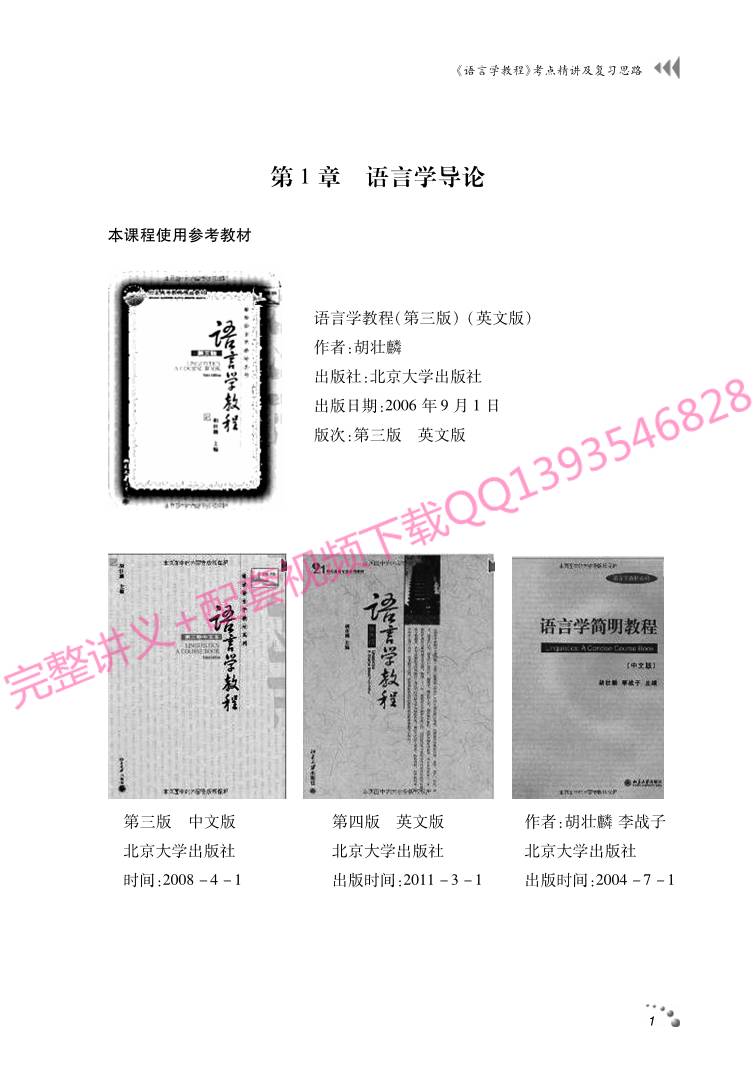


 设备数据采集
 工程招标采购
 搞笑表情
搞笑表情 微信头像
微信头像 CWMS冷库管理系统
 美女图片
美女图片 APP小游戏
 PPT模板
PPT模板 WMS仓库系统
 软件开发
软件开发