概要信息:
Ø»´°·²¹ §±« ³¿µ» ³¿®¬»® ½¿®»»® ¼»½··±²ò
ß½» DZ«® Ý¿»
r
×××æ
Ю¿½¬·½» Ó¿µ»
л®º»½¬
2004 Edition
̸» É»¬Ú»»¬ λ»¿®½¸ Ó»¬¸±¼±´±¹§
You hold in your hands a copy of the best-quality research available for job seekers. We have
designed this Insider Guide to save you time doing your job research and to provide highly
accurate information written precisely for the needs of the job-seeking public. (We also hope
that youll enjoy reading it, because, believe it or not, the job search doesnt have to be a pain
in the neck.)
Each WetFeet Insider Guide represents hundreds of hours of careful research and writing. We
start with a review of the public information available. (Our writers are also experts in reading
between the lines.) We augment this information with dozens of in-depth interviews of people
who actually work for each company or industry we cover. And, although we keep the identity of
the rank-and-file employees anonymous to encourage candor, we also interview the companys
recruiting staff extensively, to make sure that we give you, the reader, accurate information about
recruiting, process, compensation, hiring targets, and so on. (WetFeet retains all editorial control
of the product.) We also regularly survey our members and customers to learn about their
experiences in the recruiting process. Finally, each Insider Guide goes through an editorial review
and fact-checking process to make sure that the information and writing live up to our exacting
standards before it goes out the door.
Are we perfect? No-but we do believe that youll find our content to be the highest-quality
content of its type available on the Web or in print. (Please see our guarantee below.) We also are
eager to hear about your experiences on the recruiting front and your feedback (both positive and
negative) about our products and our process. Thank you for your interest.
̸» É»¬Ú»»¬ Ù«¿®¿²¬»»
Youve got enough to worry about with your job search. So, if you dont like this Insider Guide,
send it back within 30 days of purchase and well refund your money. Call us for details or e-mail
us comments at 1-800-926-4JOB or comments@wetfeet.com.
ß½» DZ«® Ý¿»
r
×××æ
Ю¿½¬·½» Ó¿µ»
л®º»½¬
2004 Edition
Ø»´°·²¹ §±« ³¿µ» ³¿®¬»® ½¿®»»® ¼»½··±²ò
ݱ°§®·¹¸¬ îððí É»¬Ú»»¬ô ײ½ò
É»¬Ú»»¬ ײ½ò
609 Mission Street
Suite 400
San Francisco, CA 94105
Phone: (415) 284-7900 or 1-800-926-4JOB
Fax: (415) 284-7910
E-mail: info@wetfeet.com
Website: www.wetfeet.com
ß½» DZ«® Ý¿»r ×××æ Ю¿½¬·½» Ó¿µ» л®º»½¬
ISBN: 1-58207-298-1
Photocopying Is Prohibited
Copyright 2003 WetFeet, Inc. All rights reserved. This publication is
protected by the copyright laws of the United States of America. No copying in any
form is permitted. It may not be reproduced, distributed, stored in a retrieval
system, or transmitted in any form or by any means, in part or in whole, without the
express written permission of WetFeet, Inc.
Ì¿¾´» ±º ݱ²¬»²¬
ß½» DZ«® Ý¿» ××× ¿¬ ¿ Ù´¿²½» ò ò ò ò ò ò ò ò ò ò ò ò ò ò ò ò ò ò ò ò ò ò ò ò ò ò ò ò ò ï
̸» ײ¬»®ª·»© ˲°´«¹¹»¼ ò ò ò ò ò ò ò ò ò ò ò ò ò ò ò ò ò ò ò ò ò ò ò ò ò ò ò ò ò ò ò ò í
Overview . . . . . . . . . . . . . . . . . . . . . . . . . . . . . . . . . . . . . . . . . . . . . . . . . . . . . . . . . . 4
The Case Interview . . . . . . . . . . . . . . . . . . . . . . . . . . . . . . . . . . . . . . . . . . . . . . . . . . 5
Ý¿»ó¾§óÝ¿» Ϋ´» ò ò ò ò ò ò ò ò ò ò ò ò ò ò ò ò ò ò ò ò ò ò ò ò ò ò ò ò ò ò ò ò ò ò ò ïí
Market-Sizing Case. . . . . . . . . . . . . . . . . . . . . . . . . . . . . . . . . . . . . . . . . . . . . . . . . . 14
Business Operations Cases . . . . . . . . . . . . . . . . . . . . . . . . . . . . . . . . . . . . . . . . . . . 17
Business Strategy Cases . . . . . . . . . . . . . . . . . . . . . . . . . . . . . . . . . . . . . . . . . . . . . . 20
Resume Cases. . . . . . . . . . . . . . . . . . . . . . . . . . . . . . . . . . . . . . . . . . . . . . . . . . . . . . 23
̸» Ю¿½¬·½» ο²¹»ò ò ò ò ò ò ò ò ò ò ò ò ò ò ò ò ò ò ò ò ò ò ò ò ò ò ò ò ò ò ò ò ò ò ò ò îé
Market-Sizing Questions . . . . . . . . . . . . . . . . . . . . . . . . . . . . . . . . . . . . . . . . . . . . . 28
Business Operations Questions . . . . . . . . . . . . . . . . . . . . . . . . . . . . . . . . . . . . . . . . 33
Business Strategy Questions . . . . . . . . . . . . . . . . . . . . . . . . . . . . . . . . . . . . . . . . . . 41
Resume Questions . . . . . . . . . . . . . . . . . . . . . . . . . . . . . . . . . . . . . . . . . . . . . . . . . . 49
ݱ°§®·¹¸¬ îððí É»¬Ú»»¬ô ײ½ò
Ò¿·´·²¹ ¬¸» Ý¿» ò ò ò ò ò ò ò ò ò ò ò ò ò ò ò ò ò ò ò ò ò ò ò ò ò ò ò ò ò ò ò ò ò ò ò ò ò ò ëí
The Answers . . . . . . . . . . . . . . . . . . . . . . . . . . . . . . . . . . . . . . . . . . . . . . . . . . . . . . 54
Market-Sizing Questions . . . . . . . . . . . . . . . . . . . . . . . . . . . . . . . . . . . . . . . . . . . . . 54
Business Operations Questions . . . . . . . . . . . . . . . . . . . . . . . . . . . . . . . . . . . . . . . . 65
Business Strategy Questions . . . . . . . . . . . . . . . . . . . . . . . . . . . . . . . . . . . . . . . . . . 88
Resume Questions . . . . . . . . . . . . . . . . . . . . . . . . . . . . . . . . . . . . . . . . . . . . . . . . . 109
ݱ°§®·¹¸¬ îððí É»¬Ú»»¬ô ײ½ò
ß½» DZ«® Ý¿» ××× ¿¬ ¿ Ù´¿²½»
Ý¿»ó¾§óÝ¿» Ϋ´»
Heres a summary of the different types of cases youll find in this report,
along with some rules that should help you ace your answer.
Ó¿®µ»¬óÍ·¦·²¹ Ï«»¬·±²
Use round numbers
Show your work
Use paper and calculator
Þ«·²» Ñ°»®¿¬·±² Ï«»¬·±²
Isolate the main issue
Apply a framework
Think action
Þ«·²» ͬ®¿¬»¹§ Ï«»¬·±²
Think frameworks
Ask questions
Work from big to small
λ«³» Ý¿»
Know your story
Keep the Parent Test in mind
Let your excitement shine
ݱ°§®·¹¸¬ îððí É»¬Ú»»¬ô ײ½ò 1
̸» ײ¬»®ª·»© ˲°´«¹¹»¼
Ѫ»®ª·»©
¡ ̸» Ý¿» ײ¬»®ª·»©
ݱ°§®·¹¸¬ îððí É»¬Ú»»¬ô ײ½ò 3
Ѫ»®ª·»©
When it comes to preparing for your case interviews, theres one word and one
word only: practice. By now, youre spending all of your spare time thinking
about why Dell is getting into printers, why the utility industry is consolidating,
and how much mustard is consumed in Idaho. Your family thinks youre
strange, but youre on the right track. By now, youre probably even starting to
enjoy thinking about these issues. Watch out: You might be turning into a
consultant.
This guide is designed to be a companion volume to Ace Your Case and Ace Your
Case II. It offers more-detailed explanations about different case types and more
sample questions. Weve also incorporated information from you, our
customers, about what youre hearing in the cubicle. Many of our sample case
questions here are based on real, live case questions that people received in
their interviews last year.
For those who havent seen our other case-interviewing guides, Ace Your Case
discusses the consulting interview in general and offers a primer containing a
number of common frameworks and B-schooltype tools (watch out for the
3Cs and the 4Ps, not to mention the infamous Five Forces) that should help
you attack your case questions. Ace Your Case II contains 15 specific case
questions and detailed recommended answers.
A word about how to use this guide: We strongly recommend that you try to
solve the questions first, without looking at the answers. After youve given
them your best shot, go ahead and check out our recommended answers. If
you find that our good answer differs from yours, see if theres something
4 ݱ°§®·¹¸¬ îððí É»¬Ú»»¬ô ײ½ò
you can learn from our suggestions. But dont panicthere are usually
numerous ways to answer any case question. Its far more important to note the
approach and the likely responses from the interviewer. As you sharpen those
skills, keep thinking to yourself, I love these case questions! Pretty soon youll
find yourself talking like a consultant!
̸» Ý¿» ײ¬»®ª·»©
Þ¿½µ¹®±«²¼
Many management consulting firms, especially the strategy firms (McKinsey,
The Boston Consulting Group, Bain, Mercer, et al.) love to give prospective
employees a problem to solve during the course of the interview. These
problem-solving exercises, known generally as case questions, are designed to
help the interviewer screen candidates and determine which people really have
what it takes to be a real, live, card-carrying management consultant.
Case questions come in many forms and levels of complexity. To help you get a
handle on them, we have identified four different categories of questions:
1. Market-sizing questions
2. Business operations questions
3. Business strategy questions
4. Resume questions
ݱ°§®·¹¸¬ îððí É»¬Ú»»¬ô ײ½ò 5
(Note that we are not covering the brainteaser category
in this Insider Guide. Consulting firms rarely ask
brainteaser questions; other types of cases give much
more insight into the type of thinking that makes a good
consultant.)
Each of these prototypes has certain distinguishing
features, which we discuss below. In addition, our insiders
recommend certain rules of the road that should help you successfully
navigate the different types of questions. Dont worryyoull never be asked to
spit out a category name and serial number for the questions you receive in the
interview cubicle. Nevertheless, if you can identify the type of question, you
will have a better idea about how to effectively attack the problem.
ɸ¿¬ DZ«® ײ¬»®ª·»©»® × Í»»µ·²¹
It may seem as if your interviewer is using the case technique for one purpose
alone: to humiliate prospective consultants. Although a few interviewers do
seem to take a perverse pleasure in watching candidates writhe, this isnt the top
goal of the technique. According to insiders, case questions really do help them
evaluate a candidates aptitude for consulting. What does that mean exactly?
Whether youre an undergrad, an MBA, or a PhD, consulting interviewers will
likely depend on the case questions to check you out on the following
dimensions:
Analytical ability
Intelligence
Ability to not break into hives under pressure
Common sense
Ability to think on your feet
6 ݱ°§®·¹¸¬ îððí É»¬Ú»»¬ô ײ½ò
Try to make the
interview more of
a dialogue between
equals. Try to
have fun.
Interest in problem solving
Business intuition
Facility with numbers
Presentation skills
Communication skills
Ability to sort through information and focus on the key points
Ability to analyze and then make recommendations based on the analysis
Creativity
Enthusiasm
Before you bid all your points to get an interview with name-your-consulting-
firm, we recommend that you spend some time thinking about how consulting
fits you. In particular, you must have good answers to two questions: Why do
you want to be a consultant? And, why do you want to work for this firm?
If you have good answers to these two questions, then youre ready to start
thinking about cases. We start by discussing the case interview as it relates to
several categories of candidates: undergraduates, MBAs, advanced-degree
candidates, and experienced hires.
˲¼»®¹®¿¼«¿¬»
Consulting interviewers tell us that the case questions and the expected answers
for undergraduates tend to be simpler and more understandable than those for
MBA students. Market-sizing questions are very popular (you will almost
certainly get at least one of these), as are general business strategy problems. In
the business strategy area, the companies and the topics may also seem a little
more friendly; youre more likely to get a case about a beer company than about
a company trying to license the latest packet-filtering technology for data
encryption. Operations questions (with the exception of the ever-popular
declining-profits question) are less common for undergraduates, and resume
ݱ°§®·¹¸¬ îððí É»¬Ú»»¬ô ײ½ò 7
questions will more likely focus on academic or extracurricular activities than
on work experiences.
Interviewers tell us that they often provide more prompting to undergraduate
candidates during the interview. In evaluating your answer to a question, only
the most sadistic interviewer would expect you to regurgitate all the standard
business-school terminology and techniques (after all, how else could the
company justify paying MBAs the big bucks?). But beware: Rank amateurs are
definitely not welcome. Thus, you must have a general understanding of basic
business relationships (e.g., revenues costs = profits), but dont get your
knickers in a knot if you cant name even one of the Five Forces.
Here are a few real, live case questions fielded by our undergraduate customers:
Your client, a tire manufacturer, is evaluating entry into a new market: the
market for four-wheel-drive-vehicle tires. How do you estimate the size of
the market?
Whats the weight of the Statue of Liberty?
If a publishing company wanted to start a new interior decorating magazine,
what would it have to think about?
If youre working for General Mills, and Kelloggs introduces a frequent-
buyer program, should you follow suit?
ÓÞß
MBAs have long been the heavy hitters of the consulting workforce. As a
result, the case interview reaches its most sophisticated and demanding form in
the MBA interview. All types of questionsfrom the simple market-sizer to
the gnarliest of business strategy problemsare fair game. Practically any
industry or functional issue area is possible material for the case question. An
MBA candidate will be expected to be familiar with a number of the standard
MBA frameworks and concepts. Also, the case will possibly have a few tricky
twists or turns. For example, what might seem like a pure and simple
8 ݱ°§®·¹¸¬ îððí É»¬Ú»»¬ô ײ½ò
international strategy question might be complicated by an unexpected
restriction related to the European regulatory environment.
Interviewers tell us that most MBAs have a polished interview technique and
understand the basics of many case problems. Therefore, they look for depth
in the answer (what they describe as an ability to get several levels down in the
answer) and a real familiarity with business concepts. We understand that at
least some recruiters like to ask resume case questions because they provide an
opportunity to get more detail about the candidates background and problem-
solving experiences.
Here are a few real, live case questions fielded by our MBA customers:
How many AA batteries are sold in Montana in a year?
A bank wants to reduce costs and asks you for advice about closing a specific
branch. What should you consider?
A wealthy entrepreneur has just bought a baseball team, and he asks you for
advice on how to show increased profits in a year. What do you suggest?
A pharmaceutical company is considering changing its sales strategy from
using a sales force with geographic territories to using specific locations.
What financial analysis would you use to see if this is worthwhile?
ß¼ª¿²½»¼óÜ»¹®»» Ý¿²¼·¼¿¬» øÒ±²óÓÞß÷
Although consulting firms are attracting record numbers of MBA applicants,
several of the top firms have started to look beyond traditional feeder
programs to identify top talent. According to WetFeet customers and recruiters,
the different firms have very different approaches to advanced degree
candidates. McKinsey and BCG, among others, have launched aggressive
recruiting programs aimed at PhDs, MDs, JDs, and others at the top schools.
In the process, some of these firms have created customized recruiting and
training programs for advanced-degree candidates. Other firms continue to
consider advanced-degree candidates on a case-by-case basis, often pitting them
against undergraduate or MBA candidates, depending on their background.
ݱ°§®·¹¸¬ îððí É»¬Ú»»¬ô ײ½ò 9
Whether or not you enter a separate recruiting track, we understand from our
customers that the format for the interviews is similar to that of undergraduate
and MBA recruiting programs. In other words, expect a heavy dose of case
interview questions along with the general get-to-know-you queries. One slight
difference is that, in addition to seeing whether or not you can handle the
substance of the case question, the recruiter will also be looking to see if [you]
can break out of the PhD box. In other words, can you adapt to the real world
and answer questions without giving too much detail?
According to WetFeet customers, case questions for advanced-degree
candidates usually dont require you to carry your own MBA toolbox. Instead,
the questions may relate to previous research (your resume is usually a font of
material), or they may resemble undergraduate case studies that check a persons
intuition, common sense, analytical skills, and problem-solving abilities.
According to interviewers at the firms, they may be more inclined to prompt
candidates with questions, and they may be satisfied with a good, solid
analytical answer that doesnt necessarily incorporate all the latest business
buzzwords.
Check out these case questions fielded by our advanced-degree customers:
How many windows are there in Mexico City?
Question for someone who had majored in international relations: Why have
missiles with MIRVed warheads caused the most trouble in arms-control
discussions?
An automobile insurance company has asked you to tell it why it has been
experiencing a decline in profits.
American Express has hired you to help it increase the profitability of the
Amex Green Card. What do you advise doing?
10 ݱ°§®·¹¸¬ îððí É»¬Ú»»¬ô ײ½ò
Û¨°»®·»²½»¼ Ø·®»
If you are seeking to join a consulting firm from industry, or from another
consulting firm, your interviewing experience may differ from that described in
this report. According to WetFeet customers, experienced-hire candidates may
or may not face a battery of case questions. There is no hard-and-fast rule, but
it seems as though people with more experience (10-plus years), and people
who have already worked for a name-brand consulting firm, are relatively
unlikely to face a case as part of their review process. In contrast, people who
have worked in industry for a few years and who are seeking to enter at a
middle level are likely to go through a process similar to that used for MBAs
(i.e., expect lots of cases). In particular, if you are changing careers (e.g.,
moving from nonprofit work to consulting) and not signing on as an industry
authority, youll probably be scrutinized for your consulting aptitudeas
demonstrated by your ability to field case questions.
Typical case questions faced by our experienced-hire customers include:
Your client is a struggling telecom firm. How would you turn it around?
Your client is a U.S.-based company that sells telephones by mail. Mail sales
of telephones are a small portion of the companys overall business, and sales
are below average for mail-order sales of appliances. Should the client
continue to sell phones in this way? If so, how should it make the operation
more profitable?
Specific questions related to their area of expertise.
ݱ³°¿²§óÍ°»½·º·½ Ê¿®·¿¬·±²
As you enter the ring with consultants from a variety of firms, youll probably
notice differences in the questions you receive, as well as the style and approach
of the case interview. More often than not, these differences derive from the
differences in the personalities and experiences of your interviewers. However,
ݱ°§®·¹¸¬ îððí É»¬Ú»»¬ô ײ½ò 11
several firms have developed their own approach to the case interview. One
variation involves giving a candidate a written case prior to the interview and
asking him or her to prepare to discuss the case in detail during the interview.
We understand that PricewaterhouseCoopers has given preprinted cases to
candidates the night before an interview. Monitor Company has used a similar
technique in which the candidate will be given materials before the interview.
Monitor has also used a group interview technique that requires competing
candidates to work with each other to solve a problem.
One other thing to keep in mind: Recruiters suggest that you would be wise to
keep the firms reputation and areas of strength in mind as you launch into
your case answer. Firms that are known for a particular type of work are likely
to be more sensitive to those issues in the case questions they give. For
example, if youre interviewing with Towers Perrin, you shouldnt be surprised
to find a people issue somewhere in the case. If youre talking with Deloitte
Consulting, keep operations in mind as you craft an answerand dont talk
about how its important to work only with the companys top management.
And, if youre interviewing with Bain, remember how much importance the
company attaches to measurable results and data-driven analysis.
12 ݱ°§®·¹¸¬ îððí É»¬Ú»»¬ô ײ½ò
Ý¿»ó¾§óÝ¿» Ϋ´»
¡ Ó¿®µ»¬óÍ·¦·²¹ Ý¿»
¡ Þ«·²» Ñ°»®¿¬·±² Ý¿»
¡ Þ«·²» ͬ®¿¬»¹§ Ý¿»
¡ λ«³» Ý¿»
ݱ°§®·¹¸¬ îððí É»¬Ú»»¬ô ײ½ò 13
Ó¿®µ»¬óÍ·¦·²¹ Ý¿»
Ѫ»®ª·»©
Consultants love to ask market-sizing questions. Not only are they easy to
create, discuss, and evaluate, they are also highly representative of an important
type of work done by consultants. In their simplest form, market-sizing cases
require the candidate to determine the size of a particular market (hence the
name). In the real world, this information can be especially helpful when
gauging the attractiveness of a new market. In the interview context, a market-
sizing question might be pitched in an extremely straightforward format (e.g.,
What is the market for surfboards in the United States?). Or it may be
disguised as a more complex question (e.g., Do you think Fidelity should come
out with a mutual fund targeted at high-net-worth individuals?) which requires
the respondent to peel away the extraneous detail in order to identify the
market-sizing issue at the core. In a more highly developed variation, the
interviewer might ask a strategy or operations case question that requires the
respondent to do some market-sizing in order to come up with an appropriate
recommendation.
̸» ͽ±®»½¿®¼
Market-sizing questions allow the interviewer to test the candidates facility with
numbers, powers of analysis, and common sense. For example, if you were
asked to size the surfboard market, you would need to make basic assumptions
about the market. (How many people surf ? How many boards does a typical
surfer dude own? How often will he or she get a new one? Are there other big
14 ݱ°§®·¹¸¬ îððí É»¬Ú»»¬ô ײ½ò
purchasers besides individual surfers? Is there
a market for used boards?) You would also
need to make a few basic calculations (number
of surfers ¨ number of new boards per year +
total quantity purchased by other types of
customers, etc.). As you work through these
issues, the interviewer would also get a glimpse
of your common sense. (Did you assume that everybody in the U.S. population
would be a potential surfer, or did you try to estimate the population in prime
surfing areas like California and Hawaii?)
Ô±½¿¬·±²
Market-sizing questions can pop up in all interviews. They are almost certain to
make an appearance in undergraduate and advanced-degree interviews. Indeed,
WetFeet customers with BAs and PhDs report receiving exactly the same
market-sizing questions. MBAs are also likely to receive market-sizing questions;
however, a common and more complex variation typical of an MBA interview
involves assessing the opportunity for a new product. For example, you might
be asked whether your pharmaceutical company client should develop and
market a drug for male pattern baldness. Part of the analysis would require you
to estimate the market potential (i.e., market size) for the drug.
Ó¿²¸¿²¼´·²¹ DZ«® Ó¿®µ»¬óÍ·¦·²¹
Market-sizing questions can seem intimidating. But once you understand the
rules (and practice your technique), you can come to view these cases as slow
pitches right over the center of the plate. So, just how many golf balls are used
in the United States in a year? You dont know, and the truth is, neither does
your interviewer. In fact, your interviewer doesnt even care what the real
ݱ°§®·¹¸¬ îððí É»¬Ú»»¬ô ײ½ò 15
We get the deer
in the headlights
look from time to
time. Thats an
automatic ding.
number is. But remember, she does care about your ability to use logic,
common sense, and creativity to get to a plausible answer. And she wants to
make sure you dont turn tail when youve got a few numbers to run. Which
brings us to the Rules for Market Sizing Questions.
Ϋ´» ïæ Ë» ®±«²¼ ²«³¾»®ò Even if you werent a multivariate calculus stud,
you can impress your interviewer with your number-crunching abilities if you
stick to round numbers. Theyre much easier to add, subtract, multiply and
divide, and since weve already decided that the exact answer doesnt matter
anyway, go ahead and pick something that you can toss around with ease. Good
examples? One hundred, one million, ten dollars, two, one-half. The population
of the United States? Two-hundred-fifty million, give or take.
Ϋ´» îæ ͸±© §±«® ©±®µò Case questions are the ultimate show your work
questions. In fact, your exact answer matters less than the path that took you
there. Remember, the market-sizing question is merely a platform through
which your interviewer can test your analysis, creativity, and comfort with
numbers.
Ϋ´» íæ É®·¬» ·¬ ¼±©²ò If you feel more comfortable writing everything down
and using a calculator, do! Most interviewers will not care if you use a pencil
and paper to keep your thoughts organized and logical. And if pulling out the
HP to multiply a few numbers keeps you from wigging out, then by all means
do it. Your interviewer will be more impressed if you are cool, calm, and
collected, and if using props helps you, then go for it.
16 ݱ°§®·¹¸¬ îððí É»¬Ú»»¬ô ײ½ò
Þ«·²» Ñ°»®¿¬·±² Ý¿»
Ѫ»®ª·»©
A fair number of case questions cover operations issues. Given the existing
economic environment, in fact, the mix of consulting business has shifted more
towards operations and process focused cases, so be prepared for a business
operations case. Broadly speaking, operations refers to all the things involved
in running a business and getting product out the door. In a manufacturing
plant, this would include the purchasing and transporting of raw materials, the
manufacturing processes, the scheduling of staff and facilities, the distribution
of the product, the servicing of equipment in the field, and so on. In its
broadest sense, operations would even include the sales and marketing of the
companys products and the systems used to track sales. Where strategy
questions deal with the future direction of the firm (such as whether to enter a
new line of business), operations deals with the day-to-day running of the
business. It is a particularly fertile ground for consulting work, and for case
questions. Some of the most typical case questions of this type are those that
require the candidate to explain why a companys sales or profits have declined.
̸» ͽ±®»½¿®¼
Consultants like to ask operations questions because they allow the interviewer
to see whether the candidate understands fundamental issues related to running
a business (e.g., the relationship between revenues and costs, and the
relationship and impact of fixed costs and variable costs on a companys
profitability). In addition, operations questions require the candidate to
ݱ°§®·¹¸¬ îððí É»¬Ú»»¬ô ײ½ò 17
demonstrate a good grasp of process and an ability to sort through a pile of
information and home in on the most important factors.
Ô±½¿¬·±²
Operations questions are fair game for all candidates, including undergraduates
and advanced-degree candidates. According to our customers, the declining
profits questions are some of the most popular types of cases around, and
almost all candidates can expect to get several of these. That said, MBAs are
typically expected to explore these questions in greater detail and have a better
grasp of key business issues and terminology. MBAs could also get tossed
more-complicated operations questions. For example, an MBA case might
involve understanding the implications of allocating fixed costs in a certain way,
or, perhaps, the impact on the balance sheet of a certain type of financing.
Undergraduates and non-MBA candidates still need to be familiar with a few
basic operational concepts, such as the relationship between costs and revenues,
and the various things that might have an impact on them. In addition,
undergraduates might expect that the topic of the question be more familiar.
For example, an undergraduate might be asked about the implications of
launching a new national chain of restaurants. An MBA might be asked about
factors that would allow a manufacturing operation to increase throughput.
Ñ°¬·³·¦·²¹ DZ«® Þ«·²» Ñ°»®¿¬·±² ß²©»®
Operations case questions are more complex than market-sizing questions. Not
only do they typically require basic business knowledge (or, in place of that, a
good deal of common sense), but they also frequently require the candidate to
think like a detective. For example, the interviewer might ask why an airline has
been losing money while its market share has increased. There could be many
reasons for this: Revenues might be down (and that, in turn, might be caused
18 ݱ°§®·¹¸¬ îððí É»¬Ú»»¬ô ײ½ò
by any number of things, including ticket price wars, lower ridership, growing
accounts payable, etc.), costs might be higher (due to higher fuel costs, greater
landing fees, higher plane maintenance costs, etc.), or the airline could be
operating more inefficiently (e.g., higher passenger loads might require it to
lease additional aircraft or pay staff overtime). In any case, a successful analysis
of the question requires the candidate to think clearly and efficiently about the
question. To help with these types of questions, here are a couple of rules you
might want to keep in mind:
Ϋ´» Ò±ò ïæ ×±´¿¬» ¬¸» ³¿·² ·«»ÿ Operations questions usually have lots of
potential answers. The first step in identifying a good answer (and
demonstrating your analytical firepower) is to separate the wheat from the
chaff. Once you have zeroed in on the main issue, youll be able to apply your
energy to working out a good conclusion to the problem.
Ϋ´» îæ ß°°´§ ¿ º®¿³»©±®µÿ Frameworks were made for cracking operations
questions! They will help you sift through lots of data and organize your
answer. A useful framework can be something as simple as saying, If the
airline is losing money, it has something to do with either costs or revenues,
and moving on to talk about each of these areas in turn.
Ϋ´» íæ ̸·²µ ¿½¬·±²ÿ Unlike your market-sizing question or brainteaser,
operations questions never end with a nice, neat analysis. Rather, the goal here
is action. The hypothetical client is usually facing a critical issue: Revenues are
falling, costs are rising, production is crashing. Something needs to be done. As
a consultant, you will be hired to give advice. As a candidate, you should be
sensitive to the fact that your analysis must drive toward a solution. Even if you
need more data before youre able to make a final recommendation, you should
acknowledge that you are evaluating various courses of action. Better yet, you
should lay out a plan for next steps.
ݱ°§®·¹¸¬ îððí É»¬Ú»»¬ô ײ½ò 19
Þ«·²» ͬ®¿¬»¹§ Ý¿»
Ѫ»®ª·»©
Business-strategy cases are the granddaddies, and demons, of the case-question
world. Consultants love to use these questions because they touch on so many
different issues. A good strategy question can have a market-sizing piece, a logic
puzzle, multiple operations issues, and a major dose of creativity and action
thrown in for good measure. Moreover, a complex strategy question can go in
many different directions, thereby allowing the interviewer to probe the
candidates abilities in a variety of areas. Again, strategy-case questions can run
the gamut from complex, multi-industry, multi-national, multi-issue behemoths
to a localized question with a pinpoint focus. Common types of strategy
questions include advising a client about an acquisition, responding to a
competitive move by another company in the industry, and evaluating
opportunities for a new product introduction and pricing the product.
̸» ͽ±®»½¿®¼
Depending on the nature of the question, the interviewer can use it to assess
anything and everything from your ability to handle numbers to your ability to
wade through a mass of detailed information and synthesize it into a
compelling business strategy. Of all the different types of case questions, these
are also the most like the actual work youll do on the job (at least at the
strategy firms). One other thing the interviewer will be checking carefully: your
presentation abilities.
20 ݱ°§®·¹¸¬ îððí É»¬Ú»»¬ô ײ½ò
Ô±½¿¬·±²
Strategy-case questions are fair game for any type of candidate. For
undergraduates, they will often be more two-dimensional and straightforward.
For MBA candidates, they will frequently have several layers of issues, and
perhaps an international or other twist to boot. Although most strategy
boutiques will use this kind of case as a mainstay in their recruiting efforts,
firms with more of an operations focus may rely more heavily on operations
questions.
Í«½½»»¼·²¹ ¿¬ ¬̧ » ͬ®¿¬»¹§ ͬ«³°»®
Because business strategy questions can involve many different elements, they
can inspire fear in the weak of heart. Although it is true that strategy questions
can be the most difficult, they can also be the most fun. This is your
opportunity to play CEO, or at least advisor to the CEO. You can put all of
your business intuition and your hard-nosed, data-driven research to work and
come up with a plan that will bring a huge multi-national corporation into the
limelightor not. Does it matter that you just crafted a story about why a
credit-card company should go into the Italian market when your best friend
who interviewed immediately prior to you recommended against going Italian?
No, not really. Unless, of course, your friend did a better job of exploring the
case question. What does that mean? By going through this case book (and the
other WetFeet Ace Your Case! Insider Guides), youre already a step ahead of
the game. However, here are a couple of rules youll want to keep in mind as
you tackle your strategy-case questions.
ݱ°§®·¹¸¬ îððí É»¬Ú»»¬ô ײ½ò 21
Ϋ´» ïæ ̸·²µ º®¿³»©±®µÿ While analyzing a really juicy strategy question you
might be able to draw information and jargon out of almost every course in
your schools core business curriculum. Dont succumb to temptation! Your
interviewer will be much more impressed by a clear and simple story about how
you are attacking the question and where you are going with your analysis. The
best way to do this is to apply a framework to the problem. Just as with
operations questions, this means setting out a plan of attack up front and
following it through to conclusion. One other big benefit: Having a clear
framework will help you organize your analysis.
Ϋ´» îæ ßµ ¯«»¬·±²ò Successful consulting is as much about asking the right
question as it is about providing a good answer. Likewise, your solution to a
strategy case will be much better if youve focused your energy on the right
issue. To help you get there, dont hesitate to ask your interviewer questions. In
the best case, he may help you avoid a derailment; in the worst case, hell
understand your thought process as you plow through the analysis.
Ϋ´» íæ ɱ®µ º®±³ ¾·¹ ¬± ³¿´´ò Even though the strategy case you are examining
was the subject of a study that lasted several months, you probably have about 15
minutes to provide your answer. Therefore, its essential that you start by looking
at the most significant issues first. Besides, this is a great discipline for future
consultants. After all, the client will probably be paying for your time by the hour,
so youll want to make sure that you are really adding value.
22 ݱ°§®·¹¸¬ îððí É»¬Ú»»¬ô ײ½ò
λ«³» Ý¿»
Ѫ»®ª·»©
One favorite type of alternative case question is the resume case. Instead of
cooking up a case question based on a carefully disguised project from his files,
the interviewer will pull something straight from the candidates resume.
Usually, these cases stem from a previous professional experience, but
occasionally youll get something like: I see you play rugby. Describe for me all
the different positions on a rugby team, and the play strategy for each.
Frequently, the interviewer will ask the candidate to walk through a previous
work project or experience and explain how he or she decided on a particular
course of action. As the candidate goes through the discussion, the interviewer
may then change a few critical assumptions and ask the candidate to explain
how he or she would have responded. For example, if you had started and run
a successful computer repair service, the interviewer might ask how you would
have responded had a local computer store created a knock-off service and
offered it at a lower price.
̸» ͽ±®»½¿®¼
The resume case is a way for the interviewer to dig a little deeper into your
resume and at the same time test your case-cracking capabilities. (It also
provides for a little variety throughout a grueling day of interviews.) Here, the
interviewer is testing for your ability to communicatein laymans termsa
topic that is very familiar to you. Resume cases are generally a good
ݱ°§®·¹¸¬ îððí É»¬Ú»»¬ô ײ½ò 23
opportunity for you to toot your own horn a bit about your past experience
and exude confidence, competence, and enthusiasm about things you really
understand.
Ô±½¿¬·±²
The resume question is fair game for undergrads, MBAs, and advanced-degree
candidates. Naturally, because the resumes for each type of candidate differ
significantly, the types of questions also differ. MBAs can expect business-
oriented questions; advanced-degree candidates can expect questions related to
their previous research. We understand that resume cases are a particularly
popular type of question for PhD students. Not only do they allow the
candidate to avoid feeling like he or she has to master a whole new lexicon and
body of frameworks, they test his or her communications skills.
α½µ·²¹ DZ«® λ«³» Ý¿»
Because the resume-case question takes the discussion to your home turf, there
isnt really a secret recipe for pulling apart the question. Rather, the way to be
successful here is to follow a few basic interview rules.
Ϋ´» ïæ Õ²±© §±«® ¬±®§ò Nothing will make you look worseand help you find
the door more quicklythan not knowing what you put on your own resume.
Make sure you have reviewed all of the items on your resume before the
interview. Write down a few notes about what you did at each job, and the main
message you want to convey through each bullet point on your resume. Think
up a short story for each bullet point that will provide compelling evidence to
support those messages.
24 ݱ°§®·¹¸¬ îððí É»¬Ú»»¬ô ײ½ò
Ϋ´» îæ ̸» п®»²¬ Ì»¬ò This is not the place to play the polyglot; nobody will
be impressed with your ability to speak techno-babble. The interviewer will
assume that you know everything there is to know about your area of expertise,
whether thats molecular biology or your computer-repair service. The real
question is: Can you tell others about what you did without sending them into a
coma? It may sound easy, but many people seem incapable of communicating
what they know. Our suggestion? Practice talking about your work as if you
were telling your parents.
Ϋ´» íæ Ô»¬ §±«® »¨½·¬»³»²¬ ¸·²»ÿ This is your home field, so use it to your
advantage. Talk about your past work with energy and enthusiasm. Believe it or
not, even consultants like a little passion. Besides, if youre sitting there griping
about a previous work experience, guess whats running through your
interviewers mind: Whoa, Nelly. This cat could be trouble!
ݱ°§®·¹¸¬ îððí É»¬Ú»»¬ô ײ½ò 25
̸» Ю¿½¬·½» ο²¹»
¡ Ó¿®µ»¬óÍ·¦·²¹ Ï«»¬·±²
¡ Þ«·²» Ñ°»®¿¬·±² Ï«»¬·±²
¡ Þ«·²» ͬ®¿¬»¹§ Ï«»¬·±²
¡ λ«³» Ï«»¬·±²
ݱ°§®·¹¸¬ îððí É»¬Ú»»¬ô ײ½ò 27
Ó¿®µ»¬óÍ·¦·²¹ Ï«»¬·±²
Remember the rules for market-sizing questions:
1. Use round numbers.
2. Show your work.
3. Write it down.
28 ݱ°§®·¹¸¬ îððí É»¬Ú»»¬ô ײ½ò
ݱ°§®·¹¸¬ îððí É»¬Ú»»¬ô ײ½ò 29
How many pieces of candy are given out on Halloween each year in the
United States?
Key questions to ask:
Basic equations/numbers:
How youd track the numbers down:
Ý¿» ï
30 ݱ°§®·¹¸¬ îððí É»¬Ú»»¬ô ײ½ò
What is the average number of chairs in a house?
Key questions to ask:
Basic equations/numbers:
How youd track the numbers down:
Ý¿» î
ݱ°§®·¹¸¬ îððí É»¬Ú»»¬ô ײ½ò 31
How many blue jeans are sold in the United States each year?
Key questions to ask:
Basic equations/numbers:
How youd track the numbers down:
Ý¿» í
32 ݱ°§®·¹¸¬ îððí É»¬Ú»»¬ô ײ½ò
How many unique people attend events at the Rose Bowl every year?
Key questions to ask:
Basic equations/numbers:
How youd track the numbers down:
Ý¿» ì
Þ«·²» Ñ°»®¿¬·±² Ï«»¬·±²
Remember the rules for business operations questions.
1. Isolate the main issue.
2. Apply a framework.
3. Think action.
ݱ°§®·¹¸¬ îððí É»¬Ú»»¬ô ײ½ò 33
34 ݱ°§®·¹¸¬ îððí É»¬Ú»»¬ô ײ½ò
A leading breakfast cereal manufacturer has hired you to determine why
its profits have taken a dive in the last year. What should it do to improve
its performance?
Key questions to ask:
What are the main issues?
Ý¿» ë
ݱ°§®·¹¸¬ îððí É»¬Ú»»¬ô ײ½ò 35
Key approaches/frameworks:
Possible courses of action:
Ý¿» ë òòò ½±²¬·²«»¼
36 ݱ°§®·¹¸¬ îððí É»¬Ú»»¬ô ײ½ò
A regional bank interested in expanding beyond commercial banking
services has merged with a major asset-management firm. They are
struggling with post-merger integration and have hired you to help
them. What issues would you address?
Key questions to ask:
What are the main issues?
Ý¿» ê
ݱ°§®·¹¸¬ îððí É»¬Ú»»¬ô ײ½ò 37
Key approaches/frameworks:
Possible courses of action:
Ý¿» ê òòò ½±²¬·²«»¼
38 ݱ°§®·¹¸¬ îððí É»¬Ú»»¬ô ײ½ò
The owner of a hip college hangout called Beer, Spaghetti and Exotic
Desserts recently hired a new manager and bartender to address a
slump in customer volume. Customer volume quickly turned around, but
the owner has noticed that profits have dropped. What is wrong?
Key questions to ask:
What process would you use to investigate this question?
Where would you find the information you need?
Ý¿» é
ݱ°§®·¹¸¬ îððí É»¬Ú»»¬ô ײ½ò 39
The Director of Purchasing for the aircraft maintenance division of a
major airline has asked for your help. His supplier base has grown to
more than 500 vendors, who supply approximately 100,000 different
aircraft parts to the airline. He has realized that his supplier strategy is
suboptimal, both from a cost and efficiency standpoint. How would you
help him devise a supplier strategy?
Key questions to ask:
What are the main issues?
Ý¿» è
40 ݱ°§®·¹¸¬ îððí É»¬Ú»»¬ô ײ½ò
Key approaches/frameworks:
Possible courses of action:
Action recommendations:
Ý¿» è òòò ½±²¬·²«»¼
Þ«·²» ͬ®¿¬»¹§ Ï«»¬·±²
Keep the rules for business strategy questions in mind:
1. Think framework.
2. Ask questions.
3. Work from small to big.
ݱ°§®·¹¸¬ îððí É»¬Ú»»¬ô ײ½ò 41
42 ݱ°§®·¹¸¬ îððí É»¬Ú»»¬ô ײ½ò
A small manufacturer and distributor of womens surf clothes is
considering selling to high-end boutiques and has hired you to help out.
What kinds of issues would you think about to help it make the
decision?
Key questions to ask:
What are the main issues?
Ý¿» ç
ݱ°§®·¹¸¬ îððí É»¬Ú»»¬ô ײ½ò 43
Key approaches/frameworks:
Outline for my answer:
Action recommendations:
Ý¿» ç òòò ½±²¬·²«»¼
44 ݱ°§®·¹¸¬ îððí É»¬Ú»»¬ô ײ½ò
Your client is a large owner and operator of hotels and vacation
properties. It also runs a highly successful rewards program that gives
guests the opportunity to earn points for each stay. The company is
considering partnering with small bed-and-breakfasts and offering
guests the opportunity to earn points for stays at participating B&Bs as
well. Should it go ahead with this partnership? What should it think
about in order to make its decision?
Key questions to ask:
What are the main issues?
Ý¿» ïð
ݱ°§®·¹¸¬ îððí É»¬Ú»»¬ô ײ½ò 45
Key approaches/frameworks:
Outline for my answer:
Action recommendations:
Ý¿» ïð òòò ½±²¬·²«»¼
46 ݱ°§®·¹¸¬ îððí É»¬Ú»»¬ô ײ½ò
A camera company has stumbled on a compound that helps extend the
life of cut roses. It wants to know if it should introduce the product and
how to price it. The firm has collected the following data and wants your
assistance in analyzing the data and making a recommendation:
One billion roses are purchased each year in the United States.
The average rose costs $2
There are 50 million unique buyers of roses
The chemical extends the life of cut roses by one week
There are five other products on the market that extend the life of cut
roses from two to five days
Five grams per rose of the new chemical must be present in order to be
effective
It costs $0.02 per gram to manufacture the new chemical, including fixed
and variable costs
Key questions to ask:
What are the main issues?
Ý¿» ïï
ݱ°§®·¹¸¬ îððí É»¬Ú»»¬ô ײ½ò 47
Key approaches/frameworks:
Outline for my answer:
Action recommendations:
Ý¿» ïï òòò ½±²¬·²«»¼
48 ݱ°§®·¹¸¬ îððí É»¬Ú»»¬ô ײ½ò
Your client is a large private equity firm. It is looking into rolling up
the tow-truck industry; that is, buying many small- and medium-sized
firms and combining them to create one, larger firm. It wants your help
in assessing industry attractiveness.
Key questions to ask:
What are the main issues?
Outline for my answer:
Ý¿» ïî
λ«³» Ï«»¬·±²
Remember the rules for resume questions:
1. Know your story
2. The Parent Test
3. Let your excitement shine
ݱ°§®·¹¸¬ îððí É»¬Ú»»¬ô ײ½ò 49
50 ݱ°§®·¹¸¬ îððí É»¬Ú»»¬ô ײ½ò
After one year with our firm, what would our formal evaluation of your
performance look like?
Ý¿» ïí
ݱ°§®·¹¸¬ îððí É»¬Ú»»¬ô ײ½ò 51
I see that you worked at a dot com for a year, before moving to a large
bank for two years. What do you see as the pros and cons for you of
working in a large organization vs. a small organization? What would
you bring to consulting from your experiences in two very different
working environments?
Ý¿» ïì
52 ݱ°§®·¹¸¬ îððí É»¬Ú»»¬ô ײ½ò
I see you led a cross-functional merger integration team at General
Electric. What is your leadership style?
Ý¿» ïë
Ò¿·´·²¹ ¬¸» Ý¿»
¡ ̸» ß²©»®
¡ Ó¿®µ»¬·²¹óÍ·¦·²¹ Ï«»¬·±²
¡ Þ«·²» Ñ°»®¿¬·±² Ï«»¬·±²
¡ Þ«·²» ͬ®¿¬»¹§ Ï«»¬·±²
¡ λ«³» Ï«»¬·±²
ݱ°§®·¹¸¬ îððí É»¬Ú»»¬ô ײ½ò 53
̸» ß²©»®
Now its time to walk through several answers to each of the questions given in
the previous section. Although we believe that our recommended answers are
good, we know that there are many other even better answers out there.
Remember, though, the destination is often less important to your interviewer
than the road you take to get there. With that in mind, smooth sailing! A quick
note on the layout: Each question is followed by bad answers and a good
answer. The questions and dialogue between the hypothetical recruiter and
candidate appear in normal type; the WetFeet analysis and commentary appear
in italics.
Ó¿®µ»¬óÍ·¦·²¹ Ï«»¬·±²
Ý¿» ï
How many pieces of candy are given out on Halloween each year in the
United States?
This is a straightforward market-sizing question, which would be good for undergraduates and
advanced-degree candidates. It requires no special technical knowledge, and it focuses on a
subject that is accessibleand hopefully enjoyed!by everyone: Halloween candy.
54 ݱ°§®·¹¸¬ îððí É»¬Ú»»¬ô ײ½ò
Þ¿¼ ß²©»®
10 million.
Its never good to just give a specific number answer, even if you happen to know the right
number. This is especially true if the question asks you to estimate the market size of a
product or industry in which you may have some experience, though hopefully the
interviewer would be smart enough not to ask you such a question.
Rather, the interviewer is trying to see how you go about figuring out such an answer. After
all, throughout your career as a consultant, youll rarely find that you already know a
needed number, and even if you do, youll still have to show the client how you got the
information.
I never went trick-or-treating because I dont like candy.
Though your aversion to sweets may be admirable, youre going to have to answer the
question anyway.
I always got the most candy because I made my own costumes.
Bye bye.
What does Halloween candy have to do with consulting?
Good question, bad answer.
Ù±±¼ ß²©»®
Candidate: Interesting question. It appears to me that there are two ways of
attacking this problem. The first way is to determine how many people go trick-
or-treating and multiply that number by the average number of pieces of candy
they collect on their rounds. This would estimate demand. The other way to
answer the question is to estimate the supply side by determining how many
houses give out candy every year, and multiplying that number by the number
of pieces of candy each house distributes. Hopefully these two numbers will be
about the same. Given our time constraints and the fact that I am more familiar
with how many pieces of candy someone receives, Id like to estimate the
demand side.
The candidate has done a great job of providing an analytical framework of how she will
attack the problem and outlined a couple of options for coming up with the answer. Further,
the candidate has made a decision based on her experience: she is going to estimate the demand
ݱ°§®·¹¸¬ îððí É»¬Ú»»¬ô ײ½ò 55
side. At this point, its okay for the candidate to put the supply side question aside because the
interviewer knows that shes acknowledged it; if the candidate had more time, she could do
both. Nice start so far.
Candidate: Now, how many people go out trick-or-treating each year? First,
lets figure out who is going trick-or-treating. Lets assume that you start trick-
or-treating once youre five and you stop when youre 12. So our market is
five to 12 year olds. Further, lets assume that the population of the United
States is 250 million; what we need to estimate now is, of that 250 million, how
many are five to 12 year olds. For the sake of argument, lets say that 25 million
are in that age range10 percent of the population. The way I got to this
number was to assume that the average life expectancy is around 80, Im
looking at a seven-year age range, and there are more people at the lower end
of the age spectrum than the higher end. Now what we need to do is
determine what percentage of this 25 million goes out trick-or-treating on
Halloween. I grew up in a neighborhood where almost everyone went trick-or-
treatingmaybe 75 percent of kidsbut that seems really high to me, so lets
say that 60 percent of kids in that age range collect candy each year.
Conveniently, it also makes the math work. So there are 15 million kids who go
out trick-or-treating.
Note what the candidate is doing. She is very logically breaking the problem down in pieces,
narrowing the size of the market down. She is announcing assumptions to the interviewer,
using round numbers, and basing her assumptions on previous experience. Remember: the
accuracy of the assumptions is not as important as the analytic path the candidate takes to
make them. And dont get caught up in the detailsnotice how the interviewer didnt try to
disaggregate the percent of kids who go out trick-or-treating; the candidate may want to
mention that it may differ by geography or location (urban vs. suburban vs. rural), but should
leave it at that.
56 ݱ°§®·¹¸¬ îððí É»¬Ú»»¬ô ײ½ò
Candidate: So I have one of the key pieces of my equation; now I need to
estimate how many pieces of candy each kid gets. The way Im going to take a
crack at this is to multiply the number of houses that each kid goes to by the
average number of pieces of candy received per house.
Consultants are simple-minded people: keep the interviewer informed of where youve been and
where youre going!
Candidate: When I went trick-or-treating, I probably went to 20 houses. The
number of pieces of candy that Id get from each house variedfor example,
sometimes people would give out a large candy bar, others would give out lots
of little pieces of candy. Id say on average, Id receive about five pieces of
candy per houseagain, this number will vary based on geography and
location, but lets assume five pieces per house and 20 houses. Again, this
makes the math easy: 100 pieces of candy per kid. Although I must admit when
I think about dumping out my bag at the end of the night, 100 pieces seems
high to me. But for now lets use that number. So 15 million kids times 100
pieces of candy is 1.5 billion pieces of candy. The way I would check this is to
analyze the supply side and see if the numbers were close.
Note how the candidate is sanity checking her work and noting the places where numbers
could be high or low and offering up a solution for checking the final result.
Ý¿» î
What is the average number of chairs in a house?
This is a deceptively tricky question: though it centers around a topic accessible
to everyone, it can get very detailed very quickly. Be careful in questions such as
these that you continue to see the forest for the trees.
ݱ°§®·¹¸¬ îððí É»¬Ú»»¬ô ײ½ò 57
Þ¿¼ ß²©»®
I havent lived in a house for a while, but I can tell you how many chairs are
in the average apartment.
Again, youre going to have to answer the question that was asked of you. Remember that
its not the accuracy of the final answer, but rather the logic and structure of the thought
process that got you there.
Id say about 20.
Whered this come from? How did you get there? Telling a consultant an answer without
explaining how you got there is one way to bomb an interview.
Ù±±¼ ß²©»®
Candidate: Well, Ive never really thought about this, but lets take a crack at it.
Here are a couple of things that come to mind. First of all, there are lots of
different types of chairs. Im going to assume that when you say chairs, you
mean all kinds of chairsdining room chairs, desk chairs, living room chairs,
patio chairs, etc. Secondly, there are lots of different types of housessmall,
medium, largeeach with a different number of chairs. Im also going to
assume that were excluding apartments, condos, and other types of residences
in the analysis. So, to answer this question, Im going to have to take the
weighted average of the number of chairs in each house size.
This is a great start. The candidate has given an excellent overview of the problem; this
establishes a lot of credibility with the interviewer. Additionally, the candidate has
demonstrated an understanding of weighted averages, an oft-used analysis in consulting.
When possible, try to show the interviewer early that you have cracked the case early by
providing an analytic framework. Also, note how the candidate has narrowed the scope by
making some reasonable and simplifying assumptions.
Candidate: First, lets talk about the different types of houses. For simplicity
sake, Im going to assume that there are three buckets of housingsmall,
medium, and large. Most of the houses are going to fall into the medium
category, and there are likely more small houses than large ones. So Im going
58 ݱ°§®·¹¸¬ îððí É»¬Ú»»¬ô ײ½ò
to say that 50 percent of houses fall into the
medium category, 30 percent fall into the
small category, and 20 percent fall into the
large category. Now what I need to do is figure
out how many chairs there are in each type of
home. Lets start out by figuring out how many
chairs are in a small house, and then move up
progressively to estimate how many chairs are in the medium and large houses.
Again, the candidate has done a good job of keeping the interviewer informed of where he is
going and making key assumptions along the way. Establishing three buckets of houses is
reasonableavoid making the problem more complicated, particularly since it appears that
this case is going to require you to keep track of quite a few numbers. Also, building up the
number of chairs from small house to large house allows the candidate to build upon earlier
assumptions.
Candidate: So, small houses probably have two bedrooms, two bathrooms, a
living room, dining room, a kitchen, and probably one other room and small
front and back yards. Of those rooms, the bedrooms and bathrooms probably
wont have any chairs, so we can forget about those rooms for the time being.
Now, lets make assumptions for the following rooms: the living room will
probably have one large chair, the dining room will probably have room for
four chairs, the other room might have one desk chair, and lets assume that
the back yard has a small outdoor table with four more chairs. So this is an
average of 10 chairs in the small house category.
The average medium house will probably have an extra bedroom, maybe
another bathroom, and larger dining rooms, living rooms, and outdoor space.
Again, lets assume that the bedroom and bathrooms have no chairs, so there is
no difference there. There are probably six chairs at the dining room table and
ݱ°§®·¹¸¬ îððí É»¬Ú»»¬ô ײ½ò 59
̸» ¼»¬·²¿¬·±² · ±º¬»² ´»
·³°±®¬¿²¬ ¬± §±«® ·²¬»®ª·»©»®
¬¸¿² ¬¸» ®±¿¼ §±« ¬¿µ» ¬±
¹»¬ ¬¸»®»ò
ײ·¼»® Ì·°
likely one additional chair in the living room, so thats an additional two indoor
chairs. For the sake of argument, lets assume that there are an extra two
outdoor chairs in a medium house. So thats a total of four extra chairs, or 14
chairs.
The candidate is progressing logically. Remember that the accuracy of the assumptions is not
as critical as the logical path.
Candidate: The same analytic framework will apply to large houses. Large
houses will have more bedrooms and bathrooms, and larger living rooms,
dining rooms, and outdoor space. Lets assume that the same increase in the
number of chairs existsthat there are four more chairs in these rooms.
However, these houses may also have additional rooms, such as a den. Lets
assume that there are three chairs in this room. This means that large houses
have seven more chairs than medium houses, or 21 chairs. Therefore, the
weighted average will be:
(10 ¨ 0.3) + (14 ¨ 0.5) + (21 ¨ 0.2) = 3 + 7 + 4.2 = 14.2 chairs
Make sure that youve written your estimates down as you go, and write down the equation.
Take your time figuring out the numbers. The interviewer would much rather wait while you
do the math than have you be sloppy with the numbers.
Ý¿» í
How many blue jeans are sold in the United States each year?
This is a straightforward question and there are several ways of answering it.
Þ¿¼ ß²©»®
I used to work for a retail company, so I have a pretty good sense of how
many jeans are sold.
As previously mentioned, the interviewer is not seeking a specific answer; rather, he or she
60 ݱ°§®·¹¸¬ îððí É»¬Ú»»¬ô ײ½ò
is looking for how you think and make assumptions. You should use priorand
relevantexperience only for making logical assumptions and testing your final answer.
I dont really know anything about the jeans market.
As a future consultant, you will often work in industries where you have no experience; this
is part of the joyand painof consulting. An answer like this signals to the
interviewer that you are not comfortable working in this type of uncertain environment.
Ù±±¼ ß²©»®
Candidate: So the question is how many pairs of jeans are purchased in the
United States every year. There are a couple of ways of answering this
question: one way would be to build from the ground up by estimating the
jeans-wearing population and multiplying that number by the average number
of new jeans each person buys each year. Another way would be to estimate the
number of jeans that a single company makes each year and then multiply that
by its market share. Im going to try the first way because I think my estimates
will be more accurate.
The candidate has given a preview of what she will be doing and also provided two ways of
assessing the problem.
Candidate: Now, lets assumefor the sake of round numbersthat there are
250 million people in the United States. What percentage of the population
buys jeans? Jeans seem to be a staple in most peoples wardrobes, but for
different reasons: for example, jeans are fashion statements for younger people,
jeans are leisure and comfort wear for middle-aged people, and are functional
for a large set of workersmechanics, farmers, etc. Ive even seen babies
wearing jeans! They are also available in a range of prices, so no one is really
priced out of the entire jeans market. Id say, then, that about 80 percent of
people wear jeans; this makes the total jeans market 200 million. The next step
will be to determine how many pairs of jeans these 200 million people buy.
ݱ°§®·¹¸¬ îððí É»¬Ú»»¬ô ײ½ò 61
What the candidate has done well here is provide some insight into the jeans market and let
that insight drive the assumptions. As a result, the candidate demonstrates some business
savvy and intuition around customer behavior and price sensitivity. Also, note that the use of
80 percent results in a nice round number and that the candidate provides the interviewer
with a roadmap of where she is going next.
Candidate: My guess would be that the average jeans-wearer has approximately
three pairs of jeans. I recognize that there will be a large range: some people
will only have one pair, others will have a quite a few, based on their needs and
what they wear jeans for, but an average of three sounds about reasonable to
me. Of course, if I was looking for exact market sizing, I would segment the
market much more and see how many jeans each segment purchases.
Though the candidate is clearly guessing, this is okay as long as the interviewer is aware how
you the candidate would get more detailed if she needed to.
Candidate: The next analysis involves estimating how often people buy jeans.
Again, this is going to depend on what people are wearing jeans for: those who
wear jeans for style and fashion are likely to replenish more quickly than
someone who wears jeans around the house only. But again Im going to take a
guess and say that the average jeans last around three years. Therefore, people
are buying new jeans every three years, and if they have three pairs of jeans
each, it follows that on average they will be buying one new pair of jeans each
year. So if the entire population of jeans wearers buys one pair of jeans each
year, there are about 200 million new jeans bought each year.
The candidate has done a nice job of summarizing the logical steps and highlighting key
assumptions.
62 ݱ°§®·¹¸¬ îððí É»¬Ú»»¬ô ײ½ò
Ý¿» ì
How many unique people attend events at the Rose Bowl every year?
This is an example of a question where you may have to ask the interviewer a couple of
questions to develop a good response. Do not be afraid to ask questions, even when you are
given a market-sizing analysis. Note also the simplifying assumptions that the candidate
makes to avoid getting mired in a lot of messy numbers.
Þ¿¼ ß²©»®
I dont know what the Rose Bowl is, so Im uncomfortable answering the
question.
Dont show any trepidation about the question itself; you can figure it out!
I dont like football.
Where did this come from? All this shows is negativity; maybe the interviewer played in
college.
Ù±±¼ ß²©»®
Candidate: Well, Im not really familiar with the Rose Bowl. Ive heard of it,
but Im not sure exactly what it is and what its used for. Can you give me a
little more information?
Asking questions is perfectly fine, and the interviewer would rather have you ask a couple of
questions than blindly start trying to figure out the question.
Interviewer: The Rose Bowl is a large outdoor stadium in Pasadena, California,
that is used for sporting events (UCLA plays its home football games there,
there are a few large soccer matches, and occasionally the Rose Bowl hosts the
Super Bowl) and concerts. It holds about 100,000 people.
Candidate: Okay, well lets take the two types of events in turn. First, Ill
analyze the sporting events. There is only one college football game per week,
half of the games are away games, and the season is about 12 games. Im going
ݱ°§®·¹¸¬ îððí É»¬Ú»»¬ô ײ½ò 63
to assume that all the games are sold out. This means that there are six home
games for a total of 600,000 people. Now, a lot of people will go to all the
gameslets say 50 percent of the stadium is filled with repeat visitors. So this
means that, for the first game, there are 100,000 different people, and that for
each of the next five games there are 50,000 new people. Therefore there are
350,000 different people who go to college football games at the Rose Bowl.
The candidate has organized the analysis well, discussing the sporting events separately from
the concerts. He has also highlighted the key to this casethat there are repeat visitors that
must be factored out of the analysis to avoid double counting. Remember: dont worry if you
dont know how many games are in a college football season; you will not get dinged for this!
Candidate: Now lets move to the soccer matches. Im less comfortable with
soccer, but lets give it a shot. Im going to guess that over the course of the
year there are ten soccer matches, and that each soccer match gets about 60,000
people, because the United States in general is less rabid about soccer than
college football. However, soccer fans themselves are very loyal, so lets say that
two-thirds of the people are the same for each game. This means that there are
60,000 for the first game, and 20,000 new people in each of the next nine
games for a total of 240,000 people (60,000 + 180,000).
If the Rose Bowl holds the Super Bowl, it will definitely be packed. As a
simplifying assumption, Im going to assume that there is no overlap between
the Super Bowl crowd and the college football or soccer crowd. There probably
is overlap in reality, but it may be small because the Super Bowl attracts a
national crowd. So this means another 100,000 people.
The candidate has made some logical assumptions, one of which may be a stretch but which
simplifies the analysis. As long as the candidate acknowledges that the assumption is
simplistic, the interviewer should have no problem with it.
64 ݱ°§®·¹¸¬ îððí É»¬Ú»»¬ô ײ½ò
Candidate: So now lets move on to the concerts. Im going to assume that
there are about 50 concerts in the Rose Bowl every year, roughly one a week.
Some will sell out, others will not. Lets say that the average attendance at these
concerts is 80,000. So this means that there are 4,000,000 people that go to
concerts at the Rose Bowl. Unlike sporting events, youre probably not going to
get a lot of repeat visitors, so lets say that there is no overlap with either
college football, soccer, the Super Bowl, or other concerts.
Therefore, we have 4,000,000 from concerts, 350,000 for college football,
240,000 for soccer, and 100,000 when the Super Bowl is in town. So Id guess
that about 4,690,000 different people per year visit the Rose Bowl.
The candidate has successfully avoided getting too detailed, which would create headaches in
tracking all the numbers.
Þ«·²» Ñ°»®¿¬·±² Ï«»¬·±²
Ý¿» ë
A leading breakfast cereal manufacturer has hired you to determine why
its profits have taken a dive in the last year. What should it do to improve
its performance?
This is a typical case of declining profits. The interviewer is exploring the candidates
understanding of basic business concepts and the logical components of operating a
manufacturing business.
ݱ°§®·¹¸¬ îððí É»¬Ú»»¬ô ײ½ò 65
Þ¿¼ ß²©»®
Candidate: Breakfast cereal is a bad market to be in. Customers who used to
buy high volumes of cereal for their daily dose have changed their ritual to the
Starbucks model. Consumers now go to coffee shops and drink coffee with a
muffin or bagel. Again, it is a bad market to be in. My hunch is that demand
has taken a nosedive and our client is becoming very unprofitable as a result.
Slow down. This candidate is jumping in way too fast and drawing conclusions prematurely.
The logic isnt terrible, aside from the fact that the interviewer specifically mentioned the
problem being in the recent year and the coffee shop trend began many years ago. The
candidate has missed a key piece of information, which will be costly.
Interviewer: Lets take this one step at a time. The problem our client is
experiencing has surfaced within the past year. Demand for cereal hit a plateau
a couple years ago. Given this information, how would you structure your
diagnosis of the root cause or causes of this problem?
One more chance! The interviewer is nicely shooting down the candidates hasty jump toward
conclusion, and specifically asking for the candidate to show a structured diagnosis.
Candidate: Okay, so the issue isnt on the customer side. So if revenues are
not at issue, then I would look at the manufacturers costs. The commodity
markets for cereal ingredients, such as corn and wheat, have gone up in the last
yearI have a buddy who trades commodities for Goldman Sachs and makes a
zillion dollars a yearand so I would imagine this client is taking a bath on raw
materials.
Strikes two, three, and four. Youre out! No one said the problem wasnt on the revenue side.
What about competitors stealing market share? What about customer preferences changing?
Additionally, the interviewer is assessing the candidates knowledge of commodity markets
and certainly doesnt much care about the friends high-paying job at Goldman. Further, the
66 ݱ°§®·¹¸¬ îððí É»¬Ú»»¬ô ײ½ò
candidate has quickly revealed his ignorance that complex manufacturing plants are more
dependent on managing intense fixed costs than anything. Not to say variable costs arent also
critical. In any event . . . see ya!
Ù±±¼ ß²©»®
Candidate: If profits have dropped, then either revenues have decreased
recently, costs have increased, or both. Lets start with revenues. Has there been
a drop in revenues recently? Specifically, have any changes in sales volumes or
product pricing occurred, which would bring revenues down?
The candidate has shown that she understands the profit equation. She then proceeds by
confidently diving into revenues. Also, she asks the question of revenue decline while at the
same time demonstrating her understanding of its components, price, and volume. She may
have scored additional points by mentioning potential reasons for price and volume changes,
but she may be focusing on just gathering information up front, which is fine.
Interviewer: Yes, there have been changes to the clients revenue picture. Sales
have dropped by 5 percent. Pricing has not changed.
Candidate: Okay, if pricing has not changed, then volume of cereal sales has
declined. Lets explore this in greater detail. A decline in volume could be tied
to a shrinking cereal market or to a reduction in market share. Perhaps the
market for cereal is on the decline, say due to an increase in substitute products
at coffee shops, for example.
She is staying true to her structuring by methodically investigating the problem. At this point,
she begins to point out possible levers to shrinking volume. In doing this, she shows two high-
level areas potentially responsible, namely market share or market size. Further, she presents
a creative and logical rationale for why the market may be shrinking.
Interviewer: Thats an interesting hypothesis. While the market for cereal has
declined in the last 10 years, it leveled off last year and thus a shrinking market
does not seem to be our problem here.
ݱ°§®·¹¸¬ îððí É»¬Ú»»¬ô ײ½ò 67
Candidate: So our client has been losing market share. Lets consider the
reasons for this by looking at competitors and customers. Lets look at
competitors first. Have competitors made any major strategic moves recently
that may cause customers to buy their cereal over our clients? For example,
they may have stepped up marketing efforts, improved existing products,
introduced new products better aligned with customers, or lowered their
pricing. Have any of these things occurred?
Good. She took the clue to skip market size and move to market share. In doing so, she
presents logical reasons why share may be dropping. This is always smart because it serves a
dual purpose of demonstrating creative hypotheses, while proactively getting the interviewer to
steer you closer to the correct path. She also shows part of the three Cs framework by looking
at competitors.
Interviewer: Interestingly enough, no. Competitors have not done a thing, but
have picked up market share as you mentioned. What about customers?
The interviewer has noted the candidates consideration of competitors, and is now steering her
toward customers to gauge her hypotheses.
Candidate: I would want to assess not only end consumers, but retail
customers like supermarkets, mass merchants, and membership clubs. I would
segment the end consumers first, to see if there has been a shift in preferences
away from our clients cereal types toward those of its competitors, say from
sugar to healthy cereals.
Excellent. The candidate highlights that there are two very different groups of customers, the
stores that sell cereal and the end consumer of cereal. She also introduces a segmentation
strategy, the cornerstone of many consulting problem-solving techniques. In doing this, again,
she presents a potential rationale for a shift in consumer preferences.
68 ݱ°§®·¹¸¬ îððí É»¬Ú»»¬ô ײ½ò
Interviewer: The client has done extensive market research and found no
changes in consumer preferences. In fact, our clients brand has been and
remains on top in the minds of consumers. What would you look at regarding
retail customers?
The interviewer continues to steer the candidate through the possibilities.
Candidate: Well, considering we have lost market share in a nonshrinking
market in which consumers favor our product brand, pricing, and selection over
competitors, we may have a supply problem. Have our retail customers had
problems with the product supply coming from our client?
The candidate effectively summarizes what she knows so far, showing the interviewer that she
is staying on track and is noting clues along the way.
Interviewer: Yes. Stock-outs have been increasing over the last year and retail
customers have become agitated with orders frequently not being fulfilled by
our client. Specifically, of the five cereal products produced by our client, it is
only the Amazing Flakes line that is having problems. Unfortunately, this
product is typically 60 percent of sales.
She is now on to something. But a bit of a curve ball has been thrown. The interviewer is
now shifting away from the traditional drivers of revenue problems and toward the last of the
three Cs, the company and its operations. Further, the candidate is being asked to focus her
analysis on one manufacturing line, most likely in the interest of time. This is undoubtedly
meant to test the candidates logic around manufacturing operations.
Candidate: Interesting. Okay, the revenue problem is neither customer nor
competitor driven, but rather caused by our clients capacity to fulfill orders.
Lets scrutinize our clients company to determine what the problem is. Not
enough Amazing Flakes are being produced, so our client is capacity
constrained. Either they have maxed out the production lines potential under
ݱ°§®·¹¸¬ îððí É»¬Ú»»¬ô ײ½ò 69
efficient conditions and must expand, or something is going on with the lines
efficiency. My hypothesis is that the line has stumbled in the last year, since we
know that the size of the market has not grown and we assume that our client
was able to supply enough Amazing Flakes in the past when the line was
running well.
This is very good. The candidate shows an understanding of the two primary potential
scenarios behind capacity problems. Better yet, she accesses earlier information about a flat
market to hypothesize that the problem is one of efficiency and not plant size, since the client
once could fulfill demand.
Interviewer: Good thinking. You are correct. Our client knows that expansion
is not the answer, plus they are capital constrained as it is. They dont seem to
be optimizing their plants capacity on the Flakes line. Lets explore this. As you
do, think about the capacity issue in terms of costs.
The interviewer is asking the candidate to directly talk about costs now. A very comprehensive
case indeed!
Candidate: The cost structure of a manufacturing plant will be heavily
weighted toward the fixed costs of plant and equipment, and therefore capacity
utilization is keyespecially if there is sufficient demand. We already know that
there has been a drop in revenue, but given the link to our clients capacity
problem, the cost per unit has undoubtedly risen because fewer units are being
spread out across the fixed assets. Variable costsraw materials, for example
should also be scrutinized. Has there been any change in variable cost per unit?
Good demonstration of her understanding of fixed and variable costs as they relate to a
capital-intensive manufacturing plant.
Interviewer: You are correct about fixed costs. In fact, the Amazing Flakes
line was running at 90 percent of its potential last year, but now is being
70 ݱ°§®·¹¸¬ îððí É»¬Ú»»¬ô ײ½ò
utilized only 70 percent of the time. Variable costs have also gone up per
outputted unit, while suppliers of rice, vitamins, and sweeteners have not raised
the prices they charge to our client.
Careful here. Variable costs have gone up per box of cereal, but suppliers have not raised
prices. The interviewer is seeing whether the candidate can speak immediately to this dynamic.
Also, the utilization numbers clearly illustrate an efficiency problem, confirming that the
candidate is on the right track.
Candidate: Hmm. The Amazing Flakes line is in serious trouble. I would
want to conduct a full analysis of the three major aspects of a manufacturing
line: Utilization, throughput, and quality. In other words, we want our client to
be up and running as much as possible, we want as many boxes of cereal being
produced per unit of operating time as possible, and of those units, we want as
little waste as possible. With utilization first, we know that the machines are not
running 30 percent of the time. This could be due to labor strikes or
unscheduled downtime for maintenance. The rise in variable costs indicates that
there is a lot of wasted raw materials. Perhaps the machines are not calibrated
correctly. How is throughput?
The candidate has impressively showed her understanding of the three logical aspects of a
manufacturing line. Again, she is taking clues given to her to present some hypotheses around
utilization and quality. This will show the interviewer her creative thinking, while getting the
interviewer to reveal which hypotheses are going in the right direction.
Interviewer: Throughput is normal. Talk to me more about utilization. You are
right about the machines being down for maintenance more often. What could
be happening?
Candidate: Well, the machines may have not been overhauled correctly, they
may be just wearing down from age, or maybe the management of the line is
less effective than it used to be.
ݱ°§®·¹¸¬ îððí É»¬Ú»»¬ô ײ½ò 71
Interviewer: Good point. There was, in fact, a management change last year
on the Amazing Flakes line.
Candidate: That may be the driver. What changes in management approach
occurred with the switch? How about maintenance? The new manager may be
doing something different that is resulting in more downtime. Is all the
maintenance reactive to a machine after it breaks or is any preventive
maintenance down.
The candidate continues to aggressively investigate, while suggesting possibilities along the way.
A good combination of techniques that will pay dividends in the mind of the interviewer.
Interviewer: Interesting question. The new manager ceased what he
considered the excessive and costly preventive maintenance imposed by the
previous manager. But this seems to be a problem since the line is broken 30
percent of the time now.
Candidate: Ah. Yes, it is a problem, but both managers could be correct to
some extent. The new manager claims it is not economical to do excessive
preventive maintenance. The previous manager imposed this kind of
maintenance to avoid downtime. What I would do as their consultant is look at
all machines on the line to determine failure history of each. I would also rank
the level of impact each machine has on the line. I would institute regular and
rigorous preventive maintenance on those machines with high-impact (i.e.,
those that single-handedly could result in line shutdown) and with high failure
frequency. In that vein, I would avoid costly preventive maintenance on
machines of lower criticality and less frequent mechanical problems. Ultimately,
this will allow the client to maximize the value it draws from its fixed asset base
in an environment of high demand.
72 ݱ°§®·¹¸¬ îððí É»¬Ú»»¬ô ײ½ò
The candidate respectfully hesitates to criticize the current or past decisions of client managers,
and cleverly considers optimal and suboptimal aspects of both managers maintenance
strategies. The candidate displays a strong finish by taking the last clue and running with it
toward a solid conclusion and recommendation. In doing so, she presents a logical framework
of segmenting machines and ranking where each of them falls on scales of both impact and
failure rate. She explains that it would be the results of this analysis that would guide the
details of a final recommendation.
Ý¿» ê
A regional bank interested in expanding beyond commercial banking
services has merged with a major asset management firm. They are
struggling with post-merger integration and have hired you to help them.
What issues would you address?
This question is less investigative in nature, but seeks to evaluate whether the candidate
understands what challenges and critical areas a firm in a complex post-merger integration
may face. The candidate is charged with structuring and displaying a comprehensive view of
issues, as opposed to coming up with specific solutions.
Þ¿¼ ß²©»®
Candidate: Ill give it a shot, although I have absolutely no experience dealing
with merger situations. Dont they usually bring in experts for something like
this? I guess what I would do is make sure we get rid of excess people. Mergers
are done for economies of scale and the only way to achieve that is to eliminate
people. Certainly not a motivating thing for a consultantI plan on focusing
on growth strategy only. Anyway, I would also analyze competitors to make
sure they are not trying to steal my customers during the transition period. I
would also look at customers to ensure that they know what is going on and
are not threatened by the merger in any way. So basically, my approach would
use a three Cs framework.
ݱ°§®·¹¸¬ îððí É»¬Ú»»¬ô ײ½ò 73
Not a strong beginning. No case is going to require that the candidate have situational
expertise, but will be designed to see how the candidate thinks. This candidate wavers from the
start and begins to make excuses right out of the gate. He also displays a limited view of
what might motivate a merger other than to cut costs through economies of scale. A merger
could be motivated by access to new customers, access to a specific expertise, geographical
coverage, etc. Lastly, frameworks, when forced, will work against candidates. And never
assume you know what kinds of cases you will be on. In a down economy, many of the cases
done by operations and strategy consulting firms alike are cost-focused in nature.
Ù±±¼ ß²©»®
Candidate: Interesting situation. Let me first give you a sense of how I would
structure my approach, and then I will dive deeper into each issue. I would
think about this challenge using both an external and internal perspective.
Externally, I would consider the customer, first and foremost. I would also
manage the impression by Wall Street regarding the merger. Internally, I would
break my focus into five categories: organizational, cultural, technological,
operational, and strategic.
The candidate lets the interviewer know how she plans on approaching the question. She lays
out a simple, yet effective framework for considering the situation. She also lays out her
planned areas of focus within both internal and external perspectives. This is valuable on two
levels. First, it demonstrates thoughtful structure and gives the interviewer an opportunity to
direct you down the most desirable path.
Interviewer: Sounds good. What would you think of first?
Candidate: I would think of the customer first. Depending on how
communication has been handled to date, customers may not feel comfortable
with the uncertainty that typically accompanies a merger. Risk of customer
attrition must therefore be managed. Lets assume little has been done to date. I
would first send announcements to my customers explaining the benefits of the
74 ݱ°§®·¹¸¬ îððí É»¬Ú»»¬ô ײ½ò
merger and expressing our appreciation for their business. Some benefits may
be bundled product offerings, access to a greater network of investment
research, and better investment and banking rates. I would also have all
relationship managers actively visiting and communicating with our most
profitable customers. Finally, I may consider a brief survey to gauge customer
concerns and preferences.
Smart to pick the customer first. All service businesses should start with the customer. She
explains why there may be issues regarding customer satisfaction in the face of a merger, states
an assumption, explains the business risk, and then proceeds to suggests several ideas to
addressing the problem. Remember, this is not as much of an investigative case, such as a
profitability case, and so this sequence of points is exactly what the interviewer is seeking.
Interviewer: Thats great so far. Your earlier point about managing Wall Street
is an important one, but lets move on to internal challenges. What issues would
you address around culture?
The interviewer wishes to redirect the candidate toward an internal perspective and is satisfied
with the candidate having mentioned, and briefly touched upon, the external issues. Points are
scored and focus is achieved.
Candidate: With any luck, the architects of the merger carefully evaluated
cultural mix before the merger was transacted. Unfortunately, this is often one
of the least considered and analyzed factors in a pre-merger situation. I would
take a similar path to that taken with my customers. Both formal and informal
communication is critical, and expectations, hopes and concerns must be heard
and addressed. Additionally, I would encourage all managers to informally meet
with employees to gauge potential issues, as well as to communicate corporate
strategy. This open communication will help to diagnose cultural issues as they
surface. They can then be prioritized and addressed accordingly.
ݱ°§®·¹¸¬ îððí É»¬Ú»»¬ô ײ½ò 75
Without being overly presumptuous, the candidate demonstrates some knowledge of typical
merger pitfalls and uses this knowledge to logically prioritize her discussion points. Further, as
she introduces culture into the discussion, she begins by suggesting the gathering of
information, both formally and informally. All effective consulting cases are predicated on
gathering sufficient data first, even if the answer seems clear.
Interviewer: You mentioned technology. What would need to be done around
technology?
The interviewer is not gauging technical expertise, but the logical connection between technology
and a successful and profitable business, especially through a merger transition.
Candidate: I would imagine that there are complicated customer systems that
help both companies manage their customers, track profitability, store
transaction histories, execute transactions, and so on. Customers may even have
access to proprietary account reporting software. Having some experience with
financial services, I know that companies often have old legacy systems that are
not easily integrated with other legacy systems. I would evaluate the strategic
and operational significance of the systems that exist across the two firms and
work with in-house technology experts to assess integration options.
Technology is a critical part of a merger integration to get right, as any
problems in transaction execution, balance reporting or customer information
could damage the firms credibility with clients, perhaps irreparably.
The candidate provides logical examples and draws from previous experience to assist in
tackling the situation. As a result, she gains credibility in her views and demonstrates
resourcefulness.
Interviewer: What about operational issues? Give me a couple examples of
what you would address operationally.
The interviewer seems satisfied with her briefly addressing culture and technology, and now
moves the candidate on to operational issues.
76 ݱ°§®·¹¸¬ îððí É»¬Ú»»¬ô ײ½ò
Candidate: The merged firm will have to meet the challenge of presenting a
seamless, consolidated service for what previously were two customer groups,
one commercial banking and one asset management. It will be critical that
customers see the company as one and not as two separate companies sharing
the same name. Relationship managers will need to be trained across products
so they can look out for the best interest of their clients. Call centers will need
to function cohesively and may have to be combined geographically. Call center
reps will need to have efficient access to accurate customer information, as well
as be trained on how to use that information. For example, it makes strategic
sense to flag critical customers so call center reps can provide the appropriate
level of service. To do this, it would be necessary to segment the new,
combined customer group based on both current and future profitability.
The candidate continues to demonstrate the importance of looking through the customers eyes.
Good consultants must not be overly academic and inward-looking, but rather continuously
take an outside-in perspective of the business. In doing this, she highlights a very important
business pointand one that consultants frequently focus onwhich is segmenting the
customer profitability gradient. Customers have varying levels of cost to support and
subsequent levels of current and future profitability. These two sides of the customer equation
must be used to prioritize a companys focus, as rarely are there enough resources to focus on
all customers in the same way and with the same price points.
Interviewer: Yes, I agree. Good point. Since we are running short on time,
briefly summarize remaining issues you would address.
The interviewer is satisfied and wants to wrap things up. The candidate has done well in
moving through the question with structure and supporting detail. The interviewer wants her
to broadly cover any remaining pointsoften an opportunity to obtain bonus points in the
eyes of the interviewer.
ݱ°§®·¹¸¬ îððí É»¬Ú»»¬ô ײ½ò 77
Candidate: The organizational structure would need to be assessed. The
merger is bound to result in overlap of functionality and a scenario of too
many cooks. Having complementary skill sets across the team would be a key
objective. Also, it would be strategically important to analyze what products and
services we want to emphasize most, so resources can be focused accordingly.
And finally, if I was hired as a consultant to facilitate the integration, it would
be absolutely critical to have a cross-functional merger task force made up of
client employees dedicated to the effort. Our efforts would be governed by a
strict project work plan, with clear timeframes and stated ownership.
Interviewer: Great job. That is a very comprehensive way to look at the
problem.
Ý¿» é
The owner of a hip college hangout called Beer, Spaghetti and Exotic
Desserts recently hired a new manager and bartender to address a
slump in customer volume. Customer volume quickly turned around, but
the owner has noticed that profits have dropped. What is wrong?
This is an operations case dealing with declining profits. The interviewer has thrown in the
additional twist of a business having strong customer volume at the same time as decreasing
profits. The interviewer is assessing your ability to use a logical structure to methodically
investigate the facts and uncover the solution.
Þ¿¼ ß²©»®
Candidate: Oh, thats very straightforward. The problem is linked to the beer.
The owner relies on alcohol to make a profit, Im sure, but most college kids
are under age. So while the new manager and bartender have figured out a way
to bring more butts to the stools, those butts are too young to buy beer. Also,
78 ݱ°§®·¹¸¬ îððí É»¬Ú»»¬ô ײ½ò
why would anyone want to have exotic desserts with such options as beer and
spaghetti? Exotic desserts are to be savored after elegant, exotic entrées. The
strategy just doesnt make any sense to me.
Huh? The candidate entirely misses the point of demonstrating a structured thought process,
by diving to an answer with careless assumptions and arrogant opinions. Remember, its the
journey and not the destination that the interviewer is most concerned about. In addition, this
candidate does not logically address the question of why profits would go down despite the fact
that, regardless of beer drinkers, more customers in the restaurant will undoubtedly result in a
jump in revenues. So why are profits actually reversing? He misses this concept entirely.
Ù±±¼ ß²©»®
Candidate: Sounds like an interesting hangout spot. Since profit equals
revenue minus costs, I would approach the problem by scrutinizing the
components of both. Lets tackle costs first, by considering both variable and
fixed costs. Has there been a jump in rent, utilities, or employee compensation?
The candidate clearly lays out the profit equationthis should be automatic when receiving a
profitability question. The candidate doesnt waver on where to start, but rather goes into costs,
while at the same time demonstrating knowledge of cost components. Additionally, providing
examples of specific cost itemsas this candidate doeswill win more points than simply
asking if any costs went up, as it shows more comprehensive, proactive thinking.
Interviewer: Good thought, but no, rent and utilities are pretty much constant,
and the owner is paying his new employees at the level of his previous ones.
Candidate: Let me assume that the costs of operating a restaurant are largely
driven by the costs of ingredients. Has there been a change in unit costs for
ingredients?
Consultants often have to make assumptions along the problem-solving path. You will win
points as long as they are logical assumptions.
ݱ°§®·¹¸¬ îððí É»¬Ú»»¬ô ײ½ò 79
Interviewer: No.
Candidate: Okay. What about one-time, extraordinary expenses? For example,
has there been any maintenance or construction done on the restaurant?
Perhaps the owner purchased some new fixtures, tables, chairs, or cooking
equipment.
Interviewer: There have been no one-time charges.
Candidate: Okay, lets talk about revenues. I would look at the two factors of
revenue, namely volume and price. The new bartender and manager seem to
have successfully brought in additional customers, so lets assume the volume of
food and beer have gone up. What strategies have they implemented to do this?
Perhaps they changed the product mix. Maybe the bartender has convinced the
owner to carry more imported beers, for example, or the manager has added
exciting new options to the food menu. Additionally, it is possible that prices
have come down on certain food items to an extent that does not offset the
volume jump.
The candidate is methodically moving through his framework, while expanding upon it as he
digs deeper. Once a framework is presented, it is important to show the interviewer that you
have discipline to stick with it. His thought process is very clear as he hypothesizes,
demonstrates cause-and-effect logic, and probes for more information from an interviewer who
has not revealed much.
Interviewer: No new drinks nor food items have been introduced. The owner
believes that the bartender has partially driven new business due to his
friendliness, drink-serving speed, and over-the-top enthusiasm. But the bulk of
the new volume is being attributed to the manager having introduced an all
you can eat strategy for its homemade spaghetti. Prices did change, but they
went up for spaghetti to directly offset the additional cost of serving more
spaghetti to each customer. Other than that, prices have remained the same.
80 ݱ°§®·¹¸¬ îððí É»¬Ú»»¬ô ײ½ò
Ah, a new menu strategy. A clue! Be looking for them and you will have better luck spotting
them. They will always come and they will be deliberate. Careful of false clues, though. A
lack of clues up to this point has been to test the candidates patience and resolve in moving
through the framework. A logical response to this clue would be that an all you can eat
approach results in providing more food and thus raises costs. Note that the interviewer
preempts this response by mentioning an offsetting price rise to the spaghetti special. This
signals that he wants the candidate to dig deeper and think creatively.
Candidate: Okay. So we have determined no change in fixed or variable unit
costs, no one-time charges, a jump in customer volume, and a raise in spaghetti
prices to offset a the rise in cost for customers eating more spaghetti.
Something definitely changed, as we still have a drop in profits. The additional
volume is clearly driven by the perceived value of the all you can eat
spaghetti offering. So we assume most customers were eating spaghetti and not
other entrees offered. It is possible that the per-customer profit for other
entrées is higher and therefore the owner is not enjoying the profits he may
have seen before customers shifted to spaghetti?
The candidate efficiently scores on two levels here. First, he takes a step back to summarize
what he has learned so far. This buys him time to think, while demonstrating that he is
carefully and continuously considering all the evidence presented. He also shows logic in
determining why volume has jumped, namely because of the menu change, while stating a
further hypothesis around possible cannibalization of higher-margin entrées.
Interviewer: Good thought process. However, the margins on other entrées
are the same or lower than that of the spaghetti. What else would you think
about along those lines?
Again, the interviewer continues to present dead-ends in order to push the
candidates thinking. This is common among interviewers. Sometimes there may
not even be an answer, but rather they just want to gauge your full capacity for
coming up with additional hypotheses and ideas.
ݱ°§®·¹¸¬ îððí É»¬Ú»»¬ô ײ½ò 81
Candidate: You said they offered exotic desserts. How are the margins on the
desserts?
Again, always be thinking about clues. The candidate has gone back to the very beginning of
the case where the interviewer mentioned the name being Beer, Spaghetti, and Exotic
Desserts. Typically, a descriptive piece of information such as this is meant to help (and
sometimes confuse) the candidate. Always be reflecting on and considering all pieces of
information received along the way. If you are stumped, buy time by taking a timeout and
summarizing what you know so far, as this candidate did earlier.
Interviewer: Good question. Dessert margins are extremely high. The dessert
chef is highly skilled in exotic and artistically crafted desserts using inexpensive
ingredients. Because of the uniqueness and quality of the desserts, the owner
has found that customers are willing to pay high prices for them.
Candidate: Ah ha! There is your problem. An all you can eat offering of a
food that is highly filling to begin with will result in nothing but extremely
stuffed customers. When dessert rolls aroundno pun intendedthe
customers will have no appetite to order high-margin desserts. As a result, I
would advise the owner to remove the all you can eat strategy to bring
customers back to eating high-margin deserts, even if it means a slight drop in
volume.
Remember that the case should not end with the diagnosis of the problem, but with making a
recommendation, even if obvious. You may also score bonus points by explaining what further
analyses you would do if given more time. In this case however, little further analyses are
needed.
Interviewer: Good job. That is exactly what the main problem was. Under
further scrutiny, the owner found there to be one more problem with the
business. Any thoughts on what else could be wrong?
82 ݱ°§®·¹¸¬ îððí É»¬Ú»»¬ô ײ½ò
Okay, the interviewer has noticed more time on the clock and has decided to push your
thinking even further. Again, they tend to do this to measure your ability and appetite for
pushing further, even when you feel you have arrived at a solution that seems good enough.
Candidate: How about beer? Alcohol is typically a high-margin item at any bar
or restaurant. An increase in customers undoubtedly brought alcohol sales up.
Was that the case?
Good. The candidate is not caught off guard, but rather jumps in with enthusiasm by
making yet another logical point that extracts from clues in the initial case question.
Interviewer: Actually, no. Alcohol sales stayed the same, despite clearly more
patrons sitting at the bar. Further, the owners costs paid to alcohol suppliers
went up, despite the distribution of customers across beer selections not
changing.
Candidate: Well, it sounds like your bartender was very friendly indeed. He
was likely giving away comp drinks as a courtesy to customers, without
understanding the economic ramifications of his actions to the business.
Interviewer: Correct. Good job!
Ý¿» è
The Director of Purchasing for the aircraft maintenance division of a
major airline has asked for your help. His supplier base has grown to
more than 500 vendors, who supply approximately 100,000 different
aircraft parts to the airline. He has realized that his supplier strategy is
suboptimal, both from a cost and efficiency standpoint. How would you
help him devise a supplier strategy?
This is a supply chain case that digs deep into how a company should optimize its strategy
around suppliers. It is meant to assess the candidates business logic in a complex supplier
ݱ°§®·¹¸¬ îððí É»¬Ú»»¬ô ײ½ò 83
environment with a large supplier base, providing parts which range from the very simple to
the very complex.
Þ¿¼ ß²©»®
Candidate: Handling such tremendous volume of parts and suppliers can only
be managed through technology. I dont mean this as a cop-out, but its true. I
am sure the client has some technology in place, but they likely need to bring in
an IT consulting firm to analyze and install systems to create the best overall
solution. Basically, the client should try to weed out a large portion of the
suppliers. If the client gives more business to a smaller number of suppliers,
they will charge the client less. So its also about scale economies. Scale
economies and technology. That really would help the client out significantly.
Careful of the technology trap. Technology is not a panacea. Aside from that, the candidate
has missed the objectives behind case interviews. The interviewer wants to see a structured
thought process. Sure, technology often plays a role in supply chain management, but this is
not a technology question. The candidate needs to lay down a structure and then proceed with
an analysis that illustrates strong business logic and demonstrates the way the candidate
thinks. Scale economics is partly on the right track, but it would be more useful if the
candidate elaborated with an example. Plus scale economics may not be relevant depending on
types of parts and suppliers being considered.
Ù±±¼ ß²©»®
Candidate: Wow, a lot of suppliers to handle, indeed! The first thing I would
do is make sure I have all the necessary data consolidated in a database from
which I can efficiently run spend analyses. From that I would segment the vast
supplier base into manageable buckets from which to establish different
purchasing strategies. An airplane is mixed with parts of different levels of
criticality. The first bucket could consist of highly critical items linked to safety,
such as navigation equipment, flight controls, and engine components. The
84 ݱ°§®·¹¸¬ îððí É»¬Ú»»¬ô ײ½ò
second bucket could cover low-tech, commodity items such as basic nuts-and-
bolts hardware, paint, wire, etc. The last bucket could contain items not critical
to safety, but highly important to customer satisfaction, such as interior fabrics,
seats, and in-flight entertainment systems.
Data management is critical given the scope of parts and the volume of suppliers who provide
them. The candidate shows his understanding of this by suggesting the database. He then
moves into his approach by discussing segmentation, both of parts and suppliers. This is a
pervasive technique in consulting and critical to analyzing vast amounts of data. The
candidate confidently settles on three buckets to work from and presents a logical rationale
behind this segmentation. Overall, he is off to a good start by presenting a solid foundation
from which to begin considering supplier strategies.
Interviewer: That seems like a good way to handle the mass of information.
What would you do next?
Candidate: Once suppliers are segmented, I would establish decision criteria
around what is important to the client in each of the three buckets. For highly
critical items, logical criteria would be quality and reliabilitycost would be
secondary. Strong supplier support and priority service would also be
important, so if an aircraft is grounded due to maintenance, they could be
relied on to get it back flying as soon as possible. For commodity items, cost is
a major concern. By definition, these items are straightforward to manufacture
and can be bought from many different suppliers. The third bucket is trickier.
The items are not safety critical, but will influence customers desire to fly the
airline over competitors, thus impacting revenue. Cost is a key criteria item,
while ensuring innovative design that appeals to the customer.
Excellent. The candidate has gathered information, managed it through segmentation, and has
now established decision criteria to guide strategy. He has thus presented a very structured
approach that is logically sequenced. He has also linked supply-based decisions to the impact
on revenues, namely grounded planes and customer choice.
ݱ°§®·¹¸¬ îððí É»¬Ú»»¬ô ײ½ò 85
Interviewer: That makes sense. Now what would you do?
Candidate: In each bucket I would next analyze the spend profile. Specifically,
I would see how total costs are distributed across different parts and suppliers
to understand what is driving the majority of my costs. This would allow me to
focus my effort efficiently and not chase down cost reductions or quality
enhancements for every part and every supplier, but rather just the primary
ones.
These kinds of cases are very much about sifting through lots of data to pinpoint where the
leverage is. His technique is correct. He is suggesting further segmentation within each parts
category to identify the leverage. It is called the Pareto Principleor more commonly, the
80/20 ruleand it refers to the common business fact that 80 percent of the value can be
found in 20 percent of the factors, in this case it regards suppliers and parts.
Interviewer: That seems logical. Could you provide an example?
Candidate: Sure. Lets take the commodity bucket. Lets say that of 1,000
parts, I notice that 50 percent of total cost is spent on fuselage rivets, versus 1
percent on three-inch washers. I would thus scrutinize the suppliers of fuselage
rivets and not washers. Then lets say that I see that 80 percent of the total
spent on fuselage rivets goes to one supplier, whereas 20 percent goes to a
remaining 24 suppliers of rivets. I may then focus any negotiating effort for a
price reduction on the primary supplier and not all suppliers. An alternative
strategy would be to tell all 25 suppliers that I am going to consolidate down to
one primary and one secondary supplier of rivets. This would create a
competitive bid situation, which will likely yield better pricing for our client.
There would be great incentive for the suppliers to drop prices since they could
win a large piece of our business, but also since picking up volume would lower
their manufacturing costs by increasing capacity utilization and spreading out
their fixed costs. I should note that the actual analysis would likely be more
86 ݱ°§®·¹¸¬ îððí É»¬Ú»»¬ô ײ½ò
complex due to suppliers spanning across several different commodity types.
Such a strategy may not work in other buckets if suppliers are differentiated,
there are few suppliers, or switching costs are high for our client.
Always be prepared to elaborate with an example and to illustrate with numbers. Interviewers
love it. It demonstrates further analytical horsepower. The candidate clearly illustrates the
concept of the 80/20 rule here. He also shows an understanding of potential negotiating
tactics available, given the example. In doing this he demonstrates a win-win approach by
suggesting a supplier would have the incentive to lower prices, win more volume, and therefore
benefit by covering more of its fixed costs. Additionally, being unsure of whether time is
running out in the interview, he scores extra points by suggesting added complexity requiring
consideration in a real life situation. If the interviewer wants more on that added complexity,
he will ask for it and it wont be a strike against the candidate. Finally, he clearly points to
drivers of the buyer-supplier balance of power, recognizing that strategies will differ depending
on that balance.
Interviewer: You seem to have a good grasp of controlling supplier costs. You
have laid out a good buy for less strategy for commodity suppliers. What
other strategies might you consider to improve efficiency and cost across all
buckets?
The interviewer seems content with the one strategy example for a specific bucket, and now
wants to push your thinking further on general supplier optimization strategies that span all
buckets.
Candidate: Inventory management is a critical factor across all buckets. If our
client is out of stock of parts when they need them, it could result in costly
grounded planes. Additionally, having too much inventory on hand results in
high carrying costs. I would work closely with primary suppliers to ensure that
the latest inventory management techniques, such as just-in-time and vendor-
managed inventory, are in place. Technological tools can also be leveraged to
ݱ°§®·¹¸¬ îððí É»¬Ú»»¬ô ײ½ò 87
improve coordination with suppliers, demand forecasting accuracy, logistical
flows, and transactional efficiency. Also, if our client is part of an airline
consortium, it would be valuable to leverage their overall buyer power and share
best practices regarding supplier management. Lastly, I would involve suppliers
in future solution design decisions to drive toward more standardization,
simplified specifications, and rationalized requirements.
A discussion around supply chain is not complete without some mention of controlling the
flow and timing of goods to the buyer. This candidate seems to have an additional grasp of
some of the techniques out there, such as JIT and VMI (this terminology would not really be
expected). Such complex supply chains will undoubtedly rely on effective use of technology to
manage them. The candidate sees this, which will score him points, as well. Finally, the
candidate goes above and beyond by speaking to the potential advantages of leveraging airline
consortiums and involving suppliers as partners in design decisionsagain a win-win
perspective.
Interviewer: Good job.
Þ«·²» ͬ®¿¬»¹§ Ï«»¬·±²
Ý¿» ç
A small manufacturer and distributor of womens surf clothes is
considering selling to high-end boutiques and has hired you to help out.
What kinds of issues would you think about to help it make the
decision?
88 ݱ°§®·¹¸¬ îððí É»¬Ú»»¬ô ײ½ò
This is a case about entry into new channels; the issues are similar to market entry cases.
Þ¿¼ ß²©»®
Candidate: Selling surf clothes in high-end boutiques seems like an absurd
idea. Ive never seen them in any boutiques Ive been in. Id tell the client not to
do it.
What is the analysis based on?
Interviewer: Well, the client is fairly serious about it. The average selling price
is much higher in boutiques than it is in surf shops, so it may represent an
interesting opportunity.
The interviewer is giving the candidate a very clear hint, and is also providing her with some
data that she will want to factor into your analysis. In these cases, take the hint and
reconsider.
Candidate: Yeah, but I still dont think that its a good idea. I just dont think
that surf clothes and boutiques match. I bet if I talked with a bunch of my
friends, theyd all say the same things.
The candidate has not taken the hint, and the interview is essentially over. Its
important to avoid starting with a strong bias as you go into a case.
Interviewer: Oops! I forgot that I scheduled a conference call during this time.
Maybe we could reschedule.
Or maybe not.
Ù±±¼ ß²©»®
Candidate: I hate to sound overly structured, but I think the 3C framework
will work nicely here, and help me to organize my thoughts and analysis. So Ill
discuss the customer, the competition, and the company in that order. First,
ݱ°§®·¹¸¬ îððí É»¬Ú»»¬ô ײ½ò 89
lets talk about some information that I would need about customers. Do
people who shop at surf shops also visit boutiques? Or is the client trying to
attract a new base of customers by selling through boutiques? In essence, what
is the target market for both the surf shops and the boutiques and how do they
overlap or differ? This would answer questions about cannibalization of the
existing customer base.
This is a good use of a framework to set up the answer. When you so apply an off-the-shelf
framework like the 3Cs, be sure that it is appropriate. Interviewers tell us that they really
dislike it when candidates struggle to bend a problem to an ill-fitting framework.
Interviewer: Okay, so you would want to know about who is buying the
clothes. In the apparel industry, there are really two sets of customers: the
retailers and the consumers. What type of information would you want to
know about the retailers?
The interviewer is leading the candidate down a specific path, so by all means she should
follow it!
Candidate: Ah, good question, I need to consider the channel. First off, Id
want to know something about the size of the boutique market: is it big
enough to sustain a new product introduction? Also, what are the economics of
serving the boutique market? And, perhaps most importantly, would they be
interested in buying our product? Is surf wear in?
Interviewer: All good questions. It turns out that the average selling price of
clothing at boutiques is significantly higher than at surf shopsthis shouldnt
surprise anyone. Also, beach wear in general is in right now, and the client has
a fresh, youthful brand. What concerns the boutiques, though, is price
competition from other retailers: they do not want to see a piece of clothing
that they sell at their store for sale at a surf shop for two-thirds the price. How
does this impact the decision?
90 ݱ°§®·¹¸¬ îððí É»¬Ú»»¬ô ײ½ò
The interviewer is taking an active role in leading the discussion, even though he is starting to
take the candidate away from his framework. Remember: being too rigid in your frameworks
is almost as bad as using the wrong framework. Its doubtful that you will ever be able to
march all the way through an interview by sticking to the same framework. Use it as a crutch
when you get into trouble, but rely primarily on the interviewernot the frameworkto
guide you.
Candidate: Well, the margins seem to be pretty good at the boutiques,
assuming that costs to serve are relatively similar for surf shops and boutiques.
And our brand and type of clothing seem to fit with their needs. The question
will be avoiding channel conflict. There are a couple of ways to get around this.
One is to simply avoid geographical overlap by selling to boutiques in one
geography and surf shops in another. Another is to create a new line of
clothing that is branded separately from the clothing the client sells to surf
shops.
Interviewer: Good. What else would you want to know?
Now is the time when the candidate can get back to her framework. The
interviewer is clearly satisfied with this line of analysis and is ready to move on.
Candidate: I would want to know about the competition. What types of surf
clothing exist in boutiques now? This would help the client assess share of
wallet at the boutiques and assist in profitability analysis. Also, what type of
competition exists in surf shops? And what is the nature of that competition: is
it based on price, fashion, fit, quality, or other factors? If the client is successful
in moving into boutiques, who is going to follow? Can the client establish any
barriers to entry?
Interviewer: What type of barriers to entry are you thinking about?
ݱ°§®·¹¸¬ îððí É»¬Ú»»¬ô ײ½ò 91
Be careful which buzz words you use when using frameworks because interviewers will pounce on
them and see if you know what youre talking about or if youre blindly trying to impress him.
Candidate: I was thinking about things such as a strong sales force, exclusive
agreements, production scale.
Hopefully the candidate was actually thinking about these things. . . .
Interviewer: You mentioned the nature of the competition. How would you
test whether or not the competitive environment within this new channel would
be the same as the traditional surf shop channel?
Candidate: There may be examples of other channel expansions within the
apparel industry that I could take a look at, but my operating assumption would
be that because the same set of competitors would be involved, the nature of
the competition would be the same.
Interviewer: Good. I want to touch upon how the companys operations
would change to serve this new channel. What type of new capabilities do you
think they would need to add?
The interviewer, again, is taking an active role in structuring the interview, and its the
candidates role to take the lead.
Candidate: Well, I mentioned the sales force earlier. Because the buyers are
likely different, the client would probably have to develop a new sales force
targeted at this new channel. These sales representatives would need to have a
broader understanding of fashion trends and not just specialize on surf apparel
trends. In addition, design and manufacturing processes may need to change
perhaps the boutiques require a different type of merchandise with more
emphasis on fashion than on function. And, the client would need to assess
capacity requirements: can existing capacity be used? Or do new plants need to
be built?
92 ݱ°§®·¹¸¬ îððí É»¬Ú»»¬ô ײ½ò
Interviewer: Good analysis. Now lets talk a bit about your resume.
Ý¿» ïð
Your client is a large owner and operator of hotels and vacation
properties. It also runs a highly successful rewards program that gives
guests the opportunity to earn points for each stay. The company is
considering partnering with small bed-and-breakfasts and offering
guests the opportunity to earn points for stays at participating B&Bs as
well. Should it go ahead with this partnership? What should it think
about in order to make its decision?
This is a classic strategy question: how to grow and how to grow profitably? Theres clearly a
lot of information missing, so half of the problem will involve getting the right information
out of the interviewer.
Þ¿¼ ß²©»®
Candidate: Chances are that a lot of hotel chains have looked at this as an
opportunity, and because they havent done it, my inclination would be to say
that its probably not a good idea.
Dont lead off with a conclusion, because what the interviewer is looking for foremost is the
thought process and logic for dissecting the question.
Interviewer: I dont know if thats true, but even if it is, the client believes that
it has some strong competitive advantages that might make it successful.
The interviewer is leading the candidate to the trough, hoping he will drink!
Candidate: But there are thousands of B&Bs out theretheres no way that
the client could sign up all of them, and only signing up a few would not be
worth the time. The execution of the strategy would be very difficult.
ݱ°§®·¹¸¬ îððí É»¬Ú»»¬ô ײ½ò 93
The candidate has skipped to talking about the implementation and, while important, it is
not the focus of the question. He also has not taken the clue and is going to have a very
difficult time recovering to save himself.
Ù±±¼ ß²©»®
Candidate: Well, were going to want to weigh the advantages of such a
program against its costs and risks. First, Id like to ask a couple of questions.
First, what types of customers does the client target? Second, what types of
hotels does the client operate? And third, I want to get a sense of how the
proposed partnership might operate; I need to address what the revenue and
cost structure would look like.
This is a much better and safer approach. The candidate has set up a loose framework (cost-
benefit analysis) and has probed for more information. Its a good rule of thumb to force
yourself to ask a question of your interviewer after hearing a case. It will almost never hurt
you to do so, and will allow you a little more time to prepare your own thoughts.
Interviewer: Let me answer the third question first. The way the program
would workand its your job to determine if there are any other ways to
structure the flow of fundsis that each B&B would pay the client an annual
membership fee to be part of the network. Customers would then be able to
earn reward points each time they stayed at the B&Bs, and also redeem their
points at these participating B&Bs. In return, the client would provide them
with access to the centralized reservation service and allow them to advertise
the fact that they are part of our network.
Candidate: And would members of the reward program be able to stay for
free at the participating B&Bs?
This question demonstrates understanding of the program and shows that the candidate has
been listening attentively.
94 ݱ°§®·¹¸¬ îððí É»¬Ú»»¬ô ײ½ò
Interviewer: Good question. Thats up for discussion. Now you also asked
some questions about the customer base. What specific information are you
looking for and why do you want to know about it?
Beware of asking questions only to fill time. Interviewers want to know that youre thinking
before youre talking.
Candidate: What Im looking for there is a sense of overlap between the
customers in the reward program and those who visit B&Bs. We need this to
get a rough estimate of demand.
Interviewer: I see. The client owns and operates higher end hotels that are
primarily used for business purposes. The average customer is wealthy, lives in
the suburbs, and travels significantly. The customer base is highly loyal and
redeems points on vacations. Moreover, the customer plans vacations around
his or her ability to redeem points for free stays; as an example, a customer will
go to Park City instead of Vail for a ski vacation if he or she is able to stay for
free.
The interviewer has revealed a lot of information about customers and customer preferences.
Its important to note that some of the data that the interviewer gives you will be more
relevant than others; its your responsibility to sift through it.
Candidate: Interesting. Because the customers are redeeming their points on
vacation, Im going to assume that theyre not currently staying at B&Bs,
because they cant redeem their points there. But would they stay at B&Bs if
they could, or are they so used to large hotels and all of the modern amenities
that are associated with them that these customers would not stay at B&Bs?
This is the appropriate time to start making assumptions; the candidate has demonstrated an
understanding of the situation and has asked a lot of questions. Something to think about:
If youre halfway through your allotted time and youre still only asking questions, you may
ݱ°§®·¹¸¬ îððí É»¬Ú»»¬ô ײ½ò 95
want to think about initial conclusions to focus your analysis and line of questioning. The
interviewer will challenge your assumptions if she disagrees with them.
Interviewer: Another good question. The client recently conducted a survey
that said that customers are seeking less adventurous vacations and are staying
closer to home. They prefer a quieter, more removed setting.
Candidate: Which is what a B&B offers, I imagine. So there is demand for the
program, at least from the existing base of reward program members.
The candidate has established a lot of credibility with the interviewer by
immediately incorporating the information given and linking it to her line
of logic.
Interviewer: It appears so.
This is a critical time in the interview. The candidate has made some initial conclusions, but
the interviewer is not going to provide guidance on where to go next.
Candidate: But what we must also consider is whether or not there would be
demand for the B&Bs for this program. Reward program members, it seems,
would only be staying at B&Bs if they could stay for free by using points, so
the B&B owners would be providing a room for free. If all they get from the
client is access to a reservation system, which weve already established wouldnt
be that useful if the B&B is only being used for free stays, it doesnt sound like
a very compelling value proposition.
This is a nice summary of how a B&B owner might react to the proposed partnership
arrangement and also shows that the candidate remembers the structure of the program that
the interviewer gave at the outset.
Interviewer: I agree. But from our clients perspective, I hear you saying that it
may be an attractive program because it responds well to customer priorities.
96 ݱ°§®·¹¸¬ îððí É»¬Ú»»¬ô ײ½ò
What could our client do with the structure of the program to make it more
attractive to the B&Bs?
The interviewer is clearly impressed with the candidates analysis thus far and has asked her
to consider restructuring the initial proposal. If you get into these types of details during a
case interview, its a signal that youve done very well.
Candidate: Well, the client is going to have to make the financials much more
attractive to the B&B owners. The client could reimburse the B&B owners for
the cost of the room or pay the B&Bs an annual fee instead of vice versa. Of
course, these costs would need to be weighed against the revenue the client
would receive for offering the program, which is the estimated increase in
number of paid stays at the clients hotel network.
There are a lot of other potential adjustments to the program: for example, midweek stays
only when the B&Bs are likely not at capacity (and therefore not losing marginal revenue),
requiring a three-night minimum where the customer pays for two nights, and so on. Dont
make a laundry list; the interviewer would rather hear how you would analyze whether or not
your idea will work.
Interviewer: Great. Lets move on to another case.
Ý¿» ïï
A camera company has stumbled on a compound that helps extend the
life of cut roses. It wants to know if it should introduce the product and
how to price it. The firm has collected the following data and wants your
assistance in analyzing the data and making a recommendation:
One billion roses are purchased each year in the United States.
The average rose costs $2
There are 50 million unique buyers of roses
The chemical extends the life of cut roses by one week
ݱ°§®·¹¸¬ îððí É»¬Ú»»¬ô ײ½ò 97
There are five other products on the market that extend the life of cut roses
from two to five days
Five grams per rose of the new chemical must be present in order to be
effective
It costs $0.02 per gram to manufacture the new chemical, including fixed and
variable costs
Pricing cases are very common. It is also common that the interviewer will give you a lot of
information upfront. If the interviewer doesnt give you a sheet of paper with the data, make
sure you write it down. Also, understand that there is likely going to be more data that youre
going to need to gather as you go along. Because the interviewer is specifically asking for the
price of the product, youre going to need to perform a pricing analysis, based on the benefit
created by the product and an estimate of how much of the benefit the company can capture.
Þ¿¼ ß²©»®
Candidate: The market is $2 billion, which seems pretty big to me. However,
its a camera company were talking about, and they probably dont have a lot of
experience in this area, so maybe they should consider selling the product to
someone with more experience.
Its always dangerous to jump to conclusions so quickly. The interviewer has given the
candidate a lot of information, and obviously expects him to do more with it than multiply
the number of roses by the average cost of the rose. And though it might be a good idea to
talk about execution, leave this to the end of the discussion.
Interviewer: Interesting thoughts, but Id like to focus on the viability of the
product and its price. Does the data shed any insight into whether the client
should commercialize it?
The candidate is getting one more chance.
98 ݱ°§®·¹¸¬ îððí É»¬Ú»»¬ô ײ½ò
Candidate: Okay. There are five competitors out there, which is a lot, and our
product is only marginally better than theirs, so its going to be pretty tough to
get share without really lowering the price, so I dont think that its going to be
profitable.
Snap judgments are never a good idea. Real clients pay consultants a lot of money to be
thoughtful. This interview is over.
Ù±±¼ ß²©»®
Candidate: Before we get to pricing, I want to talk about market sizing: is the
market big enough to be attractive? If the market is attractive, then Ill talk
about pricing and, since you gave me cost information, we can talk about
profitability. If the product is viable, then well investigate what the competition
looks like and whether or not the company has the capabilities to execute.
A nicely structured overview. Note that there is a decision tree here: if the market is big
enough and the product is profitable, then the candidate will discuss the competitive
environment and implementation.
Interviewer: Sounds good to me.
Candidate: First, the market size. The annual market size is $2 billion, which is
certainly not small. Do we have any idea about growth rates?
Interviewer: The cut roses market has been growing at about 5 percent per
year and is expected to continue to do so.
Candidate: Okay, so we have a pretty large market with solidif not
spectaculargrowth. Seems too big to ignore. So Ill move onto the
profitability of the product.
As a rule of thumb, market sizes in strategy questions will always be big enough. Otherwise,
the case ends here and the interviewer will not get any real insight into the candidates
analytical skills.
ݱ°§®·¹¸¬ îððí É»¬Ú»»¬ô ײ½ò 99
Candidate: The way Im going to approach the pricing of the product is to
assess how much value our product creates for customers, and then use the
data you gave me about value capture to determine the price. The benefit that
the product creates for customers is that it extends the life of cut roses by a
week. To quantify the benefit, though, I need to know the percentage increase
in life: what is the average life of cut roses without any chemical supplement?
The candidate is thinking out loud and explaining exactly where hes going. This gives the
interviewer a chance to see the candidates logic and redirect if necessary.
Interviewer: About a week.
Candidate: Okay, so were essentially doubling the life of the roses. Im going
to assume, therefore, that were doubling the value of the roses to the
customer, though this may be overstating things because the perceived value to
the customer may decrease over time. Now I need to get a sense of the current
value of the roses to the customer to quantify the delta. From the data you
gave me, there are 50 million buyers of roses buying one billion roses, or 20
roses per buyer. Each buyer is spending $40 on roses per year, which I can
equate to be the perceived value. If the chemical is doubling their value, then
the new perceived value of roses per buyer per year will be $80. The value the
product is creating is $2 per rose. These numbers seem a little strangehow
am I doing?
A little advice: Its okay if the analysis that youre doing seems a little awkward to you and
the numbers a little out of whack. The interviewer is testing your ability to manipulate a data
set. But if you feel uncomfortable, check in with the interviewer, like the candidate has
done here.
Interviewer: I think your assumption that were going to double the value of
the roses is a little off. The client has done a little research and found out that
100 ݱ°§®·¹¸¬ îððí É»¬Ú»»¬ô ײ½ò
by doubling the life of the rose it only creates about $0.50 of value per rose.
Most of the perceived value to the customer is wrapped up in buying the roses
and enjoying them for the first couple of days.
Remember, this is a two-way street. The interviewer is there to help you and will appreciate
your sanity checking your own analysis.
Candidate: That feels a little better to me. So the product could theoretically
be priced at $0.50, assuming that the client is able to capture all of the value
created by the product. But this is probably unlikely. Are there other examples
of recently introduced products that could be used as benchmarks?
The candidate is suggesting a means to gauge price range for the product by conducting a
specific analysis. This will resonate strongly with the interviewer.
Interviewer: Products that have been priced in the manner you are
suggestingvalue pricinghave captured anywhere from 25 percent to 75
percent of the value they create.
Candidate: Okay, lets take the average and assume that our product will
capture 50 percent of the value. So we price it at $0.25 per rose.
Interviewer: And what does this imply about the profitability of the product?
Candidate: Well, it costs $0.02 per gram to make the chemical, or $0.10 to
create enough chemical to sustain one rose. This means that our margin would
be about $0.15 per rose.
Interviewer: Are there other costs that we need to consider?
This is certainly a leading questionthe answer is going to be a categorical yes.
Candidate: Ah, you gave me manufacturing costs. There are probably
distribution costs, packaging, sales, and indirect costs that are going to be
associated with the product. Do we have an estimate on what those might be?
ݱ°§®·¹¸¬ îððí É»¬Ú»»¬ô ײ½ò 101
Interviewer: All other costs are another $0.02 per gram.
Candidate: So now were up to costs of $0.20 per five grams. This makes our
margin $0.05 per 5 grams, or 20 percent. The profitability seems viable, so now
we need to consider the competitive environment. You mentioned five other
competitors. Can you tell me anything more about the individual competitors or
the nature of the competition?
The candidate has wrapped up the profitability analysis and made the logical jump to talking
about the competitive environment, consistent with your initial framework. At this point, he is
probably a little tired from the profitability analysis, so its a good time to ask an open-ended
question.
Interviewer: Competition is fierce. The largest competitor has well-established
distribution agreements and a strong brand. It has a history of engaging in
price wars. In fact, prices of similar products have fallen 30 percent over the
last year and several other companies have exited the market.
Candidate: Well, this doesnt sound too promising. And, given that the client is
a camera company and may not have any experience with this type of product
or the market, maybe its not such a good idea to enter the market. Plus, it may
distract management attention from other, more core products.
The new information about the competitive environment does indeed change the analysis. The
candidate has done a good job of incorporating it quickly into his own thinking; its also
always a good idea to discuss the opportunity cost of a new product or service, as hes done
here by mentioning management focus.
Interviewer: I agree. But at the same time youve concluded that its a
potentially profitable product. Can you think of ways the client could capture
any of the value or is it a lost cause?
102 ݱ°§®·¹¸¬ îððí É»¬Ú»»¬ô ײ½ò
Again, a leading question. The interviewer is testing the candidates creativity.
Candidate: Well, one idea might be to sell the product to an existing player.
Another might be to go after different customersfor example, sell it to flower
store owners. And a third idea might be to invest in research to see if the
product has any other uses.
The candidate has passed the creativity test nicely.
Interviewer: Good thinking. I think you did a fine job on the case.
Ý¿» ïî
Your client is a large private equity firm. It is looking into rolling up
the tow-truck industry; that is, buying many small- and medium-sized
firms and combining them to create one, larger firm. It wants your help
in assessing industry attractiveness.
Dont be intimidated by the jargon. This is a classic industry attractiveness question and
should be treated as such.
Þ¿¼ ß²©»®
Candidate: Im going to use the 3C framework for this case: company,
competition, and cost. First, Im going to talk about the existing tow truck
companies, then the competition between them, and finally the cost of
purchasing the individual firms.
The candidate has awkwardly tried to apply a framework that doesnt work in this case. The
3C framework should be used for new market opportunity questions, which is not the case in
this example. The interviewer is going to be wary.
ݱ°§®·¹¸¬ îððí É»¬Ú»»¬ô ײ½ò 103
104 ݱ°§®·¹¸¬ îððí É»¬Ú»»¬ô ײ½ò
Interviewer: What the client really wants to know about is the attractiveness of
the industry; youve mentioned a couple of the aspects, but I didnt hear
anything about customers or barriers to entry. Should we be considering those
things as well?
This is one nice interviewer. She is almost spoon-feeding the candidate a framework, which the
candidate should easily recognize.
Candidate: Ill get to that at the end; Ive never been a consultant before, so
Im not too familiar with the frameworks. The 3C framework is one that works
for me, so if you dont mind Im going to stick with it, even though it might be
a little messy.
Hopefully the candidate didnt make quotation marks with her fingers when she said
framework. Interviewers are looking for your ability to be flexible and comfortable with new
problems. Dont force-fit a framework.
Ù±±¼ ß²©»®
Candidate: The client has asked me to assess industry attractiveness. This
seems like a pretty good opportunity to use Porters Five Forces. So Im going
to follow that framework. First, the buyers: what is the relative power of
customers? Well, when you get your car towed, you certainly feel powerless!
Humor is a little risky, but may break the ice a bit if you think the interviewer will enjoy the
levity.
Candidate: I do think, though, that this is important. Customers need to get
their car back, and must pay the exorbitant fees that are required to get their car
out of the lot. In addition, they are somewhat price insensitive and willing to
pay whatever it takes to retrieve their car. So, from a bargaining power of
suppliers perspective, the industry is fairly attractive.
The candidate has given a briefbut effectiveoverview of one of the Five Forces and come
to a logical conclusion. Analysis of all of the categories can take a while, so its to your benefit
to move quickly and let the interviewer stop you in areas where she wants more analysis.
Interviewer: Sounds good to me. Whats next?
Candidate: Lets talk about the bargaining power of suppliers. Again, I dont
see suppliers having a lot of bargaining power over the tow truck firms. Im
defining the suppliers as the companies that make the tow trucks. Im also
assuming that there are several manufacturers of those trucks. Is this correct?
Interviewer: Thats a good assumption. There are quite a few firms that
manufacture tow trucks.
Candidate: What about labor? Are there unions that I need to be concerned
about?
Interviewer: How does this relate to suppliers?
Candidate: Well, if one union supplies all of the labor, for example, it will be
able to exercise a significant amount of control over the labor force, which is
one of the key supplies that a tow truck firm needs to operate.
The candidate has demonstrated a broad understanding of supplier power.
Interviewer: In the geography where the client is looking to roll up the
industry, there are no unions.
Candidate: Okay. So, similar to buyer power, there doesnt seem to be a lot of
supplier power in this industry.
Its a good idea to summarize whenever you come to the end of a line of logic and, when
relevant, relate it to other conclusions that youve drawn during your analysis. This gives you a
chance to take a breath, and also gives the interviewer a window to ask follow up questions. If
ݱ°§®·¹¸¬ îððí É»¬Ú»»¬ô ײ½ò 105
the interviewer does not ask any questions, you can feel confident that you are doing a good job
thus far.
Interviewer: I agree.
In this case, silence is golden.
Candidate: Next, Im going to tackle barriers to entry. High barriers to entry
may mean large initial capital investments, complicated technology, complex
manufacturing processes, or regulatory barriers. Now lets see if any of these
apply to the tow truck industry. In terms of capital requirements, new entrants
certainly need a couple of trucks. In addition, the new firm would need access
to real estate to store the vehicles once they are towed. Can you tell me how
this works? Do firms own their own storage lots? Lease them? Are there central
lots?
The candidate has given a nice definition of barriers to entry and is now addressing them in
turn. This demonstrates an understanding of the concept and the ability to take a piece of the
framework and apply it. It also helps the candidate organize her thoughts. And remember:
ask questions!
Interviewer: The answer is yes. Some own their own lots, others lease. But the
majority of vehicles are taken to central lots owned by the municipality. All
vehicles that are towed from city streets are taken to these central lots, and you
have to have a contract with the municipality in order to bring vehicles there.
Notice how a simple question has revealed some significant insights into how the industry
operates. The interviewer is rewarding the candidate for asking the right questions.
Candidate: So the vehicles that are brought to other locations have been towed
off privately held property?
Interviewer: Correct. As an example, if you get your car towed from a mall
parking lot, it will be brought directly to the towing companys lot.
106 ݱ°§®·¹¸¬ îððí É»¬Ú»»¬ô ײ½ò
Candidate: Okay, so weve just identified another barrier to entryhaving a
contract with the city. How hard is it to get these?
Interviewer: Theyre not easy to come by, and you have to pay the municipality
an arm and a leg to have access to these central lots.
Candidate: Interesting. So this is a pretty significant barrier to entry, which,
from our clients point of view, makes the industry fairly attractive.
The candidate is thinking about what the analysis means for the client. Whenever possible,
think about client implications and state them clearly and explicitly.
Interviewer: Good. I think weve done a good job of thinking about barriers
to entry.
A sign to move on.
Candidate: We still have to talk about substitutes and competition. Let me
address substitutes first. Here, I think the industry is going to be less attractive
to the client because towing is really a commodity business. There is certainly
no brand loyalty, and little differentiation between the services provided: in the
mind of the customer, one tow truck company is the same as another.
This analysis is fairly straightforward, and the candidate has done a good job of hitting the
high points without going into too much detail.
Interviewer: Makes sense to me; Ive never heard of someone talk about
brand loyalty and tow truck companies in the same breath.
A consultants feeble attempt at humor.
Candidate: Finally, we get to competition, or rivalry among firms. Based on
the analysis of substitutes that I just did, I imagine that there is a lot of
competition because the product is not unique.
ݱ°§®·¹¸¬ îððí É»¬Ú»»¬ô ײ½ò 107
Interviewer: What type of competition, specifically?
Candidate: For commodity products, competition typically revolves around
price.
Interviewer: But you mentioned at the beginning of the case that buyers are
fairly cost insensitive.
The interviewer has moved into a different mode and is now challenging the candidate. If you
get into one of these situations, do not take this as a sign that you are doing poorly. The
interviewer is trying to see how you react to a more direct line of questioning. Just keep
your cool.
Candidate: I think in this case the price competition would mostly be around
how much the tow truck companies would pay for the right to tow. We
mentioned the contracts with the city earlier, but I imagine that tow truck
companies must pay for access to vehicles that are towed from malls, accident
scenes, etc.
The candidate has kept his cool and explained exactly what he means about price competition.
The candidate has also made some reasonable assumptions about how the industry might
workeven if it is completely off, the logic is rational, and this is all the interviewer
cares about.
Interviewer: I see what you mean, though isnt this at some level a discussion
of supplier power since these industry participants are supplying the tow truck
companies with the right to tow?
The interviewer is now playing bad cop and trying to fluster the candidate by telling him
that he forgot about a key supplier. This will happen: dont worry about it.
Candidate: Yeah, I guess youre right. Im glad we at least got to it, though.
Interviewer: So what does this mean for our client?
108 ݱ°§®·¹¸¬ îððí É»¬Ú»»¬ô ײ½ò
Candidate: It means that the industryat least from a competitive point of
viewis unattractive. So if I can summarize, the industry is attractive from a
buyer power and barrier to entry perspective. It is less attractive in terms of
substitutes, competition and, in light of the analysis we just did, supplier power.
Interviewer: So, what would you tell the client?
Candidate: Overall, the industry is unattractive and the client should not seek
to roll up the industry.
To the interviewer, the final conclusion is much less important than the subsequent analysis.
λ«³» Ï«»¬·±²
Ý¿» ïí
After one year with our firm, what would our formal evaluation of your
performance look like?
This is merely a creative way of asking the very typical interview question regarding your
strengths and areas of improvement. The twist is responding creatively, while having some
perspective of a timeframe that is a year away. Resume questions primarily aim to gauge your
fit within the culture of the organization. Assessing the poise and maturity with which you
answer this question is a classic way to measure fit. Additionally, make sure to know the
between the lines messages of your resume in anticipation of what they may already suspect
as a gap with the requirements of an effective consultant in their particular firm.
ݱ°§®·¹¸¬ îððí É»¬Ú»»¬ô ײ½ò 109
Þ¿¼ ß²©»®
Candidate: Comprehensive strengths, no weaknesses! Just kidding. Seriously
though, my evaluation would be focused around strengths. It would highlight
my superiority in structuring financial analyses, my position at the top of my
consulting class, and my ability to tee-up future business opportunities with
senior clients. It would also express my strong ability to solve complex
quantitative and qualitative problems. As for weaknesses, they wouldnt be
around skills so much. I guess I am a perfectionist. I also find it frustrating to
problem solve with a group of people. Too many cooks and too inefficient! I
am at my best blazing ahead on my own.
Yikes! Cocky humor is risky and will turn people off. Arrogance is unimpressive, even if you
perceive your interviewer to be a tad arrogant. Confidence and a positive tone are most
effective. With his attitude of superiority, this candidate would quickly alienate his colleagues
anyway, which deteriorates firm culture. He has also expressed ignorance toward the job
description. No fresh MBA or undergrad is going to directly sell future business opportunities
with senior clients. Their role is to provide good consulting results in order to open the door for
partners to discuss future opportunities. Oh, and please, please either dont use the
perfectionist line or find a better way of saying it. Finally, when discussing areas of
development (dont call them weaknesses), talk to addressable items and not deeper personality
issues that directly conflict with the nature of consulting.
Ù±±¼ ß²©»®
Candidate: Thats a very interesting question. For sake of argument, let me
start by briefly laying a foundation of consulting activities I may be evaluated
on during that first year. Given my four years experience at Merrill Lynch, my
desire to stay involved in financial services as a consultant, and the increasing
operations and strategy work your firm is doing in this space, lets assume this
area of activity for my case work.
110 ݱ°§®·¹¸¬ îððí É»¬Ú»»¬ô ײ½ò
The candidate does a good job at laying some context with logical assumptions that have the
additional benefit of illustrating his knowledge in the kind of work the firm does. He
immediately displays a structured approach, even with a somewhat conversational resume
question.
Candidate: Let me cover strengths first. First, I am confident that my
evaluation would highlight creative thought leadership. Given my experience in
financial services and the nature of the project-oriented work I did at Merrill,
both in operations and strategy, I will be proficient in finding leverage points
and framing the resulting implications in a language the client understands.
Also, it will highlight my strong ability for identifying actionable solutions. I
spent a year leading a special-project team in Merrills fixed income operations
group, which was very successful due to laying out actionable steps, while
effectively managing the 80/20 rule. Finally, my evaluation would highlight my
strength in client relations. I enjoy working with people and have effectively
interacted with people across many functions and levels in my past experiences.
This is something I will thrive at in serving consulting clients. I believe these
strengths will make me a strong contributor to your firm, as consultants need
to think creatively, recommend actionable solutions, and have strong rapport
and credibility with clients.
The candidate does a great job on many levels. He starts with the strengths first to
immediately develop a positive tone. The answer he gives is structured (with a good ending
summation) and draws from past project work while establishing relevancy and linkages to
consulting. The candidate illustrates skills in leadership, client relations, working in teams,
thinking creatively, being action oriented, and managing the all-important 80/20 ruleeach
important traits of a successful consultant. Depending on time allotment, this candidate could
have even gone into more detail in describing his work at Merrill.
ݱ°§®·¹¸¬ îððí É»¬Ú»»¬ô ײ½ò 111
Candidate: As I think about improvement opportunities, a couple things
come to mind. Consultants convey many of their research, findings, and
recommendations in slide presentations. As such, this is a critical art to master.
I havent had a lot of experience in this and will likely have room to improve
the packaging of my work. I would address this by writing slides, soliciting
feedback, and looking over past presentations that had real client impact.
Additionally, my experience to date has had me rolling up my sleeves and doing
the execution myself. While I know consultants often get involved in
implementation, it is very important to educate the client along the way so they
are self-sufficient in the long run. This education mode is something I will
improve on over time, as well.
The candidate presents a thoughtful answer that points to fairly common issues among new
consultants and that doesnt raise any serious concerns. Both issues are addressable with time.
More importantly, the candidate impressively talks to how he would go about addressing the
improvement opportunities. Again, showing his orientation for action. Finally, both points
further illustrate his understanding of consulting, which is far favorable to a candidate who
does not know what he or she is getting into.
Ý¿» ïì
I see that you worked at a dot com for a year, before moving to a large
bank for two years. What do you see as the pros and cons for you of
working in a large organization versus a small organization? What would
you bring to consulting from your experiences in two very different
working environments?
Whether the job history of an MBA or the internship per academic history of an undergrad,
the underlying takeaway is the same. The interviewer is probing linkages and consistency
throughout the resume, and how the mix of activities has yielded an interest in consulting.
112 ݱ°§®·¹¸¬ îððí É»¬Ú»»¬ô ײ½ò
Most interviewers are more interested in the person and their story (e.g., motivations, past
decisions, professional interests) when conducting resume interviews than in discussing specific
bullet points (which they will have already read and evaluated on their own). They are
carefully searching to answer not only whether you are right for consulting, but whether
consulting is right for you. It is important to be ready to speak to any seemingly inconsistent
steps along the chronology of your resume; whether you go from banking to a dot com or
banking to the Peace Corps.
Þ¿¼ ß²©»®
Candidate: Large organizations are too structured. Things take a long time to
get accomplished and strategic decisions get stuck in bureaucratic bottlenecks.
They also have so many divisions, groups, and layers of decision making, that
communication is always suboptimal. Small companies require employees to do
everything from fixing the copy machine to ordering supplies to drawing up a
strategic plan and executing it. Plus, unless you are among the top brass, you
will not reap the rewards if they begin to rocket into financial success. Pros? I
would say job security is a pro at a large company and small companies offer
employees more access to senior management. My experiences in both
environments would make me a good consultant because I have a first-hand
sense of these pros and cons.
Pros are a good place to start, rather than cons. But this is the least of the candidates
concerns. He clearly had some bad experiences and is displaying a bitter attitude. His
assertions are harsh generalizations about both environments, which may make the interviewer
question his interest in the consulting firm itself. The main problem with this answer is it is
more accusatory than getting to the pros and cons as they specifically apply to the kind of
person the candidate is. Finally, the candidate gave a non-answer for the last part of the
question.
ݱ°§®·¹¸¬ îððí É»¬Ú»»¬ô ײ½ò 113
Ù±±¼ ß²©»®
Candidate: Recognizing that all organizations are different, I will speak to what
I observed in my experiences. I had a very valuable experience at the dot com,
both in good times and bad. Entrepreneurship was a pervasive attitude in the
company and each individual was encouraged to run with his ideas. This was a
good fit for me, as it generated passion and a sense of ownership that made the
mission to build something from nothing quite a motivating adventure. I found
it a challenge, however, to grow under extreme uncertainty and lack of financial
resources. This was a distraction at first and ultimately led to our demise.
Good start. The candidate begins by avoiding generalizations, disclaiming that all
organizations are differentMicrosoft would not consider itself a typical large company, for
example. He also recognizes the positive value of good and bad experiences to a persons
development. He clearly highlights the motivating effect on him of an entrepreneurial
environment, and then explains, without appearing negative, the challenges of uncertainty and
access to capital.
Candidate: As I considered career options, I wanted to maintain the
entrepreneurial atmosphere, but in a more structured environment where there
was access to capital and a strong support network to feed growth. I found a
small incubator group in a large bank and accepted a position where I could
leverage my dot com experience in helping grow small companies in our
portfolio, while helping to build the group from the ground up. It really was the
best of both worlds for me at first. Being a large organization, there were many
business groups with different agendas and priorities that were not effectively
communicated. Ultimately the incubator was not absorbed effectively into the
organization because of perceived conflicts of interest and a general lack of
appetite for a changed business model.
114 ݱ°§®·¹¸¬ îððí É»¬Ú»»¬ô ײ½ò
The candidate draws a clear linkage of moving from the dot com to the large bank. He also
shows his creativity in finding a startup-like opportunity under the umbrella of a large,
resource-rich organization. He goes on to explain the difficulty the company had with accepting
change and ironing out real or perceived conflicts of interest across different groups.
Candidate: My experiences taught me a lot. They taught me that I like working
on small teams with a clean slate from which to creatively build an optimal path
forward. I also found that despite what happened to the incubator group, I
enjoyed the feeling of being supported by a larger organization with sufficient
resources. Working on a project-by-project basis in small teams within a large
consulting firm will meet my interests well. My experiences afford me the
ability to work well in small teams and address many different problem types.
Additionally, I would bring a strong desire for helping ensure that
communication lines are open and efficient across consulting teams and
industry practices within the firm, to leverage resources and avoid clashes in
strategic directions. Finally, having worked in large and small environments, I
would be able to interact effectively with various sizes of client organizations.
The candidate finishes strongly by explaining what he got from his experiences and why it is
driving his interest in consulting. He goes on to highlight what of his past experiences he
brings to consulting, thus positioning his situation in a unique, value-added way.
Ý¿» ïë
I see you led a cross-functional merger integration team at General
Electric. What is your leadership style?
This is a common yet highly important resume question. The interviewer is trying to gauge
how you will structure and lead team-based projects (or modules within a project), how you
will develop and motivate others around you (peers, managers, and subordinates alike), and
how you will interact with client employees. At the same time, the interviewer is indirectly
seeking some description of the specific merger project listed on the resume.
ݱ°§®·¹¸¬ îððí É»¬Ú»»¬ô ײ½ò 115
Þ¿¼ ß²©»®
Candidate: I like to avoid the team dynamic of having too many people
providing too many ideas and solutions. I thus like to make it clear that I am
leading the project and that while open to suggestions, I will make the final
decisions on how we attack a problem. I have found that when people are left
to their own devices, projects can skew out of focus and become overwhelming
to control. I hold people accountable for their actions and find that to be very
motivating.
This candidate is a bit aggressive in his leadership style. He does not demonstrate a strong
sense of teamwork. He also does not seem to understand that such leadership tactics used in
his previous organization may not work well in a consulting environment. Consulting teams
consist of several highly motivated, self-starting, and intelligent people who typically function
most effectively under a more collaborative style of leadership. It is important to frame your
experiences and style in the context of the position for which you are being evaluated. This
candidate also failed to speak about his experience leading the merger team.
Ù±±¼ ß²©»®
Candidate: I first try to learn a little about my teammates. This was critical in
leading the cross-functional team at GE, as learning the strengths and
experiences of team members from marketing, R&D, IT, sales, and customer
support, gave me a comprehensive picture of what needed to be done. This
allowed me to carefully structure a work plan with logically assigned roles and
under reasonable timeframes. I also find that when a team is part of the plan
creation process, they will be more motivated in executing against it.
Good beginning. The candidate seems to be illustrating his style by going down a chronological
path of leading a project team. He also brings his experience directly into his answer, while
explaining the benefits of his technique. Overall, this candidate clearly conveys that he is a
team player.
116 ݱ°§®·¹¸¬ îððí É»¬Ú»»¬ô ײ½ò
After putting the plan together, I like to present it to the team for discussion
and to clarify primary objectives and action items. I then follow up with team
members individually to gauge what they are looking to get out of the project,
if they are happy with their role, and if they are clear on deliverables and
timeframes. I then let them go at it, without micromanaging their activity.
Frequent updates with the team are critical, as I strive to maintain open lines of
communication to facilitate knowledge sharing and establish a collaborative
team dynamic. In my experience at GE, this allowed me to redirect when
necessary and ensured that we were all on the same page. As the project
progresses and deliverables start to come in from team members, I like to offer
feedback and mentorship so they are able to develop their skill sets in real time.
Having said all that, I believe it is important to have some fun along the way. At
GE, we would try to have a team event weekly, such as eating at a nice
restaurant, playing volleyball, or going to a show together.
The candidate clearly articulated his collaborative style that believes in open communication,
encouragement, and feedback. He also made it clear that he has a very tactical style (e.g.,
plans, deliverables, stated objectives, roles). He has highlighted parts of his style most relevant
to the tactical, team-oriented nature of consulting. Plus he expressed the importance of fun, a
necessity if one is to enjoy the intense demands of consulting.
ݱ°§®·¹¸¬ îððí É»¬Ú»»¬ô ײ½ò 117
É»¬Ú»»¬ù ײ·¼»® Ù«·¼» Í»®·»
Ace Your Case! The WetFeet Insider Guide to Consulting Interviews
Ace Your Case II: Fifteen More Consulting Cases
Ace Your Case III: Practice Makes Perfect
Ace Your Case IV: The Latest and Greatest
Ace Your Interview! The WetFeet Insider Guide to Interviewing
Beat the Street: The WetFeet Insider Guide to Investment Banking Interviews
Getting Your Ideal Internship
Get Your Foot in the Door! Landing the Job Interview
Job Hunting A to Z: The WetFeet Insider Guide to Landing the Job You Want
Killer Consulting Resumes!
Killer Cover Letters and Resumes!
Killer Investment Banking Resumes!
Negotiating Your Salary and Perks
Networking Works!: The WetFeet Insider Guide to Networking
Ý¿®»»® ¿²¼ ײ¼«¬®§ Ù«·¼»
Accounting
Advertising and Public Relations
Asset Management and Retail Brokerage
Biotech and Pharmaceuticals
Brand Management
Entertainment and Sports
Health Care
Human Resources
Computer Software and Hardware
Consulting for Ph.D.s, Lawyers, and Doctors
Industries and Careers for MBAs
Industries and Careers for Undergrads
Information Technology
Investment Banking
Management Consulting
Marketing and Market Research
Non-Profits and Government Agencies
Oil and Gas
Real Estate
Top 20 Biotechnology and Pharmaceutical Firms
Top 25 Consulting Firms
Top 25 Financial Services Firms
Top 20 Law Firms
Venture Capital
ݱ³°¿²§ Ù«·¼»
Accenture
Bain & Company
Bear Stearns
Booz Allen Hamilton
The Boston Consulting Group
Cap Gemini Ernst & Young
Citigroup
Credit Suisse First Boston
Deloitte Consulting
Goldman Sachs
IBM Business Consulting Services
JPMorgan Chase
Lehman Brothers
McKinsey & Company
Merrill Lynch
Monitor Group
Morgan Stanley
ɸ± É» ß®»
WetFeet is the trusted destination for job seekers to research companies and industries, and
manage their careers. WetFeet Insider Guides provide you with inside information for a successful
job search. At WetFeet, we do the work for you and present our results in an informative, credible,
and entertaining way. Think of us as your own private research company whose primary mission
is to assist you in making more informed career decisions.
WetFeet was founded in 1994 by Stanford MBAs Gary Alpert and Steve Pollock. While exploring
our next career moves, we needed products like the WetFeet Insider Guides to help us through
the research and interviewing game. But they didnt exist. So we started writing. Today, WetFeet
serves more than a million job candidates each month by helping them nail their interviews, avoid
ill-fated career decisions, and add thousands of dollars to their compensation packages. The
quality of our work and knowledge of the job-seeking world have also allowed us to develop an
extensive corporate and university membership.
In addition, WetFeets services include two award-winning websites (WetFeet.com and
InternshipPrograms.com), Web-based recruiting technologies, consulting services, and our
exclusive research studies, such as the annual WetFeet Student Recruitment Survey. Our team
members, who come from diverse backgrounds, share a passion about the job-search process and
a commitment to delivering the highest quality products and customer service.
ß¾±«¬ Ñ«® Ò¿³»
One of the most frequent questions we receive is, So, whats the story behind your name? The
short story is that the inspiration for our name comes from a popular business school case study
about L.L. Bean, the successful mail-order company. Leon Leonwood Bean got his start because
he quite simply, and very literally, had a case of wet feet. Every time he went hunting in the Maine
woods, his shoes leaked, and he returned with soaked feet. So, one day, he decided to make a
better hunting shoe. And he did. And he told his friends, and they lined up to buy their own pairs
of Bean boots. And L.L. Bean, the company, was born . . . all because a man who had wet feet
decided to make boots.
The lesson we took from the Bean case? Lots of people get wet feet, but entrepreneurs make
boots. And thats exactly what were doing at WetFeet.
× º±«²¼ ¬¸» É»¬Ú»»¬ ¹«·¼» ª»®§ ¸¿²¼§ º±® ¹»¬¬·²¹ «° ¬± °»»¼ ¿ ©»»µ ¾»º±®» ¬¸» ·²¬»®ª·»©
¿²¼ ×ùª» ´¿²¼»¼ ³«´¬·°´» «³³»® ·²¬»®²¸·° ©·¬¸ §±«® ¸»´°ò Ù± É»¬Ú»»¬ÿ
ɸ¿®¬±² ¬«¼»²¬
É»¬Ú»»¬ ±ºº»® ¶±¾ »»µ»® ½±²ª»²·»²¬ ¿²¼ ¸·¹¸´§ ½±³°®»¸»²·ª» ®»±«®½» º±® ¹¿¬¸»®·²¹
½«®®»²¬ ·²º±®³¿¬·±² ±² ¬¸» ¶±¾ ³¿®µ»¬ò ̸»·® °«¾´·½¿¬·±² ¿®» «°»®·±® ¿»¬ ·² ¬¸» ¶±¾
»¿®½¸ ¿®»²¿´ò
ܱ² Þ®»¦·²µ·ô »¨»½«¬·ª» ¼·®»½¬±®ô ݱ®°±®¿¬» λ´¿¬·±²ô Þ»²¬´»§ ݱ´´»¹»
É»¬Ú»»¬ °®±ª·¼» ¬¸» ¾»¬ ¿²¼ ³±¬ ½±³°®»¸»²·ª» ·²·¼»® ¹«·¼»ò
Ö¿½¯«»´·²» ßò É·´¾«®ô ¼·®»½¬±®ô ÓÞß Ý¿®»»® Ü»ª»´±°³»²¬ô
Í´±¿² ͽ¸±±´ ±º Ó¿²¿¹»³»²¬ô Ó×Ì
WetFeet has earned a strong reputation among college graduates and career professionals for
its series of highly credible, no-holds-barred Insider Guides. WetFeets investigative writers get
behind the annual reports and corporate PR to tell the real story of what its like to work at
specific companies and in different industries.
©©©òÉ»¬Ú»»¬ò½±³
ËÍ üîéòçë
Ý¿®»»®ñÖ±¾ Í»¿®½¸
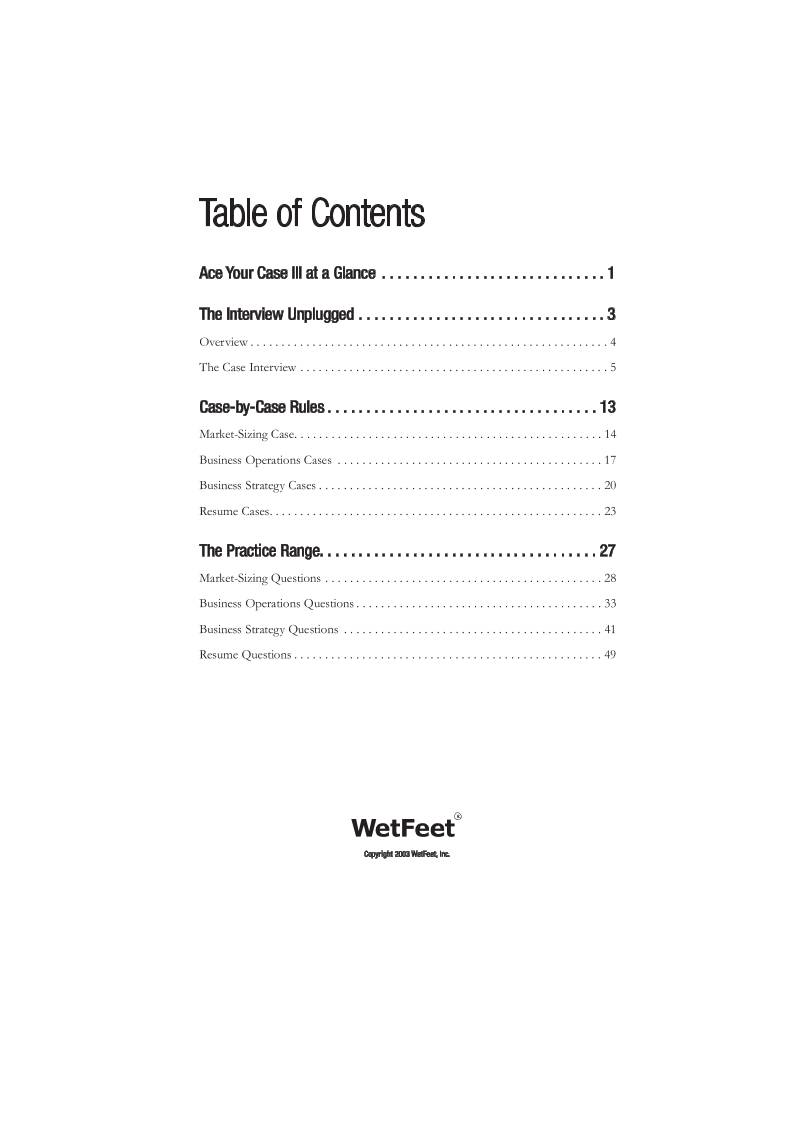


 设备数据采集
 工程招标采购
 搞笑表情
搞笑表情 微信头像
微信头像 CWMS冷库管理系统
 美女图片
美女图片 APP小游戏
 PPT模板
PPT模板 WMS仓库系统
 软件开发
软件开发