概要信息:
Property Methods and Calculations A-1
A-1
A Property Methods and
Calculations
A.1 Selecting Property Methods ....................................................................... 3
A.2 Property Methods ........................................................................................ 8
A.2.1 Equations of State ................................................................................... 8
A.2.2 Activity Models....................................................................................... 15
A.2.3 Activity Model Vapour Phase Options.................................................... 33
A.2.4 Semi-Empirical Methods........................................................................ 34
A.2.5 Vapour Pressure Property Packages..................................................... 35
A.2.6 Miscellaneous - Special Application Methods........................................ 38
A.3 Enthalpy and Entropy Departure Calculations ....................................... 41
A.3.1 Equations of State ................................................................................. 42
A.3.2 Activity Models....................................................................................... 44
A.3.3 Lee-Kesler Option.................................................................................. 45
A.4 Physical and Transport Properties .......................................................... 48
A.4.1 Liquid Density ........................................................................................ 48
A.4.2 Vapour Density ...................................................................................... 49
A.4.3 Viscosity ................................................................................................ 49
A.4.4 Liquid Phase Mixing Rules for Viscosity ................................................ 51
A.4.5 Thermal Conductivity............................................................................. 52
A.4.6 Surface Tension ..................................................................................... 54
A.4.7 Heat Capacity ........................................................................................ 54
A.5 Volumetric Flow Rate Calculations .......................................................... 55
A.5.1 Available Flow Rates ............................................................................. 55
A.5.2 Liquid and Vapour Density Basis ........................................................... 56
A.5.3 Formulation of Flow Rate Calculations .................................................. 58
A.5.4 Volumetric Flow Rates as Specifications ............................................... 59
A-2
A-2
A.6 Flash Calculations..................................................................................... 60
A.6.1 T-P Flash Calculation............................................................................. 61
A.6.2 Vapour Fraction Flash............................................................................ 61
A.6.3 Enthalpy Flash ....................................................................................... 63
A.6.4 Entropy Flash......................................................................................... 63
A.6.5 Handling of Water .................................................................................. 63
A.6.6 Solids..................................................................................................... 65
A.6.7 Stream Information ................................................................................ 66
A.7 References ................................................................................................. 67
Property Methods and Calculations A-3
A-3
Introduction
This appendix is organized such that the detailed calculations that
occur within the Simulation Basis Manager and within the Flowsheet
are explained in a logical manner.
• In the first section, an overview of property method selection is
presented. Various process systems and their recommended
property methods are listed.
• Detailed information is provided concerning each individual
property method available in HYSYS. This section is further
subdivided into equations of state, activity models, Chao-
Seader based semi-empirical methods, vapour pressure
models and miscellaneous methods.
• Following the detailed property method discussion is the
section concerning enthalpy and entropy departure
calculations. The enthalpy and entropy options available within
HYSYS are largely dependent upon your choice of a property
method.
• The physical and transport properties are covered in detail.
The methods used by HYSYS in calculating liquid density,
vapour density, viscosity, thermal conductivity and surface
tension are listed.
• HYSYS handles volume flow calculations in a unique way. To
highlight the methods involved in calculating volumes, a
separate section has been provided.
• The next section ties all of the previous information together.
Within HYSYS, the Flash calculation uses the equations of the
selected property method, as well as the physical and transport
property functions to determine all property values for
Flowsheet streams. Once a flash calculation has been
performed on an object, all of its thermodynamic, physical and
transport properties are defined. The flash calculation in
HYSYS does not require initial guesses or the specification of
flash type to assist in its convergence.
• A list of References is included at the end of the Appendix.
A.1 Selecting Property
Methods
The property packages available in HYSYS allow you to predict
properties of mixtures ranging from well defined light hydrocarbon
systems to complex oil mixtures and highly non-ideal (non-electrolyte)
chemical systems. HYSYS provides enhanced equations of state (PR
and PRSV) for rigorous treatment of hydrocarbon systems; semi-
empirical and vapour pressure models for the heavier hydrocarbon
systems; steam correlations for accurate steam property predictions;
A-4 Selecting Property Methods
A-4
and activity coefficient models for chemical systems. All of these
equations have their own inherent limitations and you are encouraged
to become more familiar with the application of each equation.
The following table lists some typical systems and recommended
correlations. However, when in doubt of the accuracy or application of
one of the property packages, contact Hyprotech to receive additional
validation material or our best estimate of its accuracy.
Type of System
Recommended Property
Method
TEG Dehydration PR
Sour Water PR, Sour PR
Cryogenic Gas Processing PR, PRSV
Air Separation PR, PRSV
Atm Crude Towers PR, PR Options, GS
Vacuum Towers PR, PR Options, GS (<10
mm Hg), Braun K10, Esso
K
Ethylene Towers Lee Kesler Plocker
High H2 Systems PR, ZJ or GS (see T/P
limits)
Reservoir Systems PR, PR Options
Steam Systems Steam Package, CS or GS
Hydrate Inhibition PR
Chemical systems Activity Models, PRSV
HF Alkylation PRSV, NRTL (Contact
Hyprotech)
TEG Dehydration with
Aromatics
PR (Contact Hyprotech)
Hydrocarbon systems
where H2O solubility in HC
is important
Kabadi Danner
Systems with select gases
and light hydrocarbons
MBWR
Property Methods and Calculations A-5
A-5
For oil, gas and petrochemical applications, the Peng-Robinson EOS
(PR) is generally the recommended property package. Hyprotech’s
enhancements to this equation of state enable it to be accurate for a
variety of systems over a wide range of conditions. It rigorously solves
any single, two-phase or three-phase system with a high degree of
efficiency and reliability, and is applicable over a wide range of
conditions, as shown in the following table.
The PR equation of state has been enhanced to yield accurate phase
equilibrium calculations for systems ranging from low temperature
cryogenic systems to high temperature, high pressure reservoir
systems. The same equation of state satisfactorily predicts component
distributions for heavy oil systems, aqueous glycol and CH3OH
systems, and acid gas/sour water systems, although specific sour water
models (Sour PR and Sour SRK) are available for more specialized
treatment. Our high recommendation for the PR equation of state is
largely due to the preferential attention that has been given to it by
Hyprotech. Although the Soave-Redlich-Kwong (SRK) equation will
also provide comparable results to the PR in many cases, it has been
found that its range of application is significantly limited and it is not as
reliable for non-ideal systems. For example, it should not be used for
systems with CH3OH or glycols.
As an alternate, the PRSV equation of state should also be considered. It
can handle the same systems as the PR equation with equivalent, or
better accuracy, plus it is more suitable for handling moderately non-
ideal systems.
The advantage of the PRSV equation is that not only does it have the
potential to more accurately predict the phase behaviour of
hydrocarbon systems, particularly for systems composed of dissimilar
components, but it can also be extended to handle non-ideal systems
with accuracies that rival traditional activity coefficient models. The
only compromise is increased computational time and the additional
interaction parameter that is required for the equation.
The PR and PRSV equations of state perform rigorous three-phase flash
calculations for aqueous systems containing H2O, CH3OH or glycols, as
well as systems containing other hydrocarbons or non-hydrocarbons in
the second liquid phase. For SRK, H2O is the only component that will
initiate an aqueous phase. The Chao-Seader (CS) and Grayson-Streed
Method Temp (°F) Temp (°C) Pressure (psia) Pressure (kPa)
PR > -456 > -271 < 15,000 < 100,000
SRK > -225 > -143 < 5,000 < 35,000
NOTE: The range of
applicability in many cases is
more indicative of the
availability of good data
rather than on the actual
limitations.
A-6 Selecting Property Methods
A-6
(GS) packages can also be used for three-phase flashes, but are
restricted to the use of pure H2O for the second liquid phase.
The PR can also be used for crude systems, which have traditionally
been modelled with dual model thermodynamic packages (an activity
model representing the liquid phase behaviour, and an equation of
state or the ideal gas law for the vapour phase properties). These earlier
models are suspect for systems with large amounts of light ends or
when approaching critical regions. Also, the dual model system leads to
internal inconsistencies. The proprietary enhancements to the PR and
SRK methods allow these EOSs to correctly represent vacuum
conditions and heavy components (a problem with traditional EOS
methods), as well as handle the light ends and high-pressure systems.
Activity Models, which handle highly non-ideal systems, are much
more empirical in nature when compared to the property predictions
in the hydrocarbon industry. Polar or non-ideal chemical systems have
traditionally been handled using dual model approaches. In this type of
approach, an equation of state is used for predicting the vapour
fugacity coefficients and an activity coefficient model is used for the
liquid phase. Since the experimental data for activity model parameters
are fitted for a specific range, these property methods cannot be used
as reliably for generalized application.
The CS and GS methods, though limited in scope, may be preferred in
some instances. For example, they are recommended for problems
containing mainly liquid or vapour H2O because they include special
correlations that accurately represent the steam tables. The Chao
Seader method can be used for light hydrocarbon mixtures, if desired.
The Grayson-Streed correlation is recommended for use with systems
having a high concentration of H2 because of the special treatment
given H2 in the development of the model. This correlation may also be
slightly more accurate in the simulation of vacuum towers.
The Vapour Pressure K models, Antoine, BraunK10 and EssoK models,
are designed to handle heavier hydrocarbon systems at lower
pressures. These equations have traditionally been applied for heavier
hydrocarbon fractionation systems and consequently provide a good
means of comparison against rigorous models. They should not be
considered for VLE predictions for systems operating at high pressures
or systems with significant quantities of light hydrocarbons.
Property Methods and Calculations A-7
A-7
The Property Package methods in HYSYS are divided into basic
categories, as shown in the following table. With each of the property
methods listed are the available methods of VLE and Enthalpy/Entropy
calculation.
Please refer to Section A.3 - Enthalpy and Entropy Departure
Calculations, for a description of Enthalpy and Entropy calculations.
Property Method VLE Calculation
Enthalpy/Entropy
Calculation
Equations of State
PR PR PR
PR LK ENTH PR Lee-Kesler
SRK SRK SRK
SRK LK ENTH SRK Lee-Kesler
Kabadi Danner Kabadi Danner SRK
Lee Kesler Plocker Lee Kesler Plocker Lee Kesler
PRSV PRSV PRSV
PRSV LK PRSV Lee-Kesler
Sour PR PR & API-Sour PR
SOUR SRK SRK & API-Sour SRK
Zudkevitch-Joffee Zudkevitch-Joffee Lee-Kesler
Activity Models
Liquid
Chien Null Chien Null Cavett
Extended and General
NRTL
NRTL Cavett
Margules Margules Cavett
NRTL NRTL Cavett
UNIQUAC UNIQUAC Cavett
van Laar van Laar Cavett
Wilson Wilson Cavett
Vapour
Ideal Gas Ideal Ideal Gas
RK RK RK
Virial Virial Virial
Peng Robinson Peng Robinson Peng Robinson
SRK SRK SRK
Semi-Empirical Models
Chao-Seader CS-RK Lee-Kesler
Grayson-Streed GS-RK Lee-Kesler
A-8 Property Methods
A-8
A.2 Property Methods
Details of each individual property method available in HYSYS will be
provided in this section, including equations of state, activity models,
Chao-Seader based empirical methods, vapour pressure models and
miscellaneous methods.
A.2.1 Equations of State
HYSYS currently offers the enhanced Peng-Robinson1 (PR), and Soave-
Redlich-Kwong2 (SRK) equations of state. In addition, HYSYS offers
several methods which are modifications of these property packages,
including PRSV, Zudkevitch Joffee (ZJ) and Kabadi Danner (KD). Lee
Kesler Plocker3 (LKP) is an adaptation of the Lee Kesler equation for
mixtures, which itself was modified from the BWR equation. Of these,
the Peng-Robinson equation of state supports the widest range of
operating conditions and the greatest variety of systems. The Peng-
Robinson and Soave-Redlich-Kwong equations of state (EOS) generate
all required equilibrium and thermodynamic properties directly.
Although the forms of these EOS methods are common with other
commercial simulators, they have been significantly enhanced by
Hyprotech to extend their range of applicability.
The Peng-Robinson property package options are PR, Sour PR, and
PRSV. Soave-Redlich-Kwong equation of state options are the SRK,
Sour SRK, KD and ZJ.
Vapour Pressure Models
Mod Antoine Mod Antoine-Ideal Gas Lee-Kesler
Braun K10 Braun K10-Ideal Gas Lee-Kesler
Esso K Esso-Ideal Gas Lee-Kesler
Miscellaneous - Special Application Methods
Amines Mod Kent Eisenberg
(L), PR (V)
Curve Fit
Steam Packages
ASME Steam ASME Steam Tables ASME Steam Tables
NBS Steam NBS/NRC Steam
Tables
NBS/NRC Steam
Tables
MBWR Modified BWR Modified BWR
Property Method VLE Calculation
Enthalpy/Entropy
Calculation
It is important to note that the
properties predicted by HYSYS’
PR and SRK equations of state
will not necessarily agree with
those predicted by the PR and
SRK of other commercial
simulators.
Property Methods and Calculations A-9
A-9
PR and SRK
The PR and SRK packages contain enhanced binary interaction
parameters for all library hydrocarbon-hydrocarbon pairs (a
combination of fitted and generated interaction parameters), as well as
for most hydrocarbon-nonhydrocarbon binaries.
For non-library or hydrocarbon pseudo components, HC-HC
interaction parameters will be generated automatically by HYSYS for
improved VLE property predictions.
The PR equation of state applies a functionality to some specific
component-component interaction parameters. Key components
receiving special treatment include He, H2, N2, CO2, H2S, H2O, CH3OH,
EG and TEG. For further information on application of equations of
state for specific components, please contact Hyprotech.
The following page provides a comparison of the formulations used in
HYSYS for the PR and SRK equations of state.
Note: The PR or SRK EOS
should not be used for non-
ideal chemicals such as
alcohols, acids or other
components. They are more
accurately handled by the
Activity Models (highly non-
ideal) or the PRSV EOS
(moderately non-ideal).
Soave Redlich Kwong Peng Robinson
where
b=
bi=
a=
ai=
aci=
αi
0.5 =
P
RT
V b–
------------
a
V V b+( )
---------------------–=
Z
3
Z
2
– A B– B
2
–( )Z AB–+ 0=
P
RT
V b–
------------
a
V V b+( ) b V b–( )+
------------------------------------------------–=
Z
3
1 B–( )Z
2
A 2B– 3B
2
–( )Z AB B
2
– B
3
–( )–+ + 0=
xibi
i 1=
N
∑ xibi
i 1=
N
∑
0.08664
RTci
Pci
---------- 0.077796
RTci
Pci
----------
xixj aiaj( )0.5
1 kij–( )
j 1=
N
∑
i 1=
N
∑ xixj aiaj( )0.5
1 kij–( )
j 1=
N
∑
i 1=
N
∑
aciαi aciαi
0.42748
RTci( )2
Pci
------------------ 0.457235
RTci( )2
Pci
------------------
1 mi 1 Tri
0.5
–( )+ 1 mi 1 Tri
0.5
–( )+
A-10 Property Methods
A-10
Kabadi Danner
This KD4 model is a modification of the original SRK equation of State,
enhanced to improve the vapour-liquid-liquid equilibria calculations
for H2O-hydrocarbon systems, particularly in the dilute regions.
The model is an improvement over previous attempts which were
limited in the region of validity. The modification is based on an
asymmetric mixing rule, whereby the interaction in the water phase
(with its strong H2 bonding) is calculated based on both the interaction
between the hydrocarbons and the H2O, and on the perturbation by
hydrocarbon on the H2O-H2O interaction (due to its structure).
Lee Kesler Plöcker Equation
The Lee Kesler Plöcker equation is an accurate general method for non-
polar substances and mixtures. Plöcker et al.3 applied the Lee Kesler
equation to mixtures, which itself was modified from the BWR
equation.
mi=
When an acentric factor > 0.49 is present HYSYS uses
following corrected form:
A=
B=
Soave Redlich Kwong Peng Robinson
0.48 1.574ωi 0.176ωi
2
–+ 0.37464 1.54226ωi 0.26992ωi
2
–+
0.379642 1.48503 0.164423 1.016666ωi–( )ωi–( )ωi+
aP
RT( )2
--------------
aP
RT( )2
--------------
bP
RT
------
bP
RT
------
The Lee Kesler Plöcker
equation does not use the
COSTALD correlation in
computing liquid density. This
may result in differences when
comparing results between
equation of states.
(A.1)z z
o( ) ω
ω r( )--------- z
r( )
z
o( )
–( )+=
Property Methods and Calculations A-11
A-11
The compressibility factors are determined as follows:
where:
Mixing rules for pseudocritical properties are as follows:
where:
(A.2)
(A.3)
z
pv
RT
------
prvr
Tr
--------- z Tr vr Ak, ,( )= = =
z 1 B
vr
----
C
vr
2
----
D
vr
5
----
C4
Tr
3
vr
2
---------- β γ
vr
2
----+
γ–
vr
2
-----exp+ + + +=
vr
pcv
RTc
--------=
C c1
c2
Tr
----–
c3
Tr
2
-----+=
ω o( )
0=
B b1
b2
Tr
----–
b3
Tr
2
-----–
b4
Tr
3
-----–=
D d1
d2
Tr
----–=
ω r( )
0.3978=
(A.4)Tcm
1
Vcm
η---------
xixjvcij
j
∑
i
∑=
Tcij
Tci
Tcj
( )1 2⁄
= Tcii
Tci
= Tcjj
Tcj
=
vcm
xixjvcij
j
∑
i
∑= vcij
1
8
-- vci
1 3⁄
vcj
1 3⁄
+( )
3
=
vci
zci
RTci
pci
----------= zci
0.2905 0.085ωi–=
pcm
zcm
RTcm
vcm
-----------= zcm
0.2905 0.085ωm–=
ωm xiωi
i
∑=
A-12 Property Methods
A-12
Peng-Robinson Stryjek-Vera
The Peng-Robinson Stryjek-Vera (PRSV) equation of state is a two-fold
modification of the PR equation of state that extends the application of
the original PR method for moderately non-ideal systems. It has been
shown to match vapour pressures curves of pure components and
mixtures more accurately than the PR method, especially at low vapour
pressures.
It has been successfully extended to handle non-ideal systems giving
results as good as those obtained using excess Gibbs energy functions
like the Wilson, NRTL or UNIQUAC equations.
One of the proposed modifications to the PR equation of state by
Stryjek and Vera was an expanded alpha, "α", term that became a
function of acentricity and an empirical parameter, κi, used for fitting
pure component vapour pressures.
where: κ1i = characteristic pure component parameter
ωi = acentric factor
The adjustable κ1i term allows for a much closer fit of the pure
component vapour pressure curves. This term has been regressed
against the pure component vapour pressure for all components in
HYSYS’ library.
For pseudo components that have been generated to represent oil
fractions, HYSYS will automatically regress the κ1i term for each pseudo
component against the Lee-Kesler vapour pressure curves. For
individual user-added hypothetical components, κ1i terms can either
be entered or they will automatically be regressed against the Lee-
Kesler, Gomez-Thodos or Reidel correlations.
The second modification consists of a new set of mixing rules for
mixtures. Conventional mixing rules are used for the volume and
energy parameters in mixtures, but the mixing rule for the cross term,
aij, is modified to adopt a composition dependent form. Although two
different mixing rules were proposed in the original paper, HYSYS has
(A.5)
αi 1 κi 1 Tr
0.5
–( )+[ ]
2
=
κi κ0i κ+
1i
1 Tri
0.5
+( ) 0.7 Tri
0.5
–( )=
κ0i 0.378893 1.4897153ωi 0.17131848ωi
2
– 0.0196554ωi
3
+ +=
Note that if kij =kji , the mixing
rules reduce to the standard
PR equation of state.
Property Methods and Calculations A-13
A-13
incorporated only the Margules expression for the cross term.
where:
Although only a limited number of binary pairs have been regressed for
this equation, our limited experience suggests that the PRSV can be
used to model moderately non-ideal systems such as H2O-alcohol
systems, some hydrocarbon-alcohol systems. You can also model
hydrocarbon systems with improved accuracy. Also, due to PRSV’s
better vapour pressure predictions, improved heat of vaporization
predictions should be expected.
Sour Water Options
The Sour option is available for both the PR and SRK equations of state.
The Sour PR option combines the PR equation of state and Wilson’s
API-Sour Model for handling sour water systems, while Sour SRK
utilizes the SRK equation of state with the Wilson model.
The Sour options use the appropriate equation of state for calculating
the fugacities of the vapour and liquid hydrocarbon phases as well as
the enthalpy for all three phases. The K-values for the aqueous phase
are calculated using Wilson’s API-Sour method. This option uses
Wilson’s model to account for the ionization of the H2S, CO2 and NH3
in the aqueous water phase. The aqueous model employs a
modification of Van Krevelen’s original model with many of the key
limitations removed. More details of the model are available in the
original API publication 955 titled "A New Correlation of NH3, CO2, and
H2S Volatility Data from Aqueous Sour Water Systems".
The original model is applicable for temperatures between 20°C (68°F)
and 140°C (285°F), and pressures up to 50 psi. Use of either the PR or
SRK equation of state to correct vapour phase non idealities extends
this range, but due to lack of experimental data, exact ranges cannot be
specified. The acceptable pressure ranges for HYSYS' model vary
depending upon the concentration of the acid gases and H2O. The
method performs well when the H2O partial pressure is below 100 psi.
This option may be applied to sour water strippers, hydrotreater loops,
crude columns or any process containing hydrocarbons, acid gases and
H2O. If the aqueous phase is not present, the method produces
(A.6)aij aiiajj( )0.5
1.0 xikij– xjkji–( )=
kij kji≠
Note that different values can
be entered for each of the
binary interaction
parameters.
It is important to note that
because the method performs
an ion balance for each K-
value calculation, the flash
calculation is much slower
than the standard EOS.
A-14 Property Methods
A-14
identical results to the EOS, (PR or SRK depending on which option you
have chosen).
Zudkevitch Joffee
The Zudkevitch Joffee model is a modification of the Redlich Kwong
equation of state. This model has been enhanced for better prediction
of vapour liquid equilibria for hydrocarbon systems, and systems
containing H2. The major advantage of this model over the previous
version of the RK equation is the improved capability of predicting pure
component equilibria, and the simplification of the method for
determining the required coefficients for the equation.
Enthalpy calculations for this model will be performed using the Lee
Kesler model.
EOS Enthalpy Calculation
With any the Equation of State options except ZJ and LKP, you can
specify whether the Enthalpy will be calculated by either the Equation
of State method or the Lee Kesler method. The ZJ and LKP must use the
Lee Kesler method in Enthalpy calculations. Selection of an enthalpy
method is done via radio buttons in the Enthalpy Method group.
Selecting the Lee Kesler Enthalpy option results in a combined
property package employing the appropriate equation of state (either
PR or SRK) for vapour-liquid equilibrium calculations and the Lee-
Kesler equation for calculation of enthalpies and entropies (for
differences between EOS and LK methods, refer to the Section A.3 -
Enthalpy and Entropy Departure Calculations).
The LK method yields comparable results to HYSYS’ standard
equations of state and has identical ranges of applicability. As such, this
option with PR has a slightly greater range of applicability than with
SRK.
Figure A.1
The Lee-Kesler enthalpies may
be slightly more accurate for
heavy hydrocarbon systems,
but require more computer
resources because a separate
model must be solved.
Property Methods and Calculations A-15
A-15
Zero Kij Option
HYSYS automatically generates hydrocarbon-hydrocarbon interaction
parameters when values are unknown if the Estimate HC-HC/Set Non
HC-HC to 0.0 radio button is selected. The Set All to 0.0 radio button
turns off the automatic calculation of any estimated interaction
coefficients between hydrocarbons. All binary interaction parameters
that are obtained from the pure component library will remain.
The Set All to 0.0 option may prove useful when trying to match results
from other commercial simulators which may not supply interaction
parameters for higher molecular weight hydrocarbons.
A.2.2 Activity Models
Although equation of state models have proven to be very reliable in
predicting properties of most hydrocarbon based fluids over a large
range of operating conditions, their application has been limited to
primarily non-polar or slightly polar components. Polar or non-ideal
chemical systems have traditionally been handled using dual model
approaches. In this approach, an equation of state is used for
predicting the vapour fugacity coefficients (normally ideal gas
assumption or the Redlich Kwong, Peng-Robinson or SRK equations of
state, although a Virial equation of state is available for specific
applications) and an activity coefficient model is used for the liquid
phase. Although there is considerable research being conducted to
extend equation of state applications into the chemical arena (e.g., the
PRSV equation), the state of the art of property predictions for
chemical systems is still governed mainly by Activity Models.
Activity Models are much more empirical in nature when compared to
the property predictions (equations of state) typically used in the
hydrocarbon industry. For example, they cannot be used as reliably as
the equations of state for generalized application or extrapolating into
untested operating conditions. Their tuning parameters should be
fitted against a representative sample of experimental data and their
application should be limited to moderate pressures. Consequently,
more caution should be exercised when selecting these models for your
simulation.
Figure A.2
This option is set on the
Binary Coeffs tab of the Fluid
Package property view.
A-16 Property Methods
A-16
The phase separation or equilibrium ratio Ki for component i, defined
in terms of the vapour phase fugacity coefficient and the liquid phase
activity coefficient is calculated from the following expression:
where: γi = liquid phase activity coefficient of component i
fi° = standard state fugacity of component i
P = system pressure
φi = vapour phase fugacity coefficient of component i
Although for ideal solutions the activity coefficient is unity, for most
chemical (non-ideal) systems this approximation is incorrect.
Dissimilar chemicals normally exhibit not only large deviations from an
ideal solution, but the deviation is also found to be a strong function of
the composition. To account for this non-ideality, activity models were
developed to predict the activity coefficients of the components in the
liquid phase. The derived correlations were based on the excess Gibbs
energy function, which is defined as the observed Gibbs energy of a
mixture in excess of what it would be if the solution behaved ideally, at
the same temperature and pressure.
For a multi-component mixture consisting of ni moles of component i,
the total excess Gibbs free energy is represented by the following
expression:
where: γi is the activity coefficient for component i
Activity Models produce the
best results when they are
applied in the operating
region for which the
interaction parameters were
regressed.
(A.7)
Ki
yi
xi
---=
γi fi°
Pφi
---------=
(A.8)G
E
RT ni γiln( )∑=
Property Methods and Calculations A-17
A-17
The individual activity coefficients for any system can be obtained from
a derived expression for excess Gibbs energy function coupled with the
Gibbs-Duhem equation. The early models (Margules, van Laar) provide
an empirical representation of the excess function that limits their
application. The newer models such as Wilson, NRTL and UNIQUAC
utilize the local composition concept and provide an improvement in
their general application and reliability. All of these models involve the
concept of binary interaction parameters and require that they be fitted
to experimental data.
Since the Margules and van Laar models are less complex than the
Wilson, NRTL and UNIQUAC models, they require less CPU time for
solving flash calculations. However, these are older and more
empirically based models and generally give poorer results for strongly
non-ideal mixtures such as alcohol-hydrocarbon systems, particularly
for dilute regions. The Chien-Null model provides the ability to
incorporate the different activity models within a consistent
thermodynamic framework. Each binary can be represented by the
model which best predicts its behaviour. The following table briefly
summarizes recommended models for different applications (for a
more detailed review, refer to the texts "The Properties of Gases &
Liquids"8 and "Molecular Thermodynamics of Fluid Phase Equilibria" 9).
A = Applicable; N/A = Not Applicable;? = Questionable; G = Good;
LA = Limited Application
Vapour phase non-ideality can be taken into account for each activity
model by selecting the Redlich-Kwong, Peng-Robinson or SRK
equations of state as the vapour phase model. When one of the
equations of state is used for the vapour phase, the standard form of the
Poynting correction factor is always used for liquid phase correction. If
dimerization will occur in the vapour phase, the Virial equation of state
should be selected as the vapour phase model.
APPLICATION Margules van Laar Wilson NRTL UNIQUAC
Binary Systems A A A A A
Multicomponent Systems LA LA A A A
Azeotropic Systems A A A A A
Liquid-Liquid Equilibria A A N/A A A
Dilute Systems ? ? A A A
Self-Associating Systems ? ? A A A
Polymers N/A N/A N/A N/A A
Extrapolation ? ? G G G
A-18 Property Methods
A-18
The binary parameters required for the activity models have been
regressed based on the VLE data collected from DECHEMA, Chemistry
Data Series3. There are over 16,000 fitted binary pairs in the HYSYS
library. The structures of all library components applicable for the
UNIFAC VLE estimation are also in the library. The Poynting correction
for the liquid phase is ignored if ideal solution behaviour is assumed.
If you are using the built-in binary parameters, the ideal gas model
should be used. All activity models, with the exception of the Wilson
equation, can automatically calculate three phases given the correct set
of energy parameters. The vapour pressures used in the calculation of
the standard state fugacity are based on the pure component
coefficients in HYSYS’ library using the modified form of the Antoine
equation.
When your selected components exhibit dimerization in the vapour
phase, the Virial option should be selected as the vapour phase model.
HYSYS contains fitted parameters for many carboxylic acids, and can
estimate values from pure component properties if the necessary
parameters are not available. Please refer to Section A.2.3 - Activity
Model Vapour Phase Options for a detailed description of the Virial
option.
General Remarks
The dual model approach for solving chemical systems with activity
models cannot be used with the same degree of flexibility and reliability
that the equations of state can be used for hydrocarbon systems.
However, some checks can be devised to ensure a good confidence
level in property predictions:
• Check the property package selected for applicability for the
system considered and see how well it matches the pure
component vapour pressures. Although the predicted pure
component vapour pressures should normally be acceptable,
the parameters have been fitted over a large temperature
range. Improved accuracies can be attained by regressing the
parameters over the desired temperature range.
• The automatic UNIFAC generation of energy parameters in
HYSYS is a very useful tool and is available for all activity
models. However, it must be used with caution. The standard
fitted values in HYSYS will likely produce a better fit for the
binary system than the parameters generated by UNIFAC. As
a general rule, use the UNIFAC generated parameters only as
a last resort.
Please note that all of the
binary parameters in HYSYS’
library have been regressed
using an ideal gas model for
the vapour phase.
Note that HYSYS’ internally
stored binary parameters have
NOT been regressed against
three phase equilibrium data.
Property Methods and Calculations A-19
A-19
• Always use experimental data to regress the energy
parameters when possible. The energy parameters in HYSYS
have been regressed from experimental data, however,
improved fits are still possible by fitting the parameters for the
narrow operating ranges anticipated. The regressed
parameters are based on data taken at atmospheric pressures.
Exercise caution when extrapolating to higher or lower
pressure (vacuum) applications.
• Check the accuracy of the model for azeotropic systems.
Additional fitting may be required to match the azeotrope with
acceptable accuracy. Check not only for the temperature, but
for the composition as well.
• If three phase behaviour is suspected, additional fitting of the
parameters may be required to reliably reproduce the VLLE
equilibrium conditions.
• An improvement in matching equilibrium data can be attained
by including a temperature dependency of the energy
parameters. However, depending on the validity or range of fit,
this can lead to misleading results when extrapolating beyond
the fitted temperature range.
By default, HYSYS regresses ONLY the aij parameters while the bij
parameters are set to zero, i.e., the aij term is assumed to be
temperature independent. A temperature dependency can be
incorporated by supplying a value for the bij term. The matrix for the bij
values are displayed by choosing the Bij radio button to switch matrices
(note the zero or blank entries for all the binary pairs).
When using the NRTL, General NRTL or Extended NRTL equations,
more than two matrices are available. In general, the second matrix is
the Bij matrix, and the third matrix is the αij parameter where αij = αji.
Any component pair with an aij value will have an associated α value.
Immiscible
This option is included for modelling the solubility of solutes in two
coexisting liquid phases that are relatively immiscible with one
another, such as a H2O-hydrocarbon system. In this system, the
hydrocarbon components (solutes) are relatively insoluble in the water
phase (solvent) whereas the solubility of the H2O in the hydrocarbon
phase can become more significant. The limited mutual solubility
behaviour can be taken into account when using any activity model
with the exception of Wilson.
This feature can be implemented for any single component pair by
using the Immiscible radio button. Component i will be insoluble with
component j, based on the highlighted cell location. Alternatively, you
Please note that the activities
for the unknown binaries are
generated at pre-selected
compositions and the
supplied UNIFAC reference
temperature.
The Wilson equation does not
support LLE equilibrium.
A-20 Property Methods
A-20
can have all j components treated as insoluble with component i.
HYSYS will replace the standard binary parameters with those
regressed specifically for matching the solubilities of the solutes in both
phases. Note that both the aij and bij parameters are regressed with
this option. These parameters were regressed from the mutual
solubility data of n-C5, n-C6, n-C7, and n-C8 in H2O over a temperature
range of 313 K to 473 K.
The solubility of H2O in the hydrocarbon phase and the solubility of the
hydrocarbons in the water phase will be calculated based on the fitted
binary parameters regressed from the solubility data referenced above.
Chien-Null
The Chien Null model provides a consistent framework for applying
existing activity models on a binary by binary basis. In this manner, the
Chien Null model allows you to select the best activity model for each
pair in the case.
The Chien Null model allows 3 sets of coefficients for each component
pair, accessible via the A, B and C coefficient matrices. Please refer to
the following sections for an explanation of the terms for each of the
models.
Chien Null Form
The Chien-Null generalized multi-component equation can be
expressed as:
Each of the parameters in this equation are defined specifically for each
of the applicable activity methods.
(A.9)
2 Γi
L
ln
Aj i, xj
j
∑
Aj i, xj
j
∑
Aj i, xj
j
∑
Aj i, xj
j
∑
------------------------------------------------------- xk
Aj k, xj
j
∑
Rj k, xj
j
∑
Sj k, xj
j
∑
Vj i, xj
j
∑
------------------------------------------------------------ ⋅
k
∑+=
Ai k,
Aj k, xj
j
∑
----------------------
Ri k,
Rj k, xj
j
∑
----------------------
Si k,
Sj k, xj
j
∑
---------------------–
Vi k,
Vj k, xj
j
∑
----------------------–+
Property Methods and Calculations A-21
A-21
Description of Terms
The Regular Solution equation uses the following:
δi is the solubility parameter in (cal/cm3)½ and vi
L is the saturated
liquid volume in cm3/mol calculated from:
The van Laar, Margules and Scatchard Hamer use the following:
For the van Laar, Margules and Scatchard Hamer equations:
where: T must be in K.
Note that this equation is of a different form than the original van Laar
and Margules equations in HYSYS, which utilized an a + bT
relationship. However, since HYSYS only contains aij values, the
difference should not cause problems.
(A.10)Ai j,
vi
L δi δj–( )2
RT
---------------------------= Ri j,
Ai j,
Aj i,
--------= Vi j, Ri j,= Si j, Ri j,=
(A.11)vi
L
vω i, 5.7 3Tr i,+( )=
Model Ai,j Ri,j Si,j Vi,j
van Laar
Margules
Scatchard Hamer
γi j,
∞
ln Ai j,
Aj i,
-------- Ri j, Ri j,
2 γi j,
∞
ln
1
γi j,
∞
ln
γj i,
∞
ln
----------------
+
-------------------------------
Ai j,
Aj i,
-------- 1 1
2 γi j,
∞
ln
1
γi j,
∞
ln
γj i,
∞
ln
----------------
+
------------------------------- Ai j,
Aj i,
--------
vi
∞
vj
∞-----
vi
∞
vj
∞-----
(A.12)γi j,
∞
ln ai j,
bi j,
T
------- cijT+ +=
If you have regressed
parameters using HYPROP for
any of the Activity Models
supported under the Chien
Null, they will not be read in.
A-22 Property Methods
A-22
The NRTL form for the Chien Null uses:
The expression for the τ term under the Chien Null incorporates the R
term of HYSYS’ NRTL into the values for aij and bij. As such, the values
initialized for NRTL under Chien Null will not be the same as for the
regular NRTL. When you select NRTL for a binary pair, aij will be empty
(essentially equivalent to the regular NRTL bij term), bij will be
initialized and cij will be the α term for the original NRTL, and will be
assumed to be symmetric.
The General Chien Null equation is:
In all cases:
With the exception of the Regular Solution option, all models can
utilize 6 constants, ai,j, aj,i, bi,j, bj,i, ci,j and cj,i for each component pair.
For all models, if the constants are unknown they can be estimated
internally from the UNIFAC VLE or LLE methods, the Insoluble option,
or using Henry’s Law coefficients for appropriate components. For the
general Chien Null model, the cij’s are assumed to be 1.
Extended and General NRTL
The Extended and General NRTL models are variations of the NRTL
model. More binary interaction parameters are used in defining the
component activity coefficients. You may apply either model to
systems:
• with a wide boiling point range between components.
• where you require simultaneous solution of VLE and LLE, and
there exists a wide boiling point range or concentration range
between components.
(A.13)Ai j, 2τi j, Vi j,= Ri j, 1= Vi j, ci j,– τi j,( )exp= Si j, 1= τi j, ai j,
bi j,
T K( )
-----------+=
(A.14)
(A.15)
Ai j, ai j,
bi j,
T K( )
-----------+= Ri j,
Ai j,
Aj i,
--------= Vi j, Ci j,= Si j, Ci j,=
Ai i, 0= Ri i, Si i, Vi i, 1= = =
Property Methods and Calculations A-23
A-23
With the General NRTL model, you can specify the format for the
Equations of τij and aij to be any of the following:
Depending on which form of the equations that you have chosen, you
will be able to specify values for the different component energy
parameters. The General NRTL model provides radio buttons on the
Binary Coeffs tab which access the matrices for the Aij, Bij, Cij, Fij, Gij,
Alp1ij and Alp2ij energy parameters.
τij and αij Options
The equations options can be
viewed in the Display Form
drop down list on the Binary
Coeffs tab of the Fluid
Package property view.
τij Aij
Bij
T
------
Cij
T
2
------ FijT Gij T( )ln+ + + +=
αij Alp1ij Alp2ijT+=
τij
Aij
Bij
T
------+
RT
-------------------=
αij Alp1ij=
τij Aij
Bij
T
------ FijT Gij T( )ln+ + +=
αij Alp1ij Alp2ijT+=
τij Aij Bijt
Cij
T
------+ +=
αij Alp1ij Alp2ijT+=
where: T is in K and t is °C
τij Aij
Bij
T
------+=
αij Alp1ij=
A-24 Property Methods
A-24
The Extended NRTL model allows you to input values for the Aij, Bij, Cij,
Alp1ij and Alp2ij energy parameters by selecting the appropriate radio
button. You do not have a choice of equation format for τij and αij. The
following is used:
where: T is in K
t is in °C
Margules
The Margules equation was the first Gibbs excess energy representation
developed. The equation does not have any theoretical basis, but is
useful for quick estimates and data interpolation. HYSYS has an
extended multicomponent Margules equation with up to four
adjustable parameters per binary.
The four adjustable parameters for the Margules equation in HYSYS are
the aij and aji (temperature independent) and the bij and bji terms
(temperature dependent). The equation will use parameter values
stored in HYSYS or any user supplied value for further fitting the
equation to a given set of data.
The Margules activity coefficient model is represented by the following
equation:
where: γi = activity coefficient of component i
xi = mole fraction of component i
(A.16)
τij Aij Bijt
Cij
T
------+ +
=
αij Alp1ij Alp2ij+=
The equation should not be
used for extrapolation beyond
the range over which the
energy parameters have been
fitted.
(A.17)γiln 1.0 xi–[ ]2
Ai 2xi Bi Ai–( )+[ ]=
Ai xj
aij bijT+( )
1.0 xi–( )
--------------------------
j 1=
n
∑=
Bi xj
aji bjiT+( )
1.0 xi–( )
--------------------------
j 1=
n
∑=
Property Methods and Calculations A-25
A-25
T = temperature (K)
n = total number of components
aij = non-temperature dependent energy parameter between
components i and j
bij = temperature dependent energy parameter between
components i and j [1/K]
aji = non-temperature dependent energy parameter between
components j and i
bji = temperature dependent energy parameter between
components j and i [1/K]
NRTL
The NRTL (Non-Random-Two-Liquid) equation, proposed by Renon
and Prausnitz in 1968, is an extension of the original Wilson equation. It
uses statistical mechanics and the liquid cell theory to represent the
liquid structure. These concepts, combined with Wilson’s local
composition model, produce an equation capable of representing VLE,
LLE and VLLE phase behaviour. Like the Wilson equation, the NRTL is
thermodynamically consistent and can be applied to ternary and
higher order systems using parameters regressed from binary
equilibrium data. It has an accuracy comparable to the Wilson
equation for VLE systems.
The NRTL equation in HYSYS contains five adjustable parameters
(temperature dependent and independent) for fitting per binary pair.
The NRTL combines the advantages of the Wilson and van Laar
equations, and, like the van Laar equation, it is not extremely CPU
intensive and can represent LLE quite well. It is important to note that
because of the mathematical structure of the NRTL equation, it can
produce erroneous multiple miscibility gaps.
Unlike the van Laar equation,
NRTL can be used for dilute
systems and hydrocarbon-
alcohol mixtures, although it
may not be as good for
alcohol-hydrocarbon systems
as the Wilson equation.
A-26 Property Methods
A-26
The NRTL equation in HYSYS has the following form:
where: γi = activity coefficient of component i
xi = mole fraction of component i
T = temperature (K)
n = total number of components
aij = non-temperature dependent energy parameter between
components i and j (cal/gmol)
bij = temperature dependent energy parameter between
components i and j (cal/gmol-K)
αij = NRTL non-randomness constant for binary interaction
note that αij = αji for all binaries
The five adjustable parameters for the NRTL equation in HYSYS are the
aij, aji, bij, bji, and αij terms. The equation will use parameter values
stored in HYSYS or any user supplied value for further fitting the
equation to a given set of data.
UNIQUAC
The UNIQUAC (UNIversal QUAsi Chemical) equation proposed by
Abrams and Prausnitz in 1975 uses statistical mechanics and the quasi-
chemical theory of Guggenheim to represent the liquid structure. The
equation is capable of representing LLE, VLE and VLLE with accuracy
comparable to the NRTL equation, but without the need for a non-
randomness factor. The UNIQUAC equation is significantly more
(A.18)γiln
τjixjGji
j 1=
n
∑
xkGki
k 1=
n
∑
---------------------------
xjGij
xkGkj
k 1=
n
∑
----------------------- τij
τmjxmGmj
m 1=
n
∑
xkGkj
k 1=
n
∑
-----------------------------------–
j 1=
n
∑+=
Gij τijαij–[ ]exp=
τij
aij bijT+
RT
---------------------=
Property Methods and Calculations A-27
A-27
detailed and sophisticated than any of the other activity models. Its
main advantage is that a good representation of both VLE and LLE can
be obtained for a large range of non-electrolyte mixtures using only two
adjustable parameters per binary. The fitted parameters usually exhibit
a smaller temperature dependence which makes them more valid for
extrapolation purposes.
The UNIQUAC equation utilizes the concept of local composition as
proposed by Wilson. Since the primary concentration variable is a
surface fraction as opposed to a mole fraction, it is applicable to
systems containing molecules of very different sizes and shape, such as
polymer solutions. The UNIQUAC equation can be applied to a wide
range of mixtures containing H2O, alcohols, nitriles, amines, esters,
ketones, aldehydes, halogenated hydrocarbons and hydrocarbons.
HYSYS contains the following four-parameter extended form of the
UNIQUAC equation. The four adjustable parameters for the UNIQUAC
equation in HYSYS are the aij and aji terms (temperature independent),
and the bij and bji terms (temperature dependent). The equation will
use parameter values stored in HYSYS or any user supplied value for
further fitting the equation to a given set of data.
where: γi = activity coefficient of component i
xi = mole fraction of component i
T = temperature (K)
n = total number of components
(A.19)γiln
Φi
xi
-----
ln 0.5Zqi
θi
Φi
-----
Li
θi
Φi
-----
Ljxj qi 1.0 θjτji
j 1=
n
∑ln–
qi
θjτij
θkτkj
k 1=
n
∑
----------------------
j 1=
n
∑–+
j 1=
n
∑–+ln+=
A-28 Property Methods
A-28
Lj = 0.5Z(rj-qj)-rj+1
Z = 10.0 co-ordination number
aij = non-temperature dependent energy parameter between
components i and j (cal/gmol)
bij = temperature dependent energy parameter between
components i and j (cal/gmol-K)
qi = van der Waals area parameter - Awi /(2.5e9)
Aw = van der Waals area
ri = van der Waals volume parameter - Vwi /(15.17)
Vw = van der Waals volume
van Laar
The van Laar equation was the first Gibbs excess energy representation
with physical significance. The van Laar equation in HYSYS is a
modified form of that described in "Phase Equilibrium in Process
Design" by H.R. Null. This equation fits many systems quite well,
particularly for LLE component distributions. It can be used for
systems that exhibit positive or negative deviations from Raoult’s Law,
however, it cannot predict maxima or minima in the activity coefficient.
Therefore, it generally performs poorly for systems with halogenated
hydrocarbons and alcohols. Due to the empirical nature of the
equation, caution should be exercised in analyzing multi-component
systems. It also has a tendency to predict two liquid phases when they
do not exist.
The van Laar equation has some advantages over the other activity
models in that it requires less CPU time and can represent limited
miscibility as well as three phase equilibrium. HYSYS uses the following
extended, multi-component form of the van Laar equation.
θi
qixi
qjxj∑---------------=
τij
aij bijT+
RT
---------------------–exp=
The van Laar equation also
performs poorly for dilute
systems and CANNOT
represent many common
systems, such as alcohol-
hydrocarbon mixtures, with
acceptable accuracy.
(A.20)γiln Ai 1.0 zi–[ ]2
1.0 Eizi+( )=
Property Methods and Calculations A-29
A-29
where: γi = activity coefficient of component i
xi = mole fraction of component i
T = temperature (K)
n = total number of components
aij = non-temperature dependent energy parameter between
components i and j
bij = temperature dependent energy parameter between
components i and j [1/K]
aji = non-temperature dependent energy parameter between
components j and i
bji = temperature dependent energy parameter between
components j and i [1/K]
The four adjustable parameters for the van Laar equation in HYSYS are
the aij, aji, bij, and bji terms. The equation will use parameter values
stored in HYSYS or any user supplied value for further fitting the
equation to a given set of data.
Wilson
The Wilson equation, proposed by Grant M. Wilson in 1964, was the
first activity coefficient equation that used the local composition model
to derive the Gibbs Excess energy expression. It offers a
thermodynamically consistent approach to predicting multi-
component behaviour from regressed binary equilibrium data. Our
experience also shows that the Wilson equation can be extrapolated
with reasonable confidence to other operating regions with the same
set of regressed energy parameters.
Ai xj
aij bijT+( )
1.0 xi–( )
--------------------------
j 1=
n
∑=
Bi xj
aji bjiT+( )
1.0 xi–( )
--------------------------
j 1=
n
∑=
Ei 4.0 if Ai Bi < 0.0, otherwise 0.0–=
zi
Aixi
Aixi Bi 1.0 xi–( )+[ ]
------------------------------------------------=
The Wilson equation CANNOT
be used for problems involving
liquid-liquid equilibrium.
A-30 Property Methods
A-30
Although the Wilson equation is more complex and requires more CPU
time than either the van Laar or Margules equations, it can represent
almost all non-ideal liquid solutions satisfactorily except electrolytes
and solutions exhibiting limited miscibility (LLE or VLLE). It performs
an excellent job of predicting ternary equilibrium using parameters
regressed from binary data only. The Wilson equation will give similar
results as the Margules and van Laar equations for weak non-ideal
systems, but consistently outperforms them for increasingly non-ideal
systems.
The Wilson equation in HYSYS requires two to four adjustable
parameters per binary. The four adjustable parameters for the Wilson
equation in HYSYS are the aij and aji (temperature independent) terms,
and the bij and bji terms (temperature dependent). Depending upon
the available information, the temperature dependent parameters may
be set to zero.
Although the Wilson equation contains terms for temperature
dependency, caution should be exercised when extrapolating. The
Wilson activity model in HYSYS has the following form:
where: γi = activity coefficient of component i
xi = mole fraction of component i
T = temperature (K)
n = total number of components
aij = non-temperature dependent energy parameter between
components i and j (cal/gmol)
bij = temperature dependent energy parameter between
components i and j (cal/gmol-K)
Note that setting all four
parameters to zero does not
reduce the binary to an ideal
solution, but maintains a
small effect due to molecular
size differences represented by
the ratio of molar volumes.
(A.21)γiln 1.0 xjAij
xkAki
xjAkj
j 1=
n
∑
---------------------
k 1=
n
∑–
j 1=
n
∑ln–=
Aij
Vj
Vi
----
aij bijT+( )
RT
--------------------------–exp=
Property Methods and Calculations A-31
A-31
Vi = molar volume of pure liquid component i in m3/kgmol
(litres/gmol)
The equation will use parameter values stored in HYSYS or any user
supplied value for further fitting the equation to a given set of data.
Henry’s Law
Henry’s Law cannot be selected explicitly as a property method in
HYSYS. However, HYSYS will use Henry’s Law when an activity model is
selected and "non-condensable" components are included within the
component list.
HYSYS considers the following components "non-condensable":
The extended Henry’s Law equation in HYSYS is used to model dilute
solute/solvent interactions. "Non-condensable" components are
defined as those components that have critical temperatures below the
temperature of the system you are modelling. The equation has the
following form:
where: i = solute or "non-condensable" component
j = solvent or condensable component
Component Simulation Name
CH4 Methane
C2H6 Ethane
C2H4 Ethylene
C2H2 Acetylene
H2 Hydrogen
He Helium
Ar Argon
N2 Nitrogen
O2 Oxygen
NO NO
H2S H2S
CO2 CO2
CO CO
(A.22)Hijln A
B
T
--- C T( ) DT+ln+ +=
A-32 Property Methods
A-32
Hij = Henry’s coefficient between i and j in kPa
A = A coefficient entered as aij in the parameter matrix
B = B coefficient entered as aji in the parameter matrix
C = C coefficient entered as bij in the parameter matrix
D = D coefficient entered as bji in the parameter matrix
T = temperature in degrees K
An example of the use of Henry’s Law coefficients is illustrated below.
The NRTL activity model is selected as the property method. There are
three components in the Fluid Package, one of which, ethane, is a "non-
condensable" component. On the Binary Coeffs tab of the Fluid
Package property view, you can view the Henry’s Law coefficients for
the interaction of ethane and the other components. By selecting the Aij
radio button, you can view/edit the A and B coefficients. Choose the Bij
radio button to enter or view the C and D coefficients in the Henry’s
Law equation.
If HYSYS does not contain pre-fitted Henry’s Law coefficients and
Henry’s Law data is not available, HYSYS will estimate the missing
coefficients. To estimate a coefficient (A or B in this case), select the Aij
radio button, highlight a binary pair and press the Individual Pair
button. The coefficients are regressed to fugacities calculated using the
Chao-Seader/Prausnitz-Shair correlations for standard state fugacity
and Regular Solution. To supply your own coefficients you must enter
them directly into the Aij and Bij matrices, as shown previously.
Figure A.3
HYSYS does not contain
a pre-fitted Henry’s Law
A coefficient for the
ethane/ethanol pair. You
can estimate it or provide
your own value.
Henry’s Law A
coefficient for the
interaction
between C2 and
H2O.
Normal binary
interaction
coefficient for the
H2O/Ethanol pair.
C2 is a "non-condensable"
component. Henry’s Law will be
used for the interaction between
C2 and the other components in
the Fluid Package.
Henry’s Law B
coefficient for the
interaction
between C2 and
H2O.
Henry’s Law D
coefficient for the
interaction
between C2 and
H2O.
Henry’s Law C
coefficient for the
interaction
between C2 and
H2O.
Property Methods and Calculations A-33
A-33
No interaction between "non-condensable" component pairs is taken
into account in the VLE calculations.
A.2.3 Activity Model Vapour
Phase Options
There are several models available for calculating the Vapour Phase in
conjunction with the selected liquid activity model. The choice will
depend on specific considerations of your system. However, in cases
when you are operating at moderate pressures (less than 5 atm),
choosing Ideal Gas should be satisfactory. The choices are:
Ideal
The ideal gas law will be used to model the vapour phase. This model is
appropriate for low pressures and for a vapour phase with little
intermolecular interaction.
Peng Robinson, SRK or RK
To model non-idealities in the vapour phase, the PR, SRK or RK options
can be used in conjunction with an activity model. The PR and SRK
vapour phase models handle the same types of situations as the PR and
SRK equations of state (refer to Section A.2.1 - Equations of State).
When selecting one of these options (PR, SRK or RK) as the vapour
phase model, you must ensure that the binary interaction parameters
used for the activity model remain applicable with the chosen vapour
model. You must keep in mind that all the binary parameters in the
HYSYS Library have been regressed using the ideal gas vapour model.
For applications where you have compressors or turbines being
modelled within your Flowsheet, PR or SRK will be superior to either
the RK or ideal vapour model. You will obtain more accurate
horsepower values by using PR or SRK, as long as the light components
within your Flowsheet can be handled by the selected vapour phase
model (i.e. C2H4 or C3H6 are fine, but alcohols will not be modelled
correctly).
A-34 Property Methods
A-34
Virial
The Virial option enables you to better model vapour phase fugacities
of systems displaying strong vapour phase interactions. Typically this
occurs in systems containing carboxylic acids, or compounds that have
the tendency to form stable H2 bonds in the vapour phase. In these
cases, the fugacity coefficient shows large deviations from ideality, even
at low or moderate pressures.
HYSYS contains temperature dependent coefficients for carboxylic
acids. You can overwrite these by changing the Association (ii) or
Solvation (ij) coefficients from the default values.22
If the virial coefficients need to be calculated, HYSYS contains
correlations utilizing the following pure component properties:
• critical temperature
• critical pressure
• dipole moment
• mean radius of gyration
• association parameter
• association parameter for each binary pair
This option is restricted to systems where the density is moderate,
typically less than one-half the critical density. The Virial equation
used is valid for the following range:
A.2.4 Semi-Empirical Methods
The Chao-Seader10 and Grayson-Streed11 methods are older, semi-
empirical methods. The GS correlation is an extension of the CS
method with special emphasis on H2. Only the equilibrium results
produced by these correlations is used by HYSYS. The Lee-Kesler
method is used for liquid and vapour enthalpies and entropies as its
results have been shown to be superior to those generated from the CS/
GS correlations. This method has also been adopted by and is
recommended for use in the API Technical Data Book.
(A.23)P
T
2
--
yiPci
i 1=
m
∑
yiTci
i 1=
m
∑
--------------------≤
Property Methods and Calculations A-35
A-35
The following table gives an approximate range of applicability for
these two methods, and under what conditions they are applicable.
The GS correlation is recommended for simulating heavy hydrocarbon
systems with a high H2 content, such as hydrotreating units. The GS
correlation can also be used for simulating topping units and heavy
ends vacuum applications. The vapour phase fugacity coefficients are
calculated with the Redlich Kwong equation of state. The pure liquid
fugacity coefficients are calculated via the principle of corresponding
states. Modified acentric factors are included in HYSYS’ GS library for
most components. Special functions have been incorporated for the
calculation of liquid phase fugacities for N2, CO2 and H2S. These
functions are restricted to hydrocarbon mixtures with less than five
percent of each of the above components. As with the Vapour Pressure
models, H2O is treated using a combination of the steam tables and the
kerosene solubility charts from the API data book. This method of
handling H2O is not very accurate for gas systems. Although three
phase calculations are performed for all systems, it is important to note
that the aqueous phase is always treated as pure H2O with these
correlations.
A.2.5 Vapour Pressure Property
Packages
Vapour pressure K value models may be used for ideal mixtures at low
pressures. This includes hydrocarbon systems such as mixtures of
ketones or alcohols where the liquid phase behaves approximately
ideal. The models may also be used for first approximations for non-
ideal systems.
Method Temp. (°C) Temp. (°C) Press. (psia) Press. (kPa)
CS 0 to 500 18 to 260 < 1500 < 10000
GS 0 to 800 18 to 425 < 3000 < 20000
Conditions of Applicability
For all hydrocarbons (except
CH4):
0.5 < Tri < 1.3 and Prmixture < 0.8
If CH4 or H2 is present: • molal average Tr < 0.93
• CH4 mole fraction < 0.3
• mole fraction dissolved gases < 0.2
When predicting K values for:
Paraffinic or Olefinic Mixtures
Aromatic Mixtures
liquid phase aromatic mole fraction < 0.5
liquid phase aromatic mole fraction > 0.5
A-36 Property Methods
A-36
Vapour pressures used in the calculation of the standard state fugacity
are based on HYSYS’ library coefficients and a modified form of the
Antoine equation. Vapour pressure coefficients for pseudo components
may be entered or calculated from either the Lee-Kesler correlation for
hydrocarbons, the Gomez-Thodos correlation for chemical
compounds or the Reidel equation.
The Vapour Pressure options include the Modified Antoine, BraunK10,
and EssoK packages.
Approximate ranges of application for each vapour pressure model are
given below:
Modified Antoine Vapour Pressure Model
The modified Antoine equation assumes the form as set out in the
DIPPR data bank.
where A, B, C, D, E and F are fitted coefficients and the units of Pvap and
T are kPa and K. These coefficients are available for all HYSYS library
components. Vapour pressure coefficients for pseudo components may
be entered or calculated from either the Lee-Kesler correlation for
hydrocarbons, the Gomez-Thodos correlation for chemical
compounds, or the Reidel equation.
The Lee-Kesler model is used for enthalpy and entropy
calculations for all vapour pressure models and all components
with the exception of H2O, which is treated separately with the
steam property correlation.
All three phase calculations are performed assuming the
aqueous phase is pure H2O and that H2O solubility in the
hydrocarbon phase can be described using the kerosene
solubility equation from the API data book (Figure 9A1.4).
Because all of the Vapour
Pressure options assume an
ideal vapour phase, they are
classified as Vapour Pressure
Models.
Model Temperature Press. (psia) Press. (kPa)
Mod. Antoine < 1.6 Tci < 100 < 700
BraunK10 0°F (-17.78°C) < 1.6 Tci < 100 < 700
EssoK < 1.6 Tci < 100 < 700
(A.24)Pvapln A
B
T C+
------------- D T ET
F
+ln+ +=
Note that all enthalpy and
entropy calculations are
performed using the Lee-
Kesler model.
Property Methods and Calculations A-37
A-37
This model is applicable for low pressure systems that behave ideally.
For hydrocarbon components that you have not provided vapour
pressure coefficients for, the model converts the Lee-Kesler vapour
pressure model directly. As such, crude and vacuum towers can be
modelled with this equation. When using this method for super-critical
components, it is recommended that the vapour pressure coefficients
be replaced with Henry’s Law coefficients. Changing Vapour Pressure
coefficients can only be accomplished if your component is being
installed as a Hypothetical.
Braun K10 Model
The Braun K10 model is strictly applicable to heavy hydrocarbon
systems at low pressures. The model employs the Braun convergence
pressure method, where, given the normal boiling point of a
component, the K value is calculated at system temperature and 10
psia. The K10 value is then corrected for pressure using pressure
correction charts. The K values for any components that are not
covered by the charts are calculated at 10 psia using the modified
Antoine equation and corrected to system conditions using the
pressure correction charts.
Accuracy suffers with this model if there are large amounts of acid gases
or light hydrocarbons. All three phase calculations assume that the
aqueous phase is pure H2O and that H2O solubility in the hydrocarbon
phase can be described using the kerosene solubility equation from the
API data book (Figure 9A1.4).
Esso K Model
The Esso Tabular model is strictly applicable to hydrocarbon systems at
low pressures. The model employs a modification of the Maxwell-
Bonnel vapour pressure model in the following format:
The Lee-Kesler model is used
for enthalpy and entropy
calculations for all
components with the
exception of H2O which is
treated with the steam tables.
(A.25)Pvaplog Aix
i∑=
A-38 Property Methods
A-38
where: Ai = fitted constants
Tb
i = normal boiling point corrected to K = 12
T = absolute temperature
K = Watson characterisation factor
For heavy hydrocarbon systems, the results will be comparable to the
modified Antoine equation since no pressure correction is applied. For
non-hydrocarbon components, the K value is calculated using the
Antoine equation. Accuracy suffers if there is a large amount of acid
gases or light hydrocarbons. All three phase calculations are performed
assuming the aqueous phase is pure H2O and that H2O solubility in the
hydrocarbon phase can be described using the kerosene solubility
equation from the API data book (Figure 9A1.4).
A.2.6 Miscellaneous - Special
Application Methods
Amines Property Package
The amines package contains the thermodynamic models developed
by D.B. Robinson & Associates for their proprietary amine plant
simulator, called AMSIM. Their amine property package is available as
an option with HYSYS giving you access to a proven third party
property package for reliable amine plant simulation, while
maintaining the ability to use HYSYS’ powerful flowsheeting
capabilities.
The chemical and physical property data base is restricted to amines
and the following components:
x
i
Tb
i
T
----- 0.0002867Tb
i
–
748.1 0.2145Tb
i
–
-------------------------------------------=
Note that the Lee-Kesler model
is used for enthalpy and
entropy calculations for all
components with the
exception of H2O which is
treated with the steam tables.
For the Amine property
method, the vapour phase is
modelled via the PR model.
Component Class Specific Components
Acid Gases CO2, H2S, COS, CS2
Hydrocarbons CH4 C7H16
Olefins C2=, C3=
Mercaptans M-Mercaptan, E-Mercaptan
Non Hydrocarbons H2, N2, O2, CO, H2O
Property Methods and Calculations A-39
A-39
The equilibrium acid gas solubility and kinetic parameters for the
aqueous alkanolamine solutions in contact with H2S and CO2 have
been incorporated into their property package. The amines property
package has been fitted to extensive experimental data gathered from a
combination of D.B. Robinson’s in-house data, several unpublished
sources, and numerous technical references.
The following table gives the equilibrium solubility limitations that
should be observed when using this property package.
It is important to note that data have not been correlated for H2S and
CO2 loadings greater than 1.0 mole acid gas/mole alkanolamine.
The absorption of H2S and CO2 by aqueous alkanolamine solutions
involves exothermic reactions. The heat effects are an important factor
in amine treating processes and are properly taken into account in the
amines property package. Correlations for the heats of solution are set
up as a function of composition and amine type. The correlations were
generated from existing published values or derived from solubility
data using the Gibbs-Helmholtz equation.
The amines package incorporates a specialized stage efficiency model
to permit simulation of columns on a real tray basis. The stage
efficiency model calculates H2S and CO2 component stage efficiencies
based on the tray dimensions given and the calculated internal tower
conditions for both absorbers and strippers. The individual component
stage efficiencies are a function of pressure, temperature, phase
compositions, flow rates, physical properties, mechanical tray design
and dimensions as well as kinetic and mass transfer parameters. Since
kinetic and mass transfer effects are primarily responsible for the H2S
selectivity demonstrated by amine solutions, this must be accounted
for by non unity stage efficiencies. See Chapter 7 - Column of the
Steady State Modeling manual for details on how to specify or have
HYSYS calculate the stage efficiencies.
Note: this method does not
allow any hypotheticals.
Alkanolamine
Alkanolamine
Concentration (wt%)
Acid Gas Partial
Pressure (psia)
Temperature
(°F)
Monoethanolamine, MEA 0 - 30 0.00001 - 300 77 - 260
Diethanolamine, DEA 0 - 50 0.00001 - 300 77 - 260
Triethanolamine, TEA 0 - 50 0.00001 - 300 77 - 260
Methyldiethanolamine, MDEA* 0 - 50 0.00001 - 300 77 - 260
Diglycolamine, DGA 50 - 70 0.00001 - 300 77 - 260
DIsoPropanolAmine, DIsoA 0 - 40 0.00001 - 300 77 - 260
* The amine mixtures, DEA/
MDEA and MEA/MDEA are
assumed to be primarily
MDEA, so use the MDEA value
for these mixtures.
A-40 Property Methods
A-40
Steam Package
HYSYS includes two steam packages:
• ASME Steam
• NBS Steam
Both of these property packages are restricted to a single component,
namely H2O.
ASME Steam accesses the ASME 1967 steam tables. The limitations of
this steam package are the same as those of the original ASME steam
tables, i.e., pressures less than 15000 psia and temperatures greater
than 32°F (0°C) and less than 1500°F. The basic reference is the book
"Thermodynamic and Transport Properties of Steam" - The American
Society of Mechanical Engineers - Prepared by C.A. Meyer, R.B.
McClintock, G.J. Silvestri and R.C. Spencer Jr.20
Selecting NBS_Steam utilizes the NBS 1984 Steam Tables, which
reportedly has better calculations near the Critical Point.
MBWR
In HYSYS, a 32-term modified BWR equation of state is used. The
modified BWR may be written in the following form:
where:
F = exp (-0.0056 r2)
(A.26)P RTρ NiXi
i 1=
32
∑+=
X1 = ρ2T X8 = ρ3/T X15 = ρ6/T2 X22 = ρ5F/T2 X29 = ρ11F/T3
X2 = ρ2T1/2 X9 = ρ3/T2 X16 = ρ7/T X23 = ρ5F/T4 X30 = ρ13F/T2
X3 = ρ2 X10 = ρ4T X17 = ρ8/T X24 = ρ7F/T2 X31 = ρ13F/T3
X4 = ρ2/T X11 = ρ4 X18 = ρ8/T2 X25 = ρ7F/T3 X32 = ρ13F/T4
X5 = ρ2/T2 X12 = ρ4/T X19 = ρ9/T2 X26 = ρ9F/T2
X6 = ρ3T X13 = ρ5 X20 = ρ3F/T2 X27 = ρ9F/T4
X7 = ρ3 X14 = ρ6/T X21 = ρ3F/T3 X28 = ρ11F/T2
Property Methods and Calculations A-41
A-41
The modified BWR is applicable only for the following pure
components:
A.3 Enthalpy and Entropy
Departure
Calculations
The Enthalpy and Entropy calculations are performed rigorously by
HYSYS using the following exact thermodynamic relations:
Component Temp. (K) Temp. (R)
Max. Press.
(MPa)
Max. Press.
(psia)
Ar 84 - 400 151.2 - 720 100 14504
CH4 91 - 600 163.8 - 1080 200 29008
C2H4 104 - 400 187.2 - 720 40 5802
C2H6 90 - 600 162. - 1080 70 10153
C3H8 85 - 600 153. - 1080 100 14504
i-C4 114 - 600 205.2 - 1080 35 5076
n-C4 135 - 500 243. - 900 70 10153
CO 68 - 1000 122.4 - 1800 30 4351
CO2 217 - 1000 390.6 - 1800 100 14504
D2 29 - 423 52.2 - 761.4 320 46412
H2 14 - 400 25.2 - 720 120 17405
o-H2 14 - 400 25.2 - 720 120 17405
p-H2 14 - 400 25.2 - 720 120 17405
He 0.8 - 1500 1.4 - 2700 200 29008
N2 63 - 1900 113.4 - 3420 1000 145038
O2 54 - 400 97.2 - 720 120 17405
Xe 161 - 1300 289.8 - 2340 100 14504
Note that mixtures of different
forms of H2 are also
acceptable. The range of use
for these components is shown
in this table.
Note that with semi-empirical
and vapour pressure models, a
pure liquid water phase will
be generated and the solubility
of H2O in the hydrocarbon
phase will be determined from
the kerosene solubility model.
(A.27)
(A.28)
H H
ID
–
RT
------------------- Z 1–
1
RT
------ T
T∂
∂P
V
P– Vd
∞
V
∫+=
The Ideal Gas Enthalpy basis
(HID) used by HYSYS is equal
to the ideal gas Enthalpy of
Formation at 25°C and 1 atm. S S°
ID
–
RT
------------------ Zln
P
P°
-----ln–
1
R
--
T∂
∂P
V
1
V
---– Vd
∞
V
∫+=
A-42 Enthalpy and Entropy Departure
A-42
A.3.1 Equations of State
For the Peng-Robinson Equation of State:
where:
For the SRK Equation of State:
A and B term definitions are provided below:
(A.29)
(A.30)
(A.31)
The Ideal Gas Enthalpy basis
(HID) used by HYSYS changes
with temperature according to
the coefficients on the TDep
tab for each individual
component.
H H
ID
–
RT
------------------- Z 1–
1
2
1.5
bRT
------------------- a T
td
da
–
V 2
0.5
1+( )b+
V 2
0.5
1–( )b+
------------------------------------
ln–=
S S°
ID
–
R
------------------ Z B–( )ln
P
P°
-----ln–
A
2
1.5
bRT
-------------------
T
a
--
td
da V 2
0.5
1+( )b+
V 2
0.5
1–( )b+
------------------------------------
ln–=
a xixj aiaj( )0.5
1 kij–( )
j 1=
N
∑
i 1=
N
∑=
(A.32)
(A.33)
H H
ID
–
RT
------------------- Z 1–
1
bRT
---------- a T
da
dt
-----– 1
b
V
--+
ln–=
S S°
ID
–
RT
------------------ Z b–( )ln
P
P°
-----ln–
A
B
---
T
a
--
da
dt
----- 1
B
Z
---+
ln+=
Peng - Robinson Soave -Redlich - Kwong
bi
ai
aci
0.077796
RTci
Pci
---------- 0.08664
RTci
Pci
----------
aciαi aciαi
0.457235
RTci( )2
Pci
------------------ 0.42748
RTci( )2
Pci
------------------
Property Methods and Calculations A-43
A-43
where:
R = Ideal Gas constant
H = Enthalpy
S = Entropy
subscripts:
ID = Ideal Gas
o = reference state
PRSV
The PRSV equation of state is an extension of the Peng-Robinson
equation utilizing an extension of the κ expression as shown below:
This results in the replacement of the αi term in the definitions of the A
and B terms shown previously by the αi term shown above.
mi
Peng - Robinson Soave -Redlich - Kwong
αi
1 mi 1 Tri
0.5
–( )+ 1 mi 1 Tri
0.5
–( )+
0.37646 1.54226ωi 0.26992ωi
2
–+ 0.48 1.574ωi 0.176ωi
2
–+
a xixj aiaj( )0.5
1 kij–( )
j 1=
N
∑
i 1=
N
∑=
(A.34)
αi 1 κi 1 Tr
0.5
–( )+[ ]
2
=
κi κ0i 1 Tri
0.5
+( ) 0.7 Tri–( )=
κ0i 0.378893 1.4897153ωi 0.17131848ωi
2
– 0.0196554ωi
3
+ +=
A-44 Enthalpy and Entropy Departure
A-44
A.3.2 Activity Models
The Liquid enthalpy and entropy for Activity Models is based on the
Cavett Correlation:
for Tri < 1:
for Tri 1:
where:
where a1, a2, and a3 are functions of the Cavett parameter, fitted to
match one known heat of vapourization.
The Gas enthalpies and entropies are dependent on the model chosen
to represent the vapour phase behaviour:
Ideal Gas:
(A.35)
H
L
H
ID
–
Tci
---------------------- max
Hi°∆ L sb( )
Tci
-------------------------
Hi°∆ L sb( )
Tci
-------------------------,
=
≥
(A.36)
H
L
H
ID
–
Tci
---------------------- max
Hi°∆ L sb( )
Tci
-------------------------
Hi°∆ L sp( )
Tci
-------------------------,
=
(A.37)
(A.38)
Hi°∆ L sb( )
Tci
------------------------- a1 a2 1 Tri
–( )
1 a3 Tri
0.1–( )–
+=
Hi°∆ L sp( )
Tci
------------------------- max 0 b1 b2Tri
2
b3Tri
3
b4Tri
4
b5Tri
2
+ + + +,( )=
(A.39)
(A.40)
H H
ID
=
S S°
ID Cv Td
T
------------
T1
T2
∫ R
V2
V1
-----ln+= =
Property Methods and Calculations A-45
A-45
Redlich-Kwong:
Virial Equation:
where: B = second virial coefficient of the mixture
A.3.3 Lee-Kesler Option
The Lee and Kesler method is an effort to extend the method originally
proposed by Pitzer to temperatures lower than 0.8 Tr. Lee and Kesler
expanded Pitzer’s method expressing the compressibility factor as:
where: Z o = the compressibility factor of a simple fluid
Z r = the compressibility factor of a reference fluid
They chose the reduced form of the BWR equation of state to represent
both Z o and Z r:
(A.41)
(A.42)
H H
ID
–
RT
------------------- Z 1–
1.5
bRT
---------- 1
b
V
---+
ln–=
S S°
ID
–
RT
------------------ Z b–( )ln
P
P°
-----ln–
A
2B
------ 1
B
Z
---+
ln+=
(A.43)
(A.44)
H H
ID
–
RT
-------------------
T
V B–
------------
dB
dt
------– Z 1–( )+=
S S°
ID
–
R
------------------
RT
V B–
------------
dB
dT
------– R
V
V B–
------------ln– R
V
V°
-----ln+=
The SRK and PR are given in
Section A.2.1 - Equations of
State.
(A.45)Z Z° ω
ωr
----- Zr Z°–( )+=
(A.46)Z 1
B
Vr
-----
C
Vr
2
-----
D
Vr
5
-----
D
Tr
3
Vr
3
----------- β γ
Vr
2
-----–
e
γ
Vr
2
-----
–
+ + + +=
A-46 Enthalpy and Entropy Departure
A-46
where:
The constants in these equations were determined using experimental
compressibility and enthalpy data. Two sets of constants, one for the
simple fluid (ωo = 0) and one for the reference fluid (ωr=0.3978, n-C8)
were determined.
The Enthalpy and Entropy departures are computed as follows:
Vr
VPc
RTc
---------=
B b1
b2
Tr
----–
b3
Tr
2
-----–
b4
Tr
4
-----–=
C c1
c2
Tr
----–
c3
Tr
3
-----+=
D d1
d2
Tr
----+=
(A.47)
(A.48)
(A.49)
H H
ID
–
RTc
------------------- Tr Z 1–
b2 2
b3
Tr
---- 3
b4
Tr
2
-----+ +
TrVr
------------------------------------–
c2 3
c3
Tr
2
-----–
2TrVr
2
--------------------–
d2
5TrVr
5
--------------– 3E+
=
S S°
ID
–
R
------------------ Zln
P
P°
-----
ln–
b1
b3
Tr
2
----- 2
b4
Tr
3
-----+ +
Vr
---------------------------------–
c1 3
c3
Tr
2
-----–
2Vr
2
--------------------–
d1
5Vr
2
--------– 2E+=
E
c4
2Tr
3γ
----------- β 1 β 1
γ
Vr
2
-----+ +
e
γ
Vr
----
–
–+
=
Property Methods and Calculations A-47
A-47
for mixtures, the Critical Properties are defined as follows:
Fugacity Coefficient
Soave-Redlich-Kwong
Peng Robinson
ω xiωi
i 1=
N
∑=
zci
0.2905 0.0851ωi–=
Vci
Zci
RTci
Pci
-----------------=
Vc
1
8
-- xixj Vci
1
3
--
Vcj
1
3
--
+
3
j 1=
N
∑
i 1=
N
∑=
Tc
1
8Vc
-------- xixj Vci
1
3
--
Vcj
1
3
--
+
3
Tci
Tcj
( )0.5
j 1=
N
∑
i 1=
N
∑=
Pc 0.2905 0.085ω–( )
RTc
Vc
--------=
(A.50)φiln Z
Pb
RT
------–
ln– Z 1–( )
bi
b
---
a
bRT
----------
1
a
-- 2ai
0.5
xjaj
0.5
1 kij–( )
j 1=
N
∑
bi
b
---– 1
b
V
--+
ln–+=
(A.51)φiln Z
Pb
RT
------–
ln– Z 1–( )
bi
b
---
a
2
1.5
bRT
-------------------
1
a
-- 2ai
0.5
xjaj
0.5
1 kij–( )
j 1=
N
∑
bi
b
---–
V 2
0.5
1+( )b+
V 2
0.5
1–( )b–
------------------------------------ln–+=
A-48 Physical and Transport Properties
A-48
A.4 Physical and Transport
Properties
The physical and transport properties that HYSYS calculates for a given
phase are viscosity, density, thermal conductivity and surface tension.
The models used for the transport property calculations have all been
pre-selected to yield the best fit for the system under consideration. For
example, the corresponding states model proposed by Ely and Hanley
is used for viscosity predictions of light hydrocarbons (NBP<155), the
Twu methodology for heavier hydrocarbons, and a modification of the
Letsou-Stiel method for predicting the liquid viscosities of non-ideal
chemical systems. A complete description of the models used for the
prediction of the transport properties can be found in the references
listed in each sub-section. All these models have been modified by
Hyprotech to improve the accuracy of the correlations.
In the case of multiphase streams, the transport properties for the
mixed phase are meaningless and are reported as , although
the single phase properties are known. There is an exception with the
pipe and heat exchanger operations. For three-phase fluids, HYSYS
uses empirical mixing rules to determine the apparent properties for
the combined liquid phases.
A.4.1 Liquid Density
Saturated liquid volumes are obtained using a corresponding states
equation developed by R. W. Hankinson and G. H. Thompson13 which
explicitly relates the liquid volume of a pure component to its reduced
temperature and a second parameter termed the characteristic volume.
This method has been adopted as an API standard. The pure
compound parameters needed in the corresponding states liquid
density (COSTALD) calculations are taken from the original tables
published by Hankinson and Thompson, and the API data book for
components contained in HYSYS’ library. The parameters for
hypothetical components are based on the API gravity and the
generalized Lu equation. Although the COSTALD method was
developed for saturated liquid densities, it can be applied to sub-cooled
liquid densities, i.e., at pressures greater than the vapour pressure,
using the Chueh and Prausnitz correction factor for compressed fluids.
It is used to predict the density for all systems whose pseudo-reduced
temperature is below 1.0. Above this temperature, the equation of state
compressibility factor is used to calculate the liquid density.
Property Methods and Calculations A-49
A-49
Pseudo components generated in the Oil Characterization
Environment will have their densities either calculated from internal
correlations or generated from input curves. Given a bulk density, the
densities of the pseudo components are adjusted such that:
The characteristic volume for each pseudo component is calculated
using the adjusted densities and the physical properties. The calculated
characteristic volumes are then adjusted such that the bulk density
calculated from the COSTALD equation matches the density calculated
via above equation. This ensures that a given volume of fluid will
contain the same mass whether it is calculated with the sum of the
component densities or the COSTALD equation.
A.4.2 Vapour Density
The density for all vapour systems at a given temperature and pressure
is calculated using the compressibility factor given by the equation of
state or by the appropriate vapour phase model for Activity Models.
A.4.3 Viscosity
HYSYS will automatically select the model best suited for predicting the
phase viscosities of the system under study. The model selected will be
from one of the three available in HYSYS: a modification of the NBS
method (Ely and Hanley), Twu’s model, or a modification of the Letsou-
Stiel correlation. HYSYS will select the appropriate model using the
following criteria:
All of the models are based on corresponding states principles and have
been modified for more reliable application. Internal validation
showed that these models yielded the most reliable results for the
chemical systems shown. Viscosity predictions for light hydrocarbon
liquid phases and vapour phases were found to be handled more
(A.52)
ρbulk
1.0
xi
ρi°
------∑
-------------=
Chemical System Vapour Phase Liquid Phase
Lt Hydrocarbons (NBP<155°F) Mod Ely & Hanley Mod Ely & Hanley
Hvy Hydrocarbons (NBP>155°F) Mod Ely & Hanley Twu
Non-Ideal Chemicals Mod Ely & Hanley Mod Letsou-Stiel
A-50 Physical and Transport Properties
A-50
reliably by an in-house modification of the original Ely and Hanley
model, heavier hydrocarbon liquids were more effectively handled by
Twu’s model, and chemical systems were more accurately handled by
an in-house modification of the original Letsou-Stiel model.
A complete description of the original corresponding states (NBS)
model used for viscosity predictions is presented by Ely and Hanley in
their NBS publication. The original model has been modified to
eliminate the iterative procedure for calculating the system shape
factors. The generalized Leech-Leland shape factor models have been
replaced by component specific models. HYSYS constructs a PVT map
for each component using the COSTALD for the liquid region. The
shape factors are adjusted such that the PVT map can be reproduced
using the reference fluid.
The shape factors for all the library components have already been
regressed and are included in the Pure Component Library. Pseudo
component shape factors are regressed using estimated viscosities.
These viscosity estimations are functions of the pseudo component
Base Properties and Critical Properties.
Pseudo components generated in the Oil Characterization
Environment have the additional ability of having their shape factors
regressed to match kinematic or dynamic viscosity assays.
The general model employs CH4 as a reference fluid and is applicable to
the entire range of non-polar fluid mixtures in the hydrocarbon
industry. Accuracy for highly aromatic or naphthenic crudes will be
increased by supplying viscosity curves when available, since the pure
component property generators were developed for average crude oils.
The model also handles H2O and acid gases as well as quantum gases.
Although the modified NBS model handles these systems very well, the
Twu method was found to do a better job of predicting the viscosities of
heavier hydrocarbon liquids. The Twu model9 is also based on
corresponding states principles, but has implemented a viscosity
correlation for n-alkanes as its reference fluid instead of CH4. A
complete description of this model is given in the paper entitled
"Internally Consistent Correlation for Predicting Liquid Viscosities of
Petroleum Fractions"15.
For chemical systems the modified NBS model of Ely and Hanley is
used for predicting vapour phase viscosities, whereas a modified form
of the Letsou-Stiel model is used for predicting the liquid viscosities.
This method is also based on corresponding states principles and was
found to perform satisfactorily for the components tested.
Property Methods and Calculations A-51
A-51
The shape factors contained in the HYSYS Pure Component Library
have been fit to match experimental viscosity data over a broad
operating range. Although this will yield good viscosity predictions as
an average over the entire range, improved accuracy over a narrow
operating range can be achieved by using the Tabular features (see
Chapter 1 - Fluid Package for more information).
A.4.4 Liquid Phase Mixing Rules
for Viscosity
The estimates of the apparent liquid phase viscosity of immiscible
Hydrocarbon Liquid - Aqueous mixtures are calculated using the
following "mixing rules":
• If the volume fraction of the hydrocarbon phase is greater than
or equal to 0.5, the following equation is used17:
where: µeff = apparent viscosity
µoil = viscosity of Hydrocarbon phase
νoil = volume fraction Hydrocarbon phase
• If the volume fraction of the hydrocarbon phase is less than
0.33, the following equation is used18:
where: µeff = apparent viscosity
µoil = viscosity of Hydrocarbon phase
µH2O= viscosity of Aqueous phase
νoil = volume fraction Hydrocarbon phase
• If the volume of the hydrocarbon phase is between 0.33 and
0.5, the effective viscosity for combined liquid phase is
calculated using a weighted average between Equation
(A.53) and Equation (A.54).
(A.53)µeff µoile
3.6 1 νoil–( )
=
(A.54)µeff 1 2.5νoil
µoil 0.4µH2O+
µoil µH2O+
-----------------------------------
+ µH2O=
A-52 Physical and Transport Properties
A-52
The remaining properties of the pseudo phase are calculated as follows:
A.4.5 Thermal Conductivity
As in viscosity predictions, a number of different models and
component specific correlations are implemented for prediction of
liquid and vapour phase thermal conductivities. The text by Reid,
Prausnitz and Poling16 was used as a general guideline in determining
which model was best suited for each class of components. For
hydrocarbon systems the corresponding states method proposed by
Ely and Hanley14 is generally used. The method requires molecular
weight, acentric factor and ideal heat capacity for each component.
These parameters are tabulated for all library components and may
either be input or calculated for hypothetical components. It is
recommended that all of these parameters be supplied for non-
hydrocarbon hypotheticals to ensure reliable thermal conductivity
coefficients and enthalpy departures.
The modifications to the method are identical to those for the viscosity
calculations. Shape factors calculated in the viscosity routines are used
directly in the thermal conductivity equations. The accuracy of the
method will depend on the consistency of the original PVT map.
The Sato-Reidel method16 is used for liquid phase thermal conductivity
predictions of glycols and acids, the Latini et al. method16 is used for
esters, alcohols and light hydrocarbons in the range of C3 - C7, and the
Missenard and Reidel method16 is used for the remaining components.
For vapour phase thermal conductivity predictions, the Misic and
Thodos, and Chung et al.16 methods are used. The effect of higher
pressure on thermal conductivities is taken into account by the Chung
et al. method.
As with viscosity, the thermal conductivity for two liquid phases is
approximated by using empirical mixing rules for generating a single
pseudo liquid phase property. The thermal conductivity for an
(A.55)
MWeff xiMWi∑=
ρeff
1
xi
ρ
i
----
∑
-----------------=
Cpeff
xiCpi∑=
(molecular weight)
(mixture density)
(mixture specific heat)
Property Methods and Calculations A-53
A-53
immiscible binary of liquid phases is calculated by the following
equation21:
where: λLmix = mixture liquid thermal conductivity at temperature
T(K)
κij = liquid thermal conductivity of pure component i or j at
temperature T
λL1 = liquid thermal conductivity of liquid phase 1
λL2 = liquid thermal conductivity of liquid phase 2
φ1 =
φ2 =
xi = mole fraction of component i
Vi = molar volume of component i
(A.56)λLmix
φ1
2λL1
2φ1φ2λ12 φ2
2λL2
+ +=
λLmix φiφjkij
j
∑
i
∑=
kij
2
1 ki⁄( ) 1 kj⁄( )+
-------------------------------------=
x1V1
xiVi
i 1=
2
∑
-------------------
x2V2
xiVi
i 1=
2
∑
-------------------
A-54 Physical and Transport Properties
A-54
A.4.6 Surface Tension
Surface tensions for hydrocarbon systems are calculated using a
modified form of the Brock and Bird equation8. The equation expresses
the surface tension, σ, as a function of the reduced and critical
properties of the component. The basic form of the equation was used
to regress parameters for each family of components.
where: σ = surface tension (dynes/cm2)
Q = 0.1207[1.0 + TBR ln Pc /(1.0 - TBR)] - 0.281
a = parameter fitted for each chemical class
b = c0 + c1 ω + c2 ω2 + c3 ω3 (parameter fitted for each chemical
class, expanded as a polynomial in acentricity)
For aqueous systems, HYSYS employs a polynomial to predict the
surface tension. It is important to note that HYSYS predicts only liquid-
vapour surface tensions.
A.4.7 Heat Capacity
Heat Capacity is calculated using a rigorous Cv value whenever HYSYS
can. The method used is given by the following equations:
However, when ever this equation fails to provide an answer HYSYS will
fall back to the semi-ideal Cp/Cv method by computing Cp/Cv as Cp/
(Cp-R), which is only approximate and valid for ideal gases. Examples of
when HYSYS will use the ideal method are:
• Equation (A.58) fails to return an answer
• The stream has a solid phase
• abs(dV/dP) < 1e-12
• Cp/Cv < 0.1or Cp/Cv > 20 - this is outside the range of
applicability of the equation used so HYSYS falls back to the
ideal method
(A.57)σ Pc
2 3⁄
Tc
1 3⁄
Q 1 TR–( )a
b=
(A.58)Cp Cv– T– dV dT⁄( )2
dV dT⁄( )⁄⋅=
Property Methods and Calculations A-55
A-55
A.5 Volumetric Flow Rate
Calculations
HYSYS has the ability to interpret and produce a wide assortment of
flow rate data. It can accept several types of flow rate information for
stream specifications as well as report back many different flow rates
for streams, their phases and their components. One drawback of the
large variety available is that it often leads to some confusion as to what
exactly is being specified or reported, especially when volumetric flow
rates are involved.
In the following sections, the available flow rates are listed, each
corresponding density basis is explained, and the actual formulation of
the flow rate calculations is presented. For volumetric flow rate data
that is not directly accepted as a stream specification, a final section is
provided that outlines techniques to convert your input to mass flow
rates.
A.5.1 Available Flow Rates
Many types of flow rates appear in HYSYS output. However, only a
subset of these are available for stream specifFications.
Flow Rates Reported In The Output
The flow rate types available via our numerous reporting methods -
property views, workbook, PFD, specsheets etc. are:
• Molar Flow
• Mass Flow
• Std Ideal Liq Vol Flow
• Liq Vol Flow @Std Cond
• Actual Volume Flow
• Std Gas Flow
• Actual Gas Flow
A-56 Volumetric Flow Rate Calculations
A-56
Flow Rates Available For Specification
You will find that the following flow rate types are available for stream
specifications:
• Molar Flows
• Mass Flows
• LiqVol Flows
A.5.2 Liquid and Vapour Density
Basis
All calculations for volumetric stream flows are based on density.
HYSYS utilizes the following density basis:
Calculation of Standard and Actual Liquid
Densities
The Standard and Actual liquid densities are calculated rigorously at
the appropriate T and P using the internal methods of the chosen
property package. Flow rates based upon these densities automatically
take into account any mixing effects exhibited by non-ideal systems.
Thus, these volumetric flow rates may be considered as "real world".
Calculation of Standard Ideal Liquid Mass
Density
Contrary to the rigorous densities, the Standard Ideal Liquid Mass
density of a stream does not take into account any mixing effects due to
its simplistic assumptions. Thus, flow rates that are based upon it will
not account for mixing effects and are more empirical in nature. The
calculation is as follows:
The volumetric flow rate
reference state is defined as
60°F and 1 atm when using
Field units or 15°C and 1 atm
when using SI units.
Actual Densities are
calculated at the stream
Temperature and Pressure.
Density Basis Description
Std Ideal Liq Mass
Density
This is calculated based on ideal mixing of pure
component ideal densities at 60°F.
Liq Mass Density
@Std Cond
This is calculated rigorously at the standard
reference state for volumetric flow rates.
Actual Liquid
Density
This is calculated rigorously at the flowing conditions
of the stream (i.e. at stream T and P).
Standard Vapour
Density
This is determined directly from the Ideal Gas law.
Actual Vapour
Density
This is calculated rigorously at the flowing conditions
of the stream (i.e. at stream T and P).
Property Methods and Calculations A-57
A-57
where: xi = molar fraction of component i
ρi
Ideal = pure component Ideal Liquid density
HYSYS contains Ideal Liquid densities for all components in the Pure
Component Library. These values have been determined in one of three
ways, based on the characteristics of the component, as described
below:
Case 1 - For any component that is a liquid at 60°F and 1 atm, the data
base contains the density of the component at 60°F and 1 atm.
Case 2 - For any component that can be liquefied at 60°F and pressures
greater than 1 atm, the data base contains the density of the
component at 60°F and Saturation Pressure.
Case 3 - For any component that is non-condensable at 60°F under any
pressure, i.e. 60°F is greater than the critical temperature of the
component, the data base contains GPA tabular values of the
equivalent liquid density. These densities were experimentally
determined by measuring the displacement of hydrocarbon liquids by
dissolved non-condensable components.
For all hypothetical components, the Standard Liquid density (Liquid
Mass Density @Std Conditions) in the Base Properties will be used in
the Ideal Liquid density (Std Ideal Liq Mass Density) calculation. If a
density is not supplied, the HYSYS estimated liquid mass density (at
standard conditions) will be used. Special treatment is given by the Oil
Characterization feature to its pseudo components such that the ideal
density calculated for its streams match the assay, bulk property, and
flow rate data supplied in the Oil Characterization Environment.
(A.59)
Ideal DensityStream
1
xi
ρi
Ideal
-------------∑
---------------------=
A-58 Volumetric Flow Rate Calculations
A-58
A.5.3 Formulation of Flow Rate
Calculations
The various procedures used to calculate each of the available flow
rates are detailed below, based on a known molar flow:
Molar Flow Rate
Mass Flow
Std Ideal Liq Vol Flow
This volumetric flow rate is calculated using the ideal density of the
stream and thus is somewhat empirical in nature.
Liq Vol Flow @Std Cond
This volumetric flow rate is calculated using a rigorous density
calculated at standard conditions, and will reflect non-ideal mixing
effects.
(A.60)Total Molar Flow Molar FlowStream=
(A.61)Mass Flow Total Molar Flow MWStream×=
Note that even if a stream is all
vapour, it will still have a
LiqVolume flow, based upon
the stream’s Standard Ideal
Liquid Mass density, whose
calculation is detailed in the
previous section.
(A.62)LiqVolFlow
Total Molar Flow MWStream×
Ideal DensityStream
--------------------------------------------------------------------------=
(A.63)Std Liquid Volume Flow
Molar Flow MW×
Std Liq Density
--------------------------------------------=
Property Methods and Calculations A-59
A-59
Actual Volume Flow
This volumetric flow rate is calculated using a rigorous liquid density
calculation at the actual stream T and P conditions, and will reflect
non-ideal mixing effects.
Standard Gas Flow
Standard gas flow is based on the molar volume of an ideal gas at
standard conditions. It is a direct conversion from the stream’s molar
flow rate, based on the following:
• Ideal Gas at 60°F and 1 atm occupies 379.46 ft3/lbmole
• Ideal Gas at 15°C and 1 atm occupies 23.644 m3/kgmole
Actual Gas Flow
This volumetric flow rate is calculated using a rigorous vapour density
calculation at the actual stream T and P conditions, and will reflect
non-ideal mixing and compressibility effects.
A.5.4 Volumetric Flow Rates as
Specifications
If you require that the flow rate of your stream be specified based on
actual density or standard density as opposed to Standard Ideal Mass
Liquid density, you must utilize one of the following procedures:
Liq Vol Flow @Std Cond
1. Specify the composition of your stream.
2. Use the standard ideal liquid mass density reported for the stream
and calculate the corresponding mass flow rate either manually, or
in the SpreadSheet.
3. Use this calculated mass flow as the specification for the stream.
(A.64)Actual Volume Flow
Molar Flow MW×
Density
--------------------------------------------=
(A.65)Actual Gas Flow
Molar Flow MW×
Density
--------------------------------------------=
A-60 Flash Calculations
A-60
Actual Liquid Volume Flow
1. Specify the composition and the flowing conditions (T and P) of
your stream.
2. Use the density reported for the stream and calculate the
corresponding mass flow rate either manually, or in our
spreadsheet.
3. Use this calculated mass flow as the specification for the stream.
A.6 Flash Calculations
Rigorous three phase calculations are performed for all equations of
state and activity models with the exception of Wilson’s equation,
which only performs two phase vapour-liquid calculations. As with the
Wilson Equation, the Amines and Steam property packages only
support two phase equilibrium calculations.
HYSYS uses built-in intelligence to determine when it can perform a
flash calculation on a stream, and then what type of flash calculation
needs to be performed on the stream. This is based completely on the
degrees of freedom concept. Once the composition of a stream and two
property variables are known, (vapour fraction, temperature, pressure,
enthalpy or entropy) one of which must be either temperature or
pressure, the thermodynamic state of the stream is defined. When
HYSYS recognizes that a stream is thermodynamically defined, it will
perform the correct flash automatically in the background. You never
have to instruct HYSYS to perform a flash calculation.
Property variables can either be specified by you or back-calculated
from another unit operation. A specified variable is treated as an
independent variable. All other stream properties are treated as
dependent variables and are calculated by HYSYS.
In this manner, HYSYS also recognizes when a stream has been
overspecified. For example, if you specify three stream properties plus
composition, HYSYS will print out a warning message that an
inconsistency exists for that stream. This also applies to streams where
an inconsistency has been created through HYSYS calculations. For
example, if a stream Temperature and Pressure are specified in a
Flowsheet, but HYSYS back-calculates a different temperature for that
stream as a result of an enthalpy balance across a unit operation,
HYSYS will generate an Inconsistency message.
Specified variables can only be
re-specified by you or via
RECYCLE ADJUST, or
SpreadSheet operations. They
will not change through any
heat or material balance
calculations.
If a flash calculation has been
performed on a stream, HYSYS
will know all the property
values of that stream, i.e.,
thermodynamic, physical and
transport properties.
Property Methods and Calculations A-61
A-61
A.6.1 T-P Flash Calculation
The independent variables for this type of flash calculation are the
temperature and pressure of the system, while the dependent variables
are the vapour fraction, enthalpy and entropy.
With the equations of state and activity models, rigorous calculations
are performed to determine the coexistence of immiscible liquid
phases and the resulting component distributions by minimization of
the Gibbs free energy term. For Vapour Pressure models or the Semi
Empirical methods, the component distribution is based on the
Kerosene solubility data (Figure 9A1.4 of the API Data Book).
If the mixture is single-phase at the specified conditions, the property
package calculates the isothermal compressibility (dv/dp) to determine
if the fluid behaves as a liquid or vapour. Fluids in the dense-phase
region are assigned the properties of the phase that best represents
their current state.
Note that material solids will appear in the liquid phase of two-phase
mixtures, and in the heavy (aqueous/slurry) phase of three-phase
systems. Therefore, when a separator is solved using a T-P flash, the
vapour phase will be identical regardless of whether or not solids are
present in the feed to the flash drum.
A.6.2 Vapour Fraction Flash
Vapour fraction and either temperature or pressure are the
independent variables for this type of calculation. This class of
calculation embodies all fixed quality points including bubble points
(vapour pressure) and dew points. To perform bubble point calculation
on a stream of known composition, simply specify the Vapour Fraction
of the stream as 0.0 and define the temperature or pressure at which the
calculation is desired. For a dew point calculation, simply specify the
HYSYS will automatically perform the appropriate flash
calculation when it recognizes that sufficient stream
information is known. This information may have been either
specified by the user or calculated by an operation.
Depending on the known stream information, HYSYS will perform
one of the following flashes: T-P, T-VF, T-H, T-S, P-VF, P-H, or P-S.
See Section 1.4.5 - Stability
Test Tab for options on how to
instruct HYSYS to perform
phase stability tests.
Use caution in specifying
solids with systems that are
otherwise all vapour. Small
amounts of non-solids may
appear in the "liquid" phase.
A-62 Flash Calculations
A-62
Vapour Fraction of the stream as 1.0 and define the temperature or
pressure at which the dew point calculation is desired. Like the other
types of flash calculations, no initial estimates are required.
Note that the vapour fraction is always shown in terms of the total
number of moles. For instance, the vapour fraction (VF) represents the
fraction of vapour in the stream, while the fraction, (1.0 - VF),
represents all other phases in the stream (i.e. a single liquid, 2 liquids, a
liquid and a solid).
Dew Points
Given a vapour fraction specification of 1.0 and either temperature or
pressure, the property package will calculate the other dependent
variable (P or T). If temperature is the second independent variable,
HYSYS will calculate the dew point pressure. Likewise, if pressure is the
independent variable, then the dew point temperature will be
calculated. Retrograde dew points may be calculated by specifying a
vapour fraction of -1.0. It is important to note that a dew point that is
retrograde with respect to temperature can be normal with respect to
pressure and vice versa.
Bubble Points/Vapour Pressure
A vapour fraction specification of 0.0 defines a bubble point
calculation. Given this specification and either temperature or
pressure, the property package will calculate the unknown T or P
variable. As with the dew point calculation, if the temperature is known,
HYSYS will calculate the bubble point pressure and conversely, given
the pressure, HYSYS will calculate the bubble point temperature. For
example, by fixing the temperature at 100°F, the resulting bubble point
pressure is the true vapour pressure at 100°F.
Quality Points
Bubble and dew points are special cases of quality point calculations.
Temperatures or pressures can be calculated for any vapour quality
between 0.0 and 1.0 by specifying the desired vapour fraction and the
corresponding independent variable. If HYSYS displays an error when
calculating vapour fraction, then this means that the specified vapour
fraction doesn't exist under the given conditions, i.e., the specified
pressure is above the cricondenbar, or the given temperature lies to the
right of the cricondentherm on a standard P-T envelope.
All of the solids will appear in
the liquid phase.
Vapour pressure and bubble
point pressure are
synonymous.
HYSYS will calculate the
retrograde condition for the
specified vapour quality if the
vapour fraction is input as a
negative number.
Property Methods and Calculations A-63
A-63
A.6.3 Enthalpy Flash
Given the enthalpy and either the temperature or pressure of a stream,
the property package will calculate the unknown dependent variables.
Although the enthalpy of a stream cannot be specified directly, it will
often occur as the second property variable as a result of energy
balances around unit operations such as valves, heat exchangers and
mixers.
If HYSYS responds with an error message, and cannot find the specified
property (temperature or pressure), this probably means that an
internally set temperature or pressure bound has been encountered.
Since these bounds are set at quite large values, there is generally some
erroneous input that is directly or indirectly causing the problem, such
as an impossible heat exchange.
A.6.4 Entropy Flash
Given the entropy and either the temperature or pressure of a stream,
the property package will calculate the unknown dependent variables.
A.6.5 Handling of Water
Water is handled differently depending on the correlation being used.
The PR and PRSV equations have been enhanced to handle H2O
rigorously whereas the semi-empirical and vapour pressure models
treat H2O as a separate phase using steam table correlations.
In these correlations, H2O is assumed to form an ideal, partially-
miscible mixture with the hydrocarbons and its K value is computed
from the relationship:
where: p° = vapour pressure of H2O from Steam Tables
P = system pressure
xs = solubility of H2O in hydrocarbon liquid at saturation
conditions.
If a specified amount of energy
is to be added to a stream, this
may be accomplished by
specifying the energy stream
into either a COOLER/
HEATER or BALANCE
operation.
(A.66)Kω
p°
xsP( )
------------=
A-64 Flash Calculations
A-64
The value for xs is estimated by using the solubility data for kerosene as
shown in Figure 9A1.4 of the API Data Book19. This approach is
generally adequate when working with heavy hydrocarbon systems.
However, it is not recommended for gas systems.
For three phase systems, only the PR and PRSV property package and
Activity Models will allow components other than H2O in the second
liquid phase. Special considerations are given when dealing with the
solubilities of glycols and CH3OH. For acid gas systems, a temperature
dependent interaction parameter was used to match the solubility of
the acid component in the water phase.
The PR equation considers the solubility of hydrocarbons in H2O, but
this value may be somewhat low. The reason for this is that a
significantly different interaction parameter must be supplied for cubic
equations of state to match the composition of hydrocarbons in the
water phase as opposed to the H2O composition in the hydrocarbon
phase. For the PR equation of state, the latter case was assumed more
critical. The second binary interaction parameter in the PRSV equation
will allow for an improved solubility prediction in the alternate phase.
With the activity coefficient models, the limited mutual solubility of
H2O and hydrocarbons in each phase can be taken into account by
implementing the insolubility option (please refer to Section A.2.2 -
Activity Models). HYSYS will generate, upon request, interaction
parameters for each activity model (with the exception of the Wilson
equation) that have been fitted to match the solubility of H2O in the
liquid hydrocarbon phase and hydrocarbons in the aqueous phase
based on the solubility data referred to in that section.
Note that the Peng-Robinson and SRK property packages will always
force the water rich phase into the heavy liquid phase of a three phase
stream. As such, the aqueous phase is always forced out of the bottom
of a three phase separator, even if a light liquid phase (hydrocarbon
rich) does not exist. Solids will always be carried in the second liquid
phase.
Property Methods and Calculations A-65
A-65
A.6.6 Solids
HYSYS does not check for solid phase formation of pure components
within the flash calculations, however, incipient solid formation
conditions for CO2 and hydrates can be predicted with the Utility
Package (for more information refer toChapter 8 - Utilities of the
User’s Guide).
Solid materials such as catalyst or coke can be handled as user-defined,
solid type components. The HYSYS property package takes this type of
component into account in the calculation of the following stream
variables: stream total flow rate and composition (molar, mass and
volume), vapour fraction, entropy, enthalpy, specific heat, density,
molecular weight, compressibility factor, and the various critical
properties. Transport properties are computed on a solids-free basis.
Note that solids will always be carried in the second liquid phase, i.e.,
the water rich phase.
Solids do not participate in vapour-liquid equilibrium (VLE)
calculations. Their vapour pressure is taken as zero. However, since
solids do have an enthalpy contribution, they will have an effect on
heat balance calculations. Thus, while the results of an Temperature
flash will be the same whether or not such components are present, an
Enthalpy flash will be affected by the presence of solids.
A solid material component is entered as a hypothetical component in
HYSYS. See Chapter 2 - Hypotheticals for more information on
Hypotheticals.
A-66 Flash Calculations
A-66
A.6.7 Stream Information
When a flash calculation occurs for a stream, the information that is
returned is dependent on the phases present within the stream. The
following table shows the stream properties that will be calculated for
each phase.
Steam Property Applicable PhasesA
Vapour Phase Mole Fraction F V L S
Vapour Phase Mass Fraction F V L S
Vapour Phase Volume Fraction F V L S
Temperature F V L S
Pressure F V L S
Flow F V L S
Mass Flow F V L S
Liquid Volume Flow (Std, Ideal) F V L S
Volume Flow F V L S
Std. Gas Flow F V L S
Std. Volume Flow F L S
Energy F V L S
Molar Enthalpy F V L S
Mass Enthalpy F V L S
Molar Entropy F V L S
Mass Entropy F V L S
Molar Volume F V L S
Molar Density F V L S
Mass Density F V L S
Std. Liquid Mass Density FD L S
Molar Heat Capacity F V L S
Mass Heat Capacity F V L S
CP/CV F V L S
Thermal Conductivity FB,D V L
Viscosity FB,D V L
Kinematic Viscosity FB,D V L
Surface Tension FB L
Molecular Weight F V L S
Z Factor FB V L S
Air SG FB V
Watson (UOP) K Value F V L S
Component Mole Fraction F V L S
Component Mass Fraction F V L S
Property Methods and Calculations A-67
A-67
AStream phases:
BPhysical property queries are allowed on the feed phase of single
phase streams.
CPhysical property queries are allowed on the feed phase only for
streams containing vapour and/or liquid phases.
DPhysical property queries are allowed on the feed phase of liquid
streams with more than one liquid phase.
A.7 References
1 Peng, D. Y. and Robinson, D. B., "A Two Constant Equation of State",
I.E.C. Fundamentals, 15, pp. 59-64 (1976).
2 Soave, G., Chem Engr. Sci., 27, No. 6, p. 1197 (1972).
3 Knapp, H., et al., "Vapor-Liquid Equilibria for Mixtures of Low Boiling
Substances", Chemistry Data Series Vol. VI, DECHEMA, 1989.
4 Kabadi, V.N., and Danner, R.P. A Modified Soave-Redlich-Kwong
Equation of State for Water-Hydrocarbon Phase Equilibria, Ind.
Eng. Chem. Process Des. Dev. 1985, Volume 24, No. 3, pp 537-541.
Component Volume Fraction F V L S
Component Molar Flow F V L S
Component Mass Flow F V L S
Component Volume Flow F V L S
K Value (y/x)
Lower Heating Value
Mass Lower Heating Value
Molar Liquid Fraction F V L S
Molar Light Liquid Fraction F V L S
Molar Heavy Liquid Fraction F V L S
Molar Heat of Vapourization FC V L
Mass Heat of Vapourization FC V L
Partial Pressure of CO2 F V L S
Steam Property Applicable PhasesA
F Feed
V Vapour
L Liquid
S Solid
A-68 References
A-68
5 Stryjek, R., Vera, J.H., J. Can. Chem. Eng., 64, p. 334, April 1986.
6 API Publication 955, A New Correlation of NH3, CO2 and H2S
Volatility Data From Aqueous Sour Water Systems, March 1978.
7 Zudkevitch, D., Joffee, J. "Correlation and Prediction of Vapor-Liquid
Equilibria with the Redlich-Kwong Equation of State", AIChE
Journal, Volume 16, No. 1, January pp. 112-119.
8 Reid, C.R., Prausnitz, J.M. and Sherwood, T.K., "The Properties of
Gases and Liquids", McGraw-Hill Book Company, 1977.
9 Prausnitz, J.M., Lichtenthaler, R.N., Azevedo, E.G., "Molecular
Thermodynamics of Fluid Phase Equilibria", 2nd. Ed., McGraw-
Hill, Inc. 1986.
10Chao, K. D. and Seader, J. D., A.I.Ch.E. Journal, pp. 598-605,
December 1961.
11Grayson, H. G. and Streed, G. W., "Vapour-Liquid Equilibria for High
Temperature, High Pressure Systems", 6th World Petroleum
Congress, West Germany, June 1963.
12Jacobsen, R.T and Stewart, R.B., 1973. "Thermodynamic Properties of
Nitrogen Including Liquid and Vapour Phases from 63 K to 2000K
with Pressure to 10 000 Bar." J. Phys. Chem. Reference Data, 2: 757-
790.
13Hankinson, R.W. and Thompson, G.H., A.I.Ch.E. Journal, 25, No. 4, p.
653 (1979).
14Ely, J.F. and Hanley, H.J.M., "A Computer Program for the Prediction
of Viscosity and Thermal Conductivity in Hydrocarbon Mixtures",
NBS Technical Note 1039.
15Twu, C.H., I.E.C. Proc Des & Dev, 24, p. 1287 (1985).
16Reid, R.C., Prausnitz, J.M., Poling, B.E., "The Properties of Gases &
Liquids", McGraw-Hill, Inc., 1987.
17Woelflin, W., "Viscosity of Crude-Oil Emulsions", presented at the
spring meeting, Pacific Coast District, Division of Production, Los
Angeles, Calif., Mar. 10, 1942.
18Gambill, W.R., Chem. Eng., March 9, 1959.
19API Technical Data Book, Petroleum Refining, Fig. 9A1.4, p. 9-15, 5th
Edition (1978).
Property Methods and Calculations A-69
A-69
20Keenan, J. H. and Keyes, F. G., Thermodynamic Properties of Steam,
Wiley and Sons (1959).
21Perry, R. H.; Green, D. W.; “Perry’s Chemical Engineers’ Handbook
Sixth Edition”, McGraw-Hill Inc., (1984).
22Passut, C. A.; Danner, R. P., “Development of a Four-Parameter
Corresponding States Method: Vapour Pressure Prediction”,
Thermodynamics - Data and Correlations, AIChE Symposium
Series; p. 30-36, No. 140, Vol. 70.
A-70 References
A-70
Petroleum Methods/Correlations B-1
B-1
B Petroleum Methods/
Correlations
B.1 Characterization Method............................................................................. 3
B.1.1 Generate a Full Set of Working Curves ................................................... 3
B.1.2 Light Ends Analysis ................................................................................. 4
B.1.3 Auto Calculate Light Ends ....................................................................... 7
B.1.4 Determine TBP Cutpoint Temperatures................................................... 7
B.1.5 Graphically Determine Component Properties ........................................ 8
B.1.6 Calculate Component Critical Properties................................................. 9
B.1.7 Correlations ............................................................................................. 9
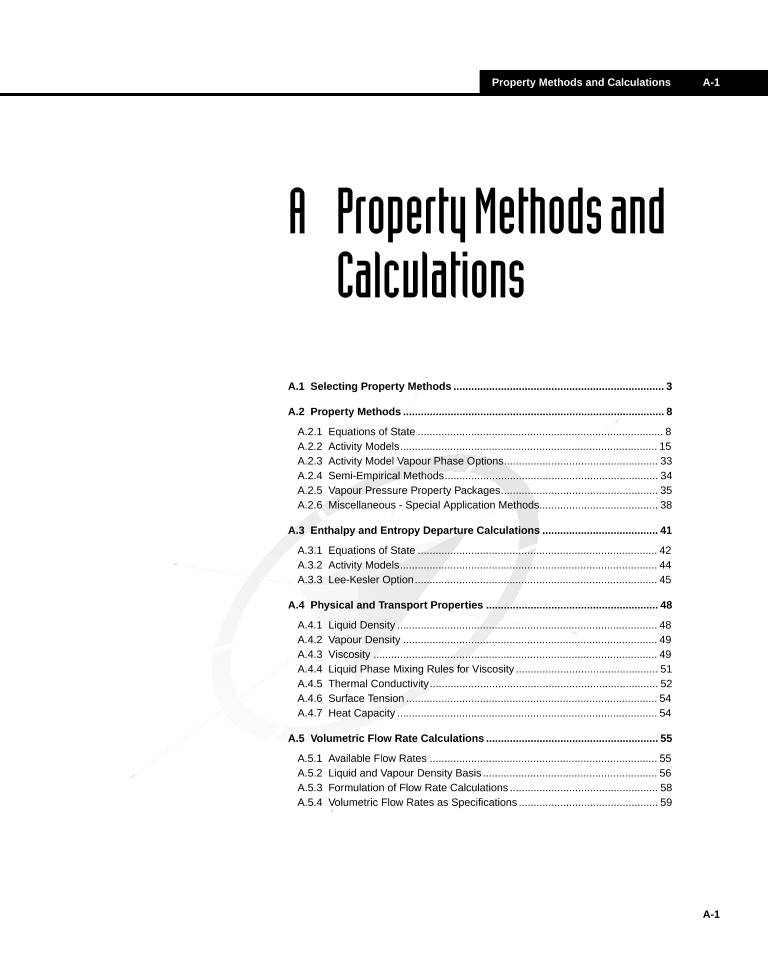

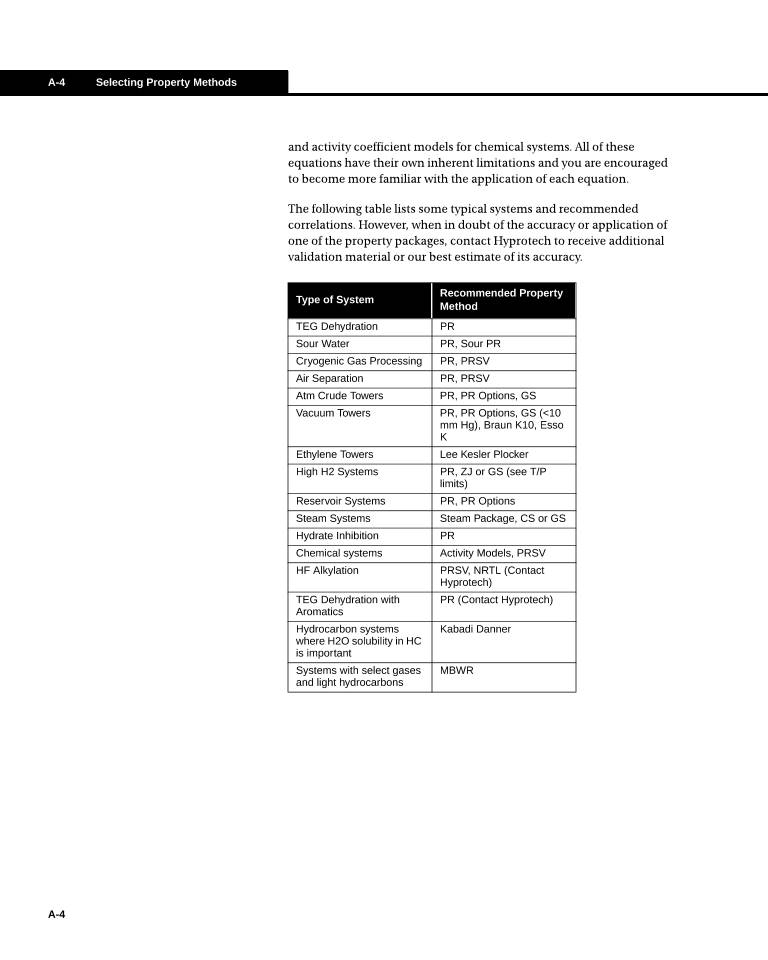
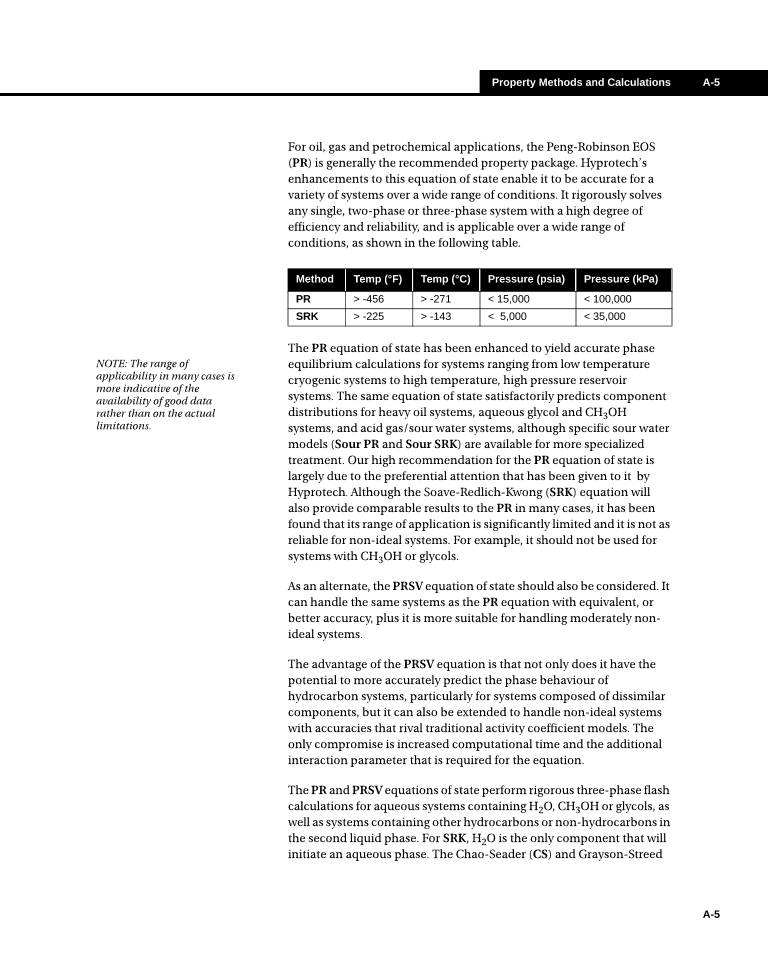


 设备数据采集
 工程招标采购
 搞笑表情
搞笑表情 微信头像
微信头像 CWMS冷库管理系统
 美女图片
美女图片 APP小游戏
 PPT模板
PPT模板 WMS仓库系统
 软件开发
软件开发