概要信息:
sustainability plan
parkmerced
DRAFT
   01.26.11
The Parkmerced Sustainability Plan establishes specific goals, strategies and targets that will be incorporated
into the transformation of Parkmerced into a model 21st century healthy neighborhood.  The Plan addresses
the conservation and management of energy, water and other natural resources.  In addition, it establishes
goals for green building standards, solid waste management and sustainable construction strategies.  Together
with the accompanying Vision Plan, Design Standards and Guidelines, Transportation Plan, and Infrastructure
Report, The Parkmerced Sustainabilty Plan provides a comprehensive vision for all future improvements at
Parkmerced.
- The Vision Plan lays out the vision and conceptual frameworks for all proposed improvements at Parkmerced.
- The Design Standards and Guidelines prescribe urban design controls for land use, open spaces, streets,
blocks and individual buildings.  It also outlines a process for project implementation.
- The Transportation Plan provides a framework and management plan for addressing transit and vehicular
travel to and from the neighborhood.
- The Infrastructure Report establishes an outline for anticipated site-wide improvements to all streets and public
rights of way, underground utilities and site grading.
This vision for Parkmerced has been developed through a collaborative process with input from community
members, local agencies and departments, public advocacy organizations and design and engineering experts.
DRAFT
ND
LN
WA
EN
SW
MC
MV
AP
A New Vision 5
Unique Opportunity 7
Approach 8
Strategies 10
Goals 12
Neighborhood Design 14
Existing Conditions 16
Land Use + Community 18
Site Design 20
Transportation 22
Landscape 24
Existing Conditions 26
Hydrology 28
Habitat 30
Open Space 32
Operations + Maintenance 34
Water 36
Existing Conditions 38
Water Supply 40
Wastewater 42
Energy 44
Existing Conditions 46
Energy Reduction + Consumption 48
Energy Production + Distribution 50
Solid Waste 52
Existing Conditions 54
Waste Reduction 56
Materials + Construction 58
Existing Conditions 60
Materials 62
Construction 64
Measurement + Verification 66
Performance 68
Appendix 70
Definition of Terms 72
parkmerced
sustainability plan
DRAFT
4   │ P A R K M E R C E D  S U S T A I N A B I L I T Y  P L A N  /  1 0 . 1 4 . 1 0
DRAFT
│  5 1 0 . 1 4 . 1 0  /  P A R K M E R C E D  S U S T A I N A B I L I T Y  P L A N
Craig W Hartman, FAIA
August 2010
a new vision
parkmerced sustainability plan:
addressing urban sustainability at the neighborhood scale
The new vision for Parkmerced represents a bold and unparalleled opportunity to transform an entire
WWII-era San Francisco neighborhood into an international model for a sustainable 21st-century green
community. The goal of a regenerated Parkmerced will be to create a vibrant, verdant and sustainable
neighborhood.  Parkmerced will be a neighborhood with an increased number of residential units and
commercial/retail services and an increased amount of open space dedicated to natural ecological sys-
tems and recreational uses, all while reducing the per capita impact on our environment. A key goal to
this sustainability-focused neighborhood is targeting a project-wide net-zero increase in greenhouse gas
production from buildings while providing for more homes.  A regenerated Parkmerced will contribute
towards San Francisco’s stated goal to be among the world’s most sustainable cities.
The Parkmerced Sustainability Plan is able to address some of the most critical environmental issues
of our time including climate change, resource overconsumption and reinvigoration of ecosystems at
the critical scale of an entire neighborhood, allowing the community as a whole to accomplish more
than a single parcel or building could on its own.  This Plan has been developed to address these
issues while working within the framework and specific conditions of Parkmerced’s location, micro-
climate, topography, ecosystems and historical and design circumstances.
The Parkmerced Sustainability Plan establishes the goals, strategies and targets that will lead to a
substantial decrease by each household in energy and water consumption, waste production, and
automobile dependence, and will focus on state-of-the-art sustainable building materials systems and
strategies.  Parkmerced’s environmental focus will also be enhanced by a renewed urbanism that will
provide and integrate open spaces and natural ecosystems into the neighborhood in unique, sustain-
able and regenerative ways. The final result will ultimately be the incremental replacement of a devel-
opment based on the consumptive, suburban, car-centric approaches of the past with a neighborhood
built around the principles of a productive, socially active, walkable community.
DRAFT

Parkmerced is one of eight large-scale, planned community
developments built by Metropolitan Life throughout the
country around the time of WWII.  These communities
were designed to introduce what was then considered to
be a highly desirable, suburban lifestyle into some of the
nation’s most densely settled urban areas.  It was close to
the cultural amenities of the City while offering wide open
spaces and room to spread out.  Parkmerced was noted
for its innovative garden apartment blocks built around
shared courtyard green spaces that gave residents the
feel of enjoying their own suburban green backyards.
Parkmerced was able to provide considerable open space
with residences removed from the City’s density and public
transportation because the planning strategy of the time
favored automobiles as a primary mode of transportation.
The automobile allowed an escape from the City and
represented independence.  However, our dependence on
the automobile has been a key component of our society’s
ecological footprint exceeding our environment’s carrying
capacity and sustainability.  Suburbs and communities
removed from the city center have faced increased social
challenges with many people spending more time alone
in a vehicle than engaging with other people in their
community.
Similarly, Parkmerced has seen diminished activity and
social engagement in its public realm.  Services and
amenities originally intended to support the residents of
Parkmerced such as playing fields, a school, and retail
space have either been sold off by previous owners or
closed, because they were not positioned to be an integral
part of the community.  This is further compounded by the
design of the garden apartments which are configured with
primary living spaces opening inward towards semi-private
courtyards, with only hallways and bathrooms facing
the public right-of-way.  This has created a condition of
insufficient ‘eyes on the street’ and a general sense of a
lack of security.
Redeveloping Parkmerced offers a chance to change
these unintended social effects of past planning principles,
and in their place foster a vital community.  The uninsulated
garden apartments, which now contain inefficient fixtures
and appliances and cannot accommodate the people with
disabilities, can be replaced with accessible buildings
that not only consume less, but also produce renewable
energy.
Perhaps most importantly, Parkmerced’s location
within San Francisco makes this development a unique
opportunity to address the current environmental
pressures of our increasing greenhouse gas emissions.
By reversing its current land use and transportation trends,
Parkmerced can become a community fully connected
with the City through public transportation and engaged
with its surrounding neighborhoods through pedestrian
and bicycle networks, offering San Francisco the ability to
showcase forward thinking urban planning and sustainable
development for the 21st century.
unique opportunity
Parkmerced’s large scale, single ownership and location within the
City of San Francisco, with close proximity to public transit, make
this a once-in-a-lifetime opportunity to create the prototype for a
21st century eco-neighborhood.  It offers a chance to counter prior,
obsolete, car-centric urban planning principles, high maintenance
landscapes, and inefficient buildings consumptive of natural
resources.
DRAFT
DRAFT
8   │ P A R K M E R C E D  S U S T A I N A B I L I T Y  P L A N  /  1 0 . 1 4 . 1 0
The transformed Parkmerced will be built on a strategy of ecological urbanism, which can be defined as the re-thinking and
re-structuring of the built environment in response to and in collaboration with the natural environment.  Urban development
and natural ecosystems need not be mutually exclusive, nor are people and their activities separate from nature.  To
support our increasing population and the inevitable growth of our cities, it has become more and more critical to manage
and sustain the ecological systems that are the backbone of the cities and places we inhabit.  The conservation of our
natural resources has become the highest priority in order to provide for ourselves and future generations.
Parkmerced is modifying its relationship with its natural ecosystems by restoring original watersheds and replenishing a
diminishing Lake Merced, rebuilding local wildlife habitats, and integrating agriculture into the urban environment.  The
buildings and infrastructure will be carefully designed to function in tandem with nature to capture sunlight, mitigate strong
winds, allow rainwater infiltration and conveyance, and reduce waste.  The landscape will include usable green spaces
for gathering and recreation while supporting food production and the management of micro-ecosystems for indigenous
wildlife, and the buildings will not only conserve resources, but also have the potential to produce renewable clean energy.
By constructing new housing within an existing urban environment, Parkmerced will decrease the demand for new, sprawling,
suburban development and the destruction of natural habitats associated with those developments.  Parkmerced residents
will be able to rely on the existing urban infrastructure, including the City’s public transportation system, and as a result
will produce fewer GREENHOUSE GAS emissions than their suburban counterparts.  Moreover, because Parkmerced
will contain mixed-use and multi-family buildings and will connect to existing utility networks, the project will require fewer
building materials than would a new suburban development project providing the same number of dwelling units.
approach
Ecological Urbanism: integrating the built
and natural environments into a single
interrelated system which is mutually
beneficial and supportive, and nurtures a
vibrant self-sustaining neighborhood.
DRAFT
│  9 1 0 . 1 4 . 1 0  /  P A R K M E R C E D  S U S T A I N A B I L I T Y  P L A N
DRAFT
10   │ P A R K M E R C E D  S U S T A I N A B I L I T Y  P L A N  /  1 0 . 1 4 . 1 0
connection of built and natural infrastructure
The neighborhood street network at Parkmerced will
work in conjunction with the topography and natural wa-
tershed.  Streets will not only convey vehicles and peo-
ple, but also collect and transport stormwater through a
system of bioswales, streams and ponds.  This interlac-
ing of urban and ecological systems will reinforce Park-
merced’s connection to nature and regenerate the neigh-
borhood’s underlying watershed.
usable open space
Green spaces will offer a variety of scales and uses and
will be strategically positioned to bring people together.  A
vibrant, concentrated urban fabric will support the active
use of open spaces including individual terraces and bal-
conies, semi-private courtyards, neighborhood commons,
community oriented recreational fields, community gar-
dens, and unprogrammed open space.
neighborhood street alignment
The primary streets into the neighborhood will be oriented
north-south in order to capture as much sunlight as pos-
sible.  East-west streets will be staggered to help block the
winds coming off the Pacific Ocean from the West.  Hedge-
rows planted on the West side of the streets will provide
protection from the wind.  Careful consideration will be giv-
en to working with nature to provide the most comfortable
environment  to promote increased social activity within
the community.
strategies
DRAFT
│  11 1 0 . 1 4 . 1 0  /  P A R K M E R C E D  S U S T A I N A B I L I T Y  P L A N
social heart
A retail and services ‘social heart’, concentrated close to
public transportation, will link Parkmerced to the City and
will nurture a strong sense of community and identity.
socially and ecologically dynamic buildings
Buildings will be socially dynamic with areas for com-
munal gathering, places of commerce, and gardens for
food production, while also collecting rainwater, conserv-
ing resources, and producing energy through the use of
wind turbines, photovoltaics and cogeneration.
conservation of resources and reuse
By constructing high performance buildings, many natural
resources will be conserved.  Existing building materials,
which can be reclaimed and reused, will also help to lessen
the impact of Parkmerced on local and global ecologies.
DRAFT
12   │ P A R K M E R C E D  S U S T A I N A B I L I T Y  P L A N  /  1 0 . 1 4 . 1 0
TODAY
 GREEN HOUSE GAS EMISSIONS
60% CARBON REDUCTION
RESIDENTIAL AND VEHICULAR TOTAL PER CAPITA / YR
TOMORROW TODAY 11.4
 ENERGY CONSUMPTION
56% REDUCTION ON CALIF GRID
MWH TOTAL PER CAPITA / YR
TOMORROW 5.0
goals
more homes, less consumption
One of Parkmerced’s goals is to achieve net-zero new
energy consumption from the grid.  If one were to build
the same number of new homes in a suburban setting,
these new homes, when combined with the existing 3,221
Parkmerced units, would consume 200% more energy
than this project is designed to consume.
One of the key benefits of creating a pedestrian-focused
neighborhood that is well served by local transit is that
it provides an opportunity for Parkmerced residents
to reduce their impact on local and global ecologies.
Utilizing sustainable design strategies in conjunction
with those of compatible urban design, the re-invented
Parkmerced will nearly triple the number of dwelling units
with virtually no change to the neighborhood’s natural
resource consumption. This will translate into a reduced
ecological impact for all Parkmerced residents while
making a significant contribution to San Francisco’s
objective of reducing its overall carbon footprint.

 With a goal of reducing the average per capita carbon
footprint by approximately 60%, Parkmerced is targeting
to only increase its project-wide annual carbon footprint
by approximately 18% while nearly tripling the number
of residents. This represents a significant reduction of
the annual carbon footprint associated with housing and
transportation for each Parkmerced resident.
DRAFT
│  13 1 0 . 1 4 . 1 0  /  P A R K M E R C E D  S U S T A I N A B I L I T Y  P L A N
Supplemented by
recycled & grey water
eliminating unnecessary
potable water use.
TODAY  30,000
 POTABLE WATER CONSUMPTION
60% REDUCTION
TOTAL GALLONS PER CAPITA / YR
TOMORROW  12,000 TODAY 27,000
 WASTE WATER
60% REDUCTION
TOTAL GALLONS PER CAPITA / YR
TOMORROW 11,000 TODAY 100%
 STORM WATER
100% REDUCTION
STORMWATER TO COMBINED SEWER SYSTEM
TOMORROW 0%
Through a combination of strategies, including the use of
recycled water, an estimated per capita 60% reduction in
potable water usage represents a significant reduction of
potable water usage, dramatically reducing demand on
the City and State’s taxed water supply systems.
Parkmerced plans to reduce wastewater by approximately
60% per person while increasing project-wide wastewater
generation by approximately 2%.
Treating stormwater runoff on-site, using a combination
of bioswales, biogutters, ponds and streams rather than
diverting it to the combined sewer system, would result in
an estimated 20 million gallon average annual decrease
in combined sewer discharges to Ocean Beach (a 6%
reduction).
ND
ND.01
Goals + Strategies
ND.02
ND.03
ND.04
Neighborhood Design
Existing Conditions        16
Land Use + Community      18
Site Design       20
Transportation       22
DRAFT
14
Reduce auto emissions and dependence on fossil fuels
by providing conveniently located neighborhood services
and amenities as well as by designing public streets to
encourage people to walk and ride transit
“The Climate Action Plan for San Francisco” reports that 50% of the city’s greenhouse gas
emissions are from transportation, and 24% are attributed to road vehicles in the city.  In
2000, road vehicles emitted 2.23 million tons of CO2e, and it is predicted that by 2012 the
emissions will rise to 2.41 million tons.1  While commuting to work accounts for many of
these trips, a significant percentage are attributed to services and amenities.  Parkmerced
conducted a transportation survey of its residents and discovered that an average of 6 daily
car trips per unit were for non-work related activities and of those trips 34% were to super-
markets and 18% to schools.
Residents’ carbon footprints can be drastically reduced by providing daily services within
walking distance and close to public transportation, eliminating the need for these vehicle
trips.  Careful urban planning not only will reduce traffic and lower greenhouse gas emis-
sions, but it will also foster a greater sense of community and augment local economies by
activating the pedestrian public realm.
1   Climate Action Plan for San Francisco. September 2004. San Francisco
Department of the Environment, San Francisco Public Utilities Commission.
DRAFT
15
16   │ P A R K M E R C E D  S U S T A I N A B I L I T Y  P L A N  /  1 0 . 1 4 . 1 0
DRAFT
When it was first proposed in the late 1930’s, Parkmerced
was conceived of and marketed as ‘suburban living in the
city’. The desire for suburban-style living within the ur-
ban boundaries of San Francisco led to the creation of an
auto-oriented neighborhood. With services and amenities
pushed to the perimeter, large block sizes, roundabouts,
and segregated zoning shaped daily life patterns of Park-
merced residents, making them almost wholly dependent
upon the car to meet their daily needs.  At the same time,
residents living in other areas of the city such as Russian
Hill, Cow Hollow, Laurel Heights, and West Portal enjoy
ND.01
existing conditions
mixed-use, transit-rich lifestyles served by centrally-located
commercial centers, schools, and other neighborhood ser-
vices within walking distance.  Once in their cars, most resi-
dents of Parkmerced travel to competing services and ame-
nities, further reducing the viability of what few services and
amenities still remain at the periphery of the neighborhood.
Previous owners sold off and lost control of those parcels
as residents drove their cars to more easily accessible and
comprehensive services and amenities outside the neigh-
borhood. Over the years, this pattern of daily life simply rein-
forced the residents’ increasing dependence on cars.

As a low-density neighborhood, Parkmerced is predomi-
nantly comprised of two-story buildings and mid-rise tow-
ers with virtually identical architectural facades throughout
that create a maze of undifferentiated buildings and streets.
Further complicating movement through the neighborhood
is a radial street configuration where streets wind and bend
while maintaining the same name.  These factors contribute
to the lack of orientation and hierarchy within the neigh-
borhood. Residential buildings with units that have living
spaces oriented towards the interior courtyards turn their
backs on the streets leading to limited social activity in the
public realm and a greatly reduced sense of security.  In ad-
dition, Parkmerced has few direct access points, isolating
residents from surrounding neighborhoods and disconnect-
ing Parkmerced from the greater city urban fabric.
DRAFT
Residential
Retail
Administration
School
Playing Fields
Undeveloped
Service
Parcels Sold Off
│  17 1 0 . 1 4 . 1 0  /  P A R K M E R C E D  S U S T A I N A B I L I T Y  P L A N
18   │ P A R K M E R C E D  S U S T A I N A B I L I T Y  P L A N  /  1 0 . 1 4 . 1 0
DRAFT
ND.02 land use + community
strategies
diverse uses
A variety of convenient land uses within walking distance
of all residences will encourage social vibrancy, including:
- 8,900 new or existing homes
- 230,000 square feet of retail use
- 80,000 square feet of commercial use
- 64,000 square feet of fitness/community center use
- 25,000 square feet of pre-school/school/day care use
The concentrated neighborhood ‘social heart’ is intended to
include a grocery store, coffee and sandwich shops, restau-
rants, dry cleaners, and other small businesses to meet the
daily needs of Parkmerced residents. The ‘social heart’ will
also include office space for professional services, such as
medical and dental practices, that offer residents addition-
al access to services and the possibility of working within
walking distance of their homes.  Parkmerced will strive to
include eleven different uses from Table 1 – Diverse Uses,
with a minimum of one use from each category.
Additionally, each of the six Neighborhood Commons, distrib-
uted throughout the neighborhood, will contain neighborhood
serving retail and amenities and take advantage of adjacency
to open space for cafe seating or other gathering spaces.
create a compact walkable community
Introducing neighborhood services and amenities within
walking distance of all residents helps to reduce depen-
dence on cars and encourage people to walk or bike to
meet their daily needs.  This strategy plays a major role in
reducing fossil fuel consumption, and therefore the overall
carbon footprint of each individual and the neighborhood
as a whole.
In keeping with the walkable community design, a child
care facility, pre-school or elementary school will be sited
within a 1/2-mile walk of all residents.  Currently, a number
of existing middle and high schools are within a mile walk
of the neighborhood.
vibrant neighborhood
Increasing the number of dwelling units at Parkmerced to
a total of 8,900 units over the next 20 to 30 years will in-
crease the neighborhood population, which in turn will help
improve the viability of supporting services and amenities.
These services and amenities are located on or around
Crespi Drive creating a vibrant ‘social heart’ adjacent to
public transit stops and accessible to surrounding neigh-
borhoods.  The ‘social heart’ will be within no more than a
ten-minute walk of all residences and a five-minute walk of
approximately half the residences.
Provide a broad mix of environmentally, economically, and socially
sustainable land use options at Parkmerced to enable a complete and
vital community that promotes diversity and supports local businesses
and agriculture.
goal
DRAFT
CATEGORY USE
Food Retail
• Supermarket
• Other food store with produce
Community-Serving
Retail
• Clothing store
• Convenience store
• Farmer’s market
• Hardware store
• Pharmacy
• Other retail
Services
• Bank
• Gym, health club, exercise studio
• Hair care
• Laundry, dry cleaner
• Restaurant, café, diner (excluding
establishments with drive-throughs)
Civic + Community
Facilities
• Adult or senior care (licensed)
• Child care (licensed)
• Community or recreation center
• Cultural arts facility (museum,
performing arts)
• Educational facility (including K–12
school, university, adult education center,
vocational school, community college)
• Family entertainment venue (theater,
sports)
• Government office that serves
public on-site.
• Place of worship
• Medical clinic or office that treats
patients.
• Police or fire station
• Post office
• Public library
• Public park
• Social services center
TABLE 1 - Diverse Uses
implementation actions
and metrics
- Comply with the requirements of Chapter 01 (Land
Use) of the “Parkmerced Design Standards + Guide-
lines”.
- Provide a farmer’s or local business market that
operates weekly for five months annually with firm
commitments from vendors to sell only items grown
within 150 miles of the neighborhood.
19
20   │ P A R K M E R C E D  S U S T A I N A B I L I T Y  P L A N  /  1 0 . 1 4 . 1 0
DRAFT
ND.03 site design
strategies
fine grain
Small blocks with frequent intersections provide a number
of routes for pedestrians and bikes, making walking a more
attractive and viable mode of transportation. Existing blocks
at Parkmerced will be reduced in size by introducing a se-
ries of new, pedestrian-focused streets, alleys and paseos.
street orientation
In order to provide a comfortable environment for residents
to enjoy the outdoor amenities and to encourage walking, the
primary neighborhood linkages will be oriented north-south
to capture the most sunlight and break the gusty westerly
winds with tall, densely foliated trees.
sidewalks
To encourage pedestrian activity and help Parkmerced
build a sense of community, generous sidewalks will be de-
signed to provide a greater area of the public right-of-way
for pedestrians rather than vehicles.  Shared streets will
give priority to pedestrians and help to calm traffic for a saf-
er neighborhood.  Seating and planted areas are planned
along sidewalks to provide areas for gathering.
street trees
Designing streets to include planted areas and street tree
species chosen specifically to thrive in Parkmerced’s micro-
climate will enhance the visual quality of the urban envi-
ronment while helping to mitigate wind, maximize sunlight
penetration, and manage stormwater run-off.  Only native
or acclimated street trees will be planted.
intuitive way finding
A clear hierarchy of street types with differentiated street
configurations, street trees and planting will aid in intuitive
way finding.  It will help establish clear traffic patterns to
dissipate congestion and slow traffic speeds, making for a
safer pedestrian environment. A richness in neighborhood
character will develop as the diversity encourages local
identities to emerge.
integrated fabric
With few direct access points to surrounding neighborhoods,
Parkmerced currently resembles a gated community.  This
condition breeds a sense of isolation for Parkmerced resi-
dents, presents a barrier to surrounding neighborhoods and
discourages walking.  A number of new and reconfigured
access points would transform Parkmerced into a more
integrated part of the City and increase connectivity with
adjacent neighborhoods.

socially engaging buildings
When Parkmerced was first designed, the social activities of
the buildings were oriented away from the public realm to-
ward semi-private courtyards.  This led to the design of resi-
dences that effectively turned their backs on the street, leav-
ing bathroom windows, stairwells and blank facades fronting
the streetwall, depriving the public realm of critical “eyes on
the street” and thereby reducing the sense of security.  To
re-establish relationships between private and public areas,
and to create a more comfortable pedestrian environment,
the “Parkmerced Design Standards + Guidelines” Building
Design chapter provides a framework (including require-
ments for stoops, individual entries and balconies) for having
buildings re-engage the social life of the street.
Promote walkability and vitality by designing an appropriately-
scaled, pedestrian-focused, safe, and environmentally comfortable
neighborhood that will encourage the building of community.
pedestrian scale
To create a visually stimulating pedestrian environment,
building facade heights will be in complementary propor-
tion to public right-of-way widths and adjacent facades.  By
incorporating variations in facade lengths and depths, the
buildings will relate to the scale of a person.  Including front
porches or creating a rhythm of small architectural bays will
reinforce the pedestrian realm as a place for people.  By
providing a pedestrian scaled environment, the site design
will encourage walking as a primary mode of transportation.
goal
│  21 1 0 . 1 4 . 1 0  /  P A R K M E R C E D  S U S T A I N A B I L I T Y  P L A N
DRAFT
implementation actions and metrics
- Meet the requirements of Chapters 02.01 through 02.15 (Neighborhood
Controls and Streets) of the “Parkmerced Design Standards + Guidelines.”
The requirements set forth in these chapters have been crafted to encour-
age walking by creating a pedestrian-scaled, socially vibrant streetscape that
provides a high degree of human comfort.
- Meet the requirements of Chapters 02.31 through 02.38 (Off-Site Improve-
ments) of the “Parkmerced Design Standards + Guidelines”.
22   │ P A R K M E R C E D  S U S T A I N A B I L I T Y  P L A N  /  1 0 . 1 4 . 1 0
DRAFT
ND.04 transportation
The “Parkmerced Transportation Plan” sets forth the strategies
to be used to achieve the above goal. This chapter provides an
overview only of such strategies. The “Parkmerced Transporta-
tion Plan” should be referenced for greater detail regarding the
proposed transportation improvements and programs.
strategies
improve access to public transit
Parkmerced will encourage the use of public transit alterna-
tives by modifying the existing Muni light rail route to bet-
ter link the neighborhood to the remainder of the City and
by focusing development intensity around new and existing
stops.  Parkmerced plans to work with the City and Caltrans
to re-route the M-Oceanview light rail line into the neighbor-
hood to increase accessibility.  A new transit plaza station
is planned at the southwest corner of the intersection of
19th Avenue and Holloway Avenue adjacent to both San
Francisco State University and the north end of the neigh-
borhood ‘social heart’.  The transit plaza will also serve a
number of local-serving bus lines for convenient transfers.
Additional new transit stops will be located on Diaz Avenue
adjacent to the south end of the retail core and further south
on Font Boulevard.  Information technology will relay real-
time arrival information to riders at all transit stops within
Parkmerced.
TDM strategies
To further increase the attractiveness and convenience of
public transit, Parkmerced will provide a state-of-the-art
Transportation Demand Management (TDM) Plan.  A full-
time transportation coordinator will provide commute plan-
ning services to help integrate transit into the daily lives
of residents and visitors.  Parkmerced residents will meet
with the Transportation Coordinator to review multiple, sus-
tainable non-auto commute options, including the relative
Reduce auto trips by promoting sustainable alternative means of
transportation to lower the dependence on fossil fuels and further
Parkmerced in achieving greenhouse gas neutrality, while creating a
more vital, connected sense of community.
goal
│  23 1 0 . 1 4 . 1 0  /  P A R K M E R C E D  S U S T A I N A B I L I T Y  P L A N
DRAFT
costs and schedules for various transit modes. The Transit
Coordinator will also implement and administer the various
TDM Plan elements and coordinate with the City, transit
agencies, and transportation companies. As one of Park-
merced’s transit-related amenities, residents may purchase
a discounted pass to all Muni transit systems serving the
site.  Additional TDM Plan elements are described in the
“Parkmerced Transportation Plan”.
neighborhood shuttle with access to BART
Free, low-emissions shuttle services will connect Park-
merced residents to regional transit options and local shop-
ping destinations.  With multiple stops within the neighbor-
hood, the BART shuttle will provide direct, frequent, peak
time service to the Daly City BART station and M-Ocean-
view stations.  An off-peak shopper shuttle will provide
service to the Stonestown Galleria and Westlake shopping
centers.  By enabling access to regional destinations and
transit hubs, Parkmerced’s shuttle services will help reduce
the number of car trips taken, minimizing the neighbor-
hood’s overall carbon footprint.
bicycle network + bike share
Sustainable transportation at Parkmerced will rely on a net-
work of bicycle routes, with parking and other amenities for
cyclists provided throughout the site. A comprehensive way-
finding signage program supporting the network will include
a map highlighting all bike routes and parking spaces.  Each
of Parkmerced’s new buildings will house secure bicycle
parking. On-street bicycle parking racks will be available
at major destinations, and loaner bicycles will be available
at bikeshare stations located throughout the site. Non-resi-
dential buildings with over 30,000 square feet of space will
provide showers and changing areas for the convenience of
bike commuters.  This internal bicycle network will be inte-
grated into the existing San Francisco Bike Route System.
unbundled parking
Parking strategies at Parkmerced are intended to accom-
modate expected demand while fostering a pedestrian-fo-
cused, transit-oriented neighborhood.  In order to encour-
age walking and transit use, a large number of parking
spaces will be located further from transit, functioning more
as ‘car storage’ than a typical garage.  Residents must
lease or purchase all off-street parking spaces separately
from the rental or purchase price of their dwelling units.
car share
Parkmerced’s Transportation Coordinator will work with lo-
cal car-sharing organizations to provide a network of ve-
hicles available throughout the site.
electric vehicle infrastructure
To promote the use of electric passenger vehicles, a mini-
mum of 1% of off-street residential parking spaces will be
constructed with electric wiring conduits to permit wiring
and hook-up of an electric vehicle charger. In addition, at
least one publicly accessible fast-charge station will be in-
stalled at Parkmerced.
implementation actions
and metrics
- Meet the requirements of the “Parkmerced Transpor-
tation Plan”.
- Meet the requirements of Chapter 04 (Parking, Load-
ing + Servicing) of the “Parkmerced Design Stan-
dards + Guidelines”.
LN
LN.01
Goals + Strategies
LN.02
LN.03
LN.04
LN.05
Landscape + Biodiversity
Existing Conditions        26
Hydrology         28
Habitat          30
Open Space         32
Operations + Maintenance          34
DRAFT
24
Develop a captivating landscape that re-establishes
biodiversity and natural habitats, promotes the
conservation and efficient use of natural resources and
meets community needs for recreation, open space, and
local food production.
Depletion of natural resources worldwide and an increasing water shortage threatening Cali-
fornia make conservation efforts an imperative.  As the population continues to grow, develop-
ment must be planned to protect and manage limited natural resources.  The development of
land must meet human needs while preserving ecosystems and their resources to provide not
only for the present, but also for many future generations to come.  In order to re-integrate the
natural and urban environments at Parkmerced, restoring the site's original hydrology patterns
will allow for the re-establishment of local habitats supporting biodiversity and an ecosystem
reconnected to Lake Merced.  This landscape will not only create an environment for plants
and animals to flourish, but also will support recreational activities, provide enjoyment of the
open spaces, and encourage the building of community among residents.
DRAFT
25
DRAFT
26   │ P A R K M E R C E D  S U S T A I N A B I L I T Y  P L A N  /  1 0 . 1 4 . 1 0
When Parkmerced was initially developed in the 1940’s, the site’s natural topography was graded into a
flat table top that tilted slightly toward the west.  The natural drainage system was filled in and replaced by
an underground system that transferred stormwater off-site through the City’s combined sewer-stormwater
system to the waste water treatment facility. As a result, during storm events, the site, Lake Merced, and the
underground aquifer are deprived of much of the annual rainfall. In addition, 74 acres of manicured, non-native
grasses within the open space replaced the natural habitats of indigenous plants and animals. These planted
lawns require approximately 55 million gallons of potable water per year for irrigation, adding a significant
demand to the City’s water supply system.
LN.01 existing conditions
PROPOSED
A proposed drainage system of rain gardens,
bioswales and biogutters will mimic the natural
system.  Water is channeled to the new stream
corridor, and a riparian corridor filters water and
restores a connection to Lake Merced.
A natural drainage system al-
lowed for the infiltration and filter-
ing of rainwater, channeling run-
off into Lake Merced.
EXISTINGORIGINAL
The site was graded into a flat tabletop for
development in the 1940s. Currently all
stormwater is piped off-site to treatment
facilities or overflows into the bay.
Figure LN.01.01:  Parkmerced Drainage Systems
Source: Tom Leader Studio
Lake Merced
Wastewater Treatment
Plant
Lake Merced
Ocean
DRAFT
│  27 1 0 . 1 4 . 1 0  /  P A R K M E R C E D  S U S T A I N A B I L I T Y  P L A N
Figure LN.01.02:  Historic San Francisco Creeks and Wetlands
Source: San Francisco Bay Area Historic Topographic Quadrangles,
UC Berkeley Library
LEGEND
Modern Landfill
Original Marshes
Original Creeks
28   │ P A R K M E R C E D  S U S T A I N A B I L I T Y  P L A N  /  1 0 . 1 4 . 1 0
LN.02 hydrology
strategies
stormwater collection
Currently, the San Francisco Code dictates that the pipes of
the combined stormwater/sewer system be sized to convey
the peak flow from a 5-year storm.  Rather than using these
traditional pipes and pumps to convey this flow, Parkmerced
will incorporate green infrastructure consisting of bioswales
and other low impact measures that will retain, detain, and
convey runoff to the underlying aquifer and to Lake Merced.
The bioswales will be natural amenities that increase biodi-
versity, improve air quality, and enhance community spaces
while simultaneously managing runoff and reducing the po-
tential for flooding. Hardscape infrastructure, such as pipes
and drain inlets, will only be necessary to convey flow be-
neath intersections to the next downstream swale.  The re-
duction in piping will also decrease the amount of infrastruc-
ture that must be manufactured, installed, and maintained.
BIOGUTTER
BIOSWALE
HOLDING POND
RIPARIAN CORRIDOR
WETLAND
LAKE MERCED &
 AQUIFER
PROPOSED
STORMWATER
SYSTEM
BIOGUTTER BIOSWALE POND
The phasing of construction of the LID measures will be such
that the most upstream, parcel-level measures will be sized
to satisfy the Stormwater Design Guidelines (SDG) require-
ments of individual buildings as included in the Parkmerced
Infrastructure Plan.  The Right of Way (ROW) LID measures
will be constructed simultaneously with the street improve-
ments or construction of new streets.  The site-wide LID
measures will be constructed as the overall site work is com-
pleted.  If the ROW LID measures downstream of a parcel
have yet to be constructed, the parcel runoff will be temporar-
ily direct to the combined sewer, and the requirements of the
SDG in combined sewer areas will be met.  If the ROW LID
measures downstream of a parcel have been constructed,
the requirements of the SDG in separated sewer areas will
be met.  However, as each segment of the bioswale network
is completed, the adjacent buildings will be required to tie
into the Parkmerced stormwater collection system and sever
the buildings’ temporary connection to the City’s combined
sewer-stormwater system.
cistern capture
In addition to infiltration through green infrastructure, a cis-
tern will be installed at the Juan Bautista pond to maintain
its moisture levels during the dry season.  This rainwater
collection will help to establish a healthy ecosystem to sup-
port native plants and animals within the pond.
Restore the natural watershed, replenish Lake Merced, reduce the
impact on the City's waste water treatment plants, prevent erosion and
provide local habitats.
goal
DRAFT
│  29 1 0 . 1 4 . 1 0  /  P A R K M E R C E D  S U S T A I N A B I L I T Y  P L A N
WETLAND LAKE MERCED & AQUIFERSTREAM CORRIDOR
restore wetlands
The hydrology system at Parkmerced will include the resto-
ration of an original wetland at the southeast corner of Lake
Merced Boulevard and Brotherhood Way.  Utilizing this low
area as part of stormwater management will help clean the
rainwater runoff before it reaches Lake Merced.  This wet-
land along with the stream corridor will also provide impor-
tant habitat for local flora and fauna.
permeable paving and tree-well infiltration
Permeable paving will be installed in Crespi Drive, alleys,
on-street parking lanes and dedicated pedestrian paths to
accept stormwater and help re-charge the aquifer.  In ad-
dition, tree wells will be designed to infiltrate water.  These
systems will help prevent excess storm water from entering
the City's combined sewer-storm water system during large
storm and flood events.

Figure LN.02.01:  Parkmerced Green Infrastructure
Source:  Tom Leader Studio
implementation actions and metrics
- Design each building to divert, upon completion of the hydrology system,
100% of stormwater for at least a 5-year storm event with a duration of 3
hours to the Parkmerced hydrology system without discharge to the City’s
combined sewer-stormwater system.
- Install a cistern that is designed to provide moisture to Juan Bautista pond
throughout the year (approximately 100,000 gallons in total capacity).
- Comply with the requirements of the San Francisco Building Code Chapter
13C (Green Building Requirements).
- Comply with the requirements of the Stormwater Management Ordinance
(Ordinance 83-10; File No. 100102).
DRAFT
30   │ P A R K M E R C E D  S U S T A I N A B I L I T Y  P L A N  /  1 0 . 1 4 . 1 0
DRAFT
LN.03 habitat
strategies
a diverse stream corridor
Parkmerced will include a stream corridor intended not only
to treat stormwater before its final deposit into the underly-
ing aquifer and Lake Merced, but also to help attract native
wildlife to the site, including amphibians, insects and birds.
By installing a series of check dams along the stream, a
steady and slow water flow rate is intended to maintain mi-
cro ecosystems and provide beautiful stopping points along
a trail system that increases residents' awareness and ap-
preciation for nature.
habitat management plan
A habitat management plan will be developed to maintain
ecological areas within the stream corridor and investigate
threats that the project poses for habitat and/or water re-
sources within these areas, such as the introduction of exotic
species or destruction through human impact.
native or regionally appropriate species
Native and regionally appropriate species help to maintain
healthy and rich ecosystems without using unnecessary
amounts of natural resources.  Drought tolerant species will
be planted at Parkmerced to reduce the need for irrigation
and help conserve potable water.  Invasive species that
out-compete native and acclimated species, and therefore
pose a threat to the ecosystems, will be prohibited in order
to prevent unhealthy competition amongst species and to
allow the success of all plants and animals dependent on
the native and acclimated habitat.
education
The natural habitats created along the stream corridor could
provide educational opportunities for both children and
3
5
2
4
1
Extend and create local habitats to encourage biodiversity, support a
self-sustaining ecosystem, and increase environmental awareness
Figure LN.03.01:  Stream Corridor diagram
Source:  Tom Leader Studio
Check dams slow water, allow
ponding and infiltration.
Stream channel profile maximizes
biodiversity
Stream corridor planted with
diverse palette of native species
to increase habitat: canopy,
understory and grasses.
Organic Farm
Pervious pedestrian path
2
1
3
4
5
goal
implementation actions
and metrics
- Meet the requirements of Chapters 02.16 through
02.26 (Open Space) of the “Parkmerced Design Stan-
dards + Guidelines”.
- All operations and maintenance of stormwater control
facilities will be in compliance with the Operation and
Maintenance requirements described in the Stormwa-
ter Design Guidelines (SDG).
adults to learn about conservation and the local ecosystem.
The proposed school use site is located adjacent to the
stream corridor  to offer the opportunity for direct access to
the stream corridor as an educational resource.

DRAFT
32   │ P A R K M E R C E D  S U S T A I N A B I L I T Y  P L A N  /  1 0 . 1 4 . 1 0
LN.04 open space
strategies
diversity of open spaces
The Parkmerced Vision Plan and Design Standards +
Guidelines include a hierarchy of community recreational
and open spaces created at various scales to support a
variety of recreational activities for groups and individu-
als.  Private open space for individual units will be provided
through elements such as a generous setback zone, which
transitions into semi-private courtyards to foster commu-
nity building amongst neighbors bordering the courtyard.
Neighborhood Commons will be conveniently located with-
in a short walk of all residences to provide places for people
to gather such as cafes and neighborhood-serving retailers,
playgrounds and/or flexible spaces for recreation or gather-
ings.  Larger dedicated public open spaces will offer op-
portunities for a variety of recreational activities including
playing fields, cycling and nature paths.
a unique farm-to-table experience
Completing Parkmerced’s regeneration, approximately 2+
acres of open space will be reserved for an organic urban
farm and orchard bound by the stream corridor and Gon-
zalez Drive.  The farm should produce vegetables and fruit
that are well-suited to the site’s microclimate. Compost cre-
ated from green waste generated throughout the neighbor-
hood could provide organic fertilizer and reduce the amount
of waste trucked out of Parkmerced.  The farm may be pro-
fessionally managed and operated.
community gardens
In addition to the farm, the neighborhood will provide a va-
riety of opportunities for residents to cultivate plants and
vegetables in small individual plots, community herb gar-
dens, terrace planters, and greenhouses on the roofs of
some buildings.
connection to pedestrian network
Pedestrian paseos and paths will weave together the vari-
ous open spaces at Parkmerced, encouraging residents to
actively use these dedicated open spaces.  A widened pe-
destrian path along Gonzalez Boulevard will provide addi-
tional recreation opportunities and connect the stream cor-
ridor amenities to the organic farm and fitness center.  This
pedestrian network is intended to allow residents to easily
and quickly integrate outdoor activities into their daily lives.
Integrate a network of positive open spaces within comfortable walking
distance of all residents that support a variety of activities to promote
a healthy, active lifestyle at Parkmerced, create productive landscapes,
and enrich the social life of the neighborhood.
goal
implementation actions
and metrics
- Design the site such that all Parkmerced residents
live within a quarter-mile walk of open spaces such
as parks, community gardens, Neighborhood Com-
mons and plazas.
- Provide outdoor and indoor recreational facilities
such as play fields, a fitness center, ‘tot-lots’, and
other similar facilities, within a quarter-mile walk of
all residents at Parkmerced, as more particularly
described in the “Parkmerced Design Standards +
Guidelines”.
- Reserve a 2+ acres site for an organic farm.
DRAFT
│  33 1 0 . 1 4 . 1 0  /  P A R K M E R C E D  S U S T A I N A B I L I T Y  P L A N
DRAFT
34   │ P A R K M E R C E D  S U S T A I N A B I L I T Y  P L A N  /  1 0 . 1 4 . 1 0
LN.05 operations + maintenance
strategies
open space management plan
An open space management plan will regulate maintenance
of all public spaces and the proper functioning of the hydrol-
ogy system at Parkmerced.  It will provide for regular inspec-
tions of the infiltration rates of bioswales, water levels of
the seasonal stream and pond, monitoring of the irrigation
system for leaks, integration of a pest management plan, fa-
cilitating composting efforts and mulching, and general land-
scaping procedures.
pest control
An integrated pest management (IPM) plan will furnish a
knowledgeable and environmentally sound approach to
control pests by studying plant morphology, resistance lev-
els, infestation thresholds, and pest biology.  Pest damage
levels and environmental risks will be assessed and miti-
gated without using highly toxic chemicals posing serious
health concerns for residents, employees, and visitors.
Ensure the proper functioning of the hydrological system to manage
stormwater volumes successfully and support dependent ecosystems,
as well as provide adequate maintenance of public open spaces.
goal
implementation ac-
tions and metrics
- Comply with San Francisco's IPM Ordi-
nance (Environment Code, Chapter 3)
(City Ordinance 171-03, File No. 030422)
for all pest management activities.
DRAFT
│  35 1 0 . 1 4 . 1 0  /  P A R K M E R C E D  S U S T A I N A B I L I T Y  P L A N
WA.01
Goals + Strategies
WA.02
WA.03

Water
WA
Existing Conditions        38
Water Supply         40
Wastewater         42
DRAFT
36
Conserve potable water and reduce energy demand on
treating wastewater
Most of San Francisco's potable water is supplied by the Hetch Hetchy reservoir in the
Sierra Nevada Mountains, charged by springtime snow melt.  Global warming poses a
serious threat to the amount of snow melt the Sierra Nevada produces each year.  As
temperatures rise, more winter precipitation in the mountains reaches the ground as rain
rather than snow.  Winter rainwater that fills the Hetch Hetchy reservoir must be released
for flood control and cannot be stored for the summer and fall seasons.  Due to this dra-
matic shift in when precipitation is available for capture, combined with less water released
in the springtime from a lack of snow melt, the Bay Area faces potential water shortages
during the dry summer and fall seasons.  It has been projected that by the middle of this
century the snow pack in the Sierra Nevada will have declined 25-40%.1
The dwindling Sierra Nevada snow cap combined with an expected 400,000 more people
per year moving to California make it imperative to implement smart planning and design
techniques that are focused on conservation of potable water and that pursue strategies
for identifying and capitalizing on alternative sources of water.
DRAFT
1   Sierra Climate Change Toolkit, Planning Ahead to Protect Sierra Natural
Resources and Rural Communities. 2007. Sierra Nevada Alliance.
37
DRAFT
38   │ P A R K M E R C E D  S U S T A I N A B I L I T Y  P L A N  /  1 0 . 1 4 . 1 0
WA.01 existing conditions
San Francisco faces a diminishing supply of potable water
from the Hetch Hetchy reservoir and is taking measures
to reduce both the consumption of potable water through
more stringent code requirements for lower flow fixtures,
as well as the use of alternative water sources for the City's
irrigation of park and recreation land.  The City has a com-
bined sewer system which accepts stormwater in addition
to wastewater for treatment.  This means that during strong
storm events, sewage is being let into the bay and ocean
due to overflow.
Parkmerced, with its vast lawns, outdated construction,
and inefficient fixtures and plumbing, draws a significant
amount of the City's potable water, and therefore releases a
high quantity of wastewater back into the combined sewer.
According to Parkmerced billing records, irrigation with po-
table water alone consumed approximately 55 million gal-
lons per year from 2005 to 2006, and individual residents
consumed 89 gallons per day from 2006 to 2007, whereas
the average consumption of an average U.S. citizen is 56
gallons per day.
E
L
E
V
A
T
IO
N
A
L
D
E
P
E
N
D
E
N
C
E
O
F
PR
O
JE
C
T
E
D
H
Y
D
R
O
L
O
G
IC
C
H
A
N
G
E
S
327
Figure 4. Projected 2060 snowpack changes in the Bay-Delta watershed resulting from climate warming. Left: Present-day April snow water equivalent in
mm. Right: Percent SWE lost by 2060.Figure WA.01.01  Projected 2060 snow pack changes in the Bay-Delta watershed result-
ing from climate warming.  Left: Present-day April snow water equivalent in mm.  Right:
Percent SWE lost by 2060.
Source:  Elevation Dependence of Projected Hydrologic Changes in the San Francisco
Estuary and Watershed, N Knowles and D. Cayan, 2004
DRAFT
│  39 1 0 . 1 4 . 1 0  /  P A R K M E R C E D  S U S T A I N A B I L I T Y  P L A N
DRAFT
40   │ P A R K M E R C E D  S U S T A I N A B I L I T Y  P L A N  /  1 0 . 1 4 . 1 0
WA.02 water supply
strategies
utilize low-flow fixtures and appliances
The use of high-performance water fixtures will reduce wa-
ter consumption and lower the demand on the water sup-
ply. Through the installation of low-flow water fixtures in
appliances such as toilets, sinks, and showers in both new
and existing units, the average daily residential water use at
Parkmerced is projected to decrease to 38 gallons of pota-
ble and non-potable water per capita per day compared to
the San Francisco average of 57 gallons per capita per day.
recycled water
Recycled water, or reclaimed water, is former wastewa-
ter that has been treated to remove solids and impurities
through multiple stages of treatment.  In California, recycled
water must also meet the stringent health standards of Title
22 relating to tertiary recycled water, developed by the Cali-
fornia Department of Public Health.
The Parkmerced project is located in a designated recycled
water use area as defined in the City of San Francisco’s
Recycled Water Ordinances (effective November 7, 1991,
and amended in 1994). The ordinances require property
owners to install dual-plumbing systems for recycled water
uses (including irrigation, commercial toilet flushing, air-
conditioning and laundry facilities) within the designated
water use areas for new or remodeled construction over
40,000 gross square feet. On November 18, 2009, the
Building Standards Commission unanimously voted to ap-
prove the California Dual Plumbing Code that establishes
statewide standards for installing both potable and recycled
Minimize water use and only use potable water where absolutely
necessary to conserve diminishing regional water supplies
water plumbing systems in commercial, retail, and office
buildings, theaters, auditoriums, condominiums, schools,
hotels, apartments, barracks, dormitories, jails, prisons,
and reformatories. The new code is effective Jan. 11, 2011.
Website address: http://www.water.ca.gov/recycling/Dual-
PlumbingCode/
grey water
Wastewater generated from domestic sources such as
sinks, showers, and laundry machines compose 50-80%
of all wastewater produced.  Under-the-counter systems
could be installed to direct wastewater from bathroom sinks
to adjacent toilets for flushing.  Laundry facilities using non-
toxic biodegradable detergents could also be connected to
cisterns for irrigation.
rain water
Rainwater at Parkmerced will be captured in a cistern to
supply moisture to Juan Bautista pond during the dry sum-
mer and fall seasons.
fog catchers
Fog catchers are synthetic mesh nets that can be stretched
like sails on tower rooftops to capture moisture from the
fog, allowing condensation to occur in the mesh.  This wa-
ter then drips into collection basins and can be piped to a
rainwater collection cistern to contribute to irrigation water
supply.  Parkmerced may consider installing fog catchers
in the future.
goal
DRAFT
│  41 1 0 . 1 4 . 1 0  /  P A R K M E R C E D  S U S T A I N A B I L I T Y  P L A N
Hetch Hetchy
Potable Water
Figure WA.02.01:  Existing vs. Proposed Water Flows
Source:  Hydroconsult Engineers Inc.
EXISTING CONDITION PROPOSED
implementation actions and metrics
- If a recycled water source is made available to Parkmerced from a munici-
pal source in quantities sufficient for irrigation, toilet flushing and laundry,
design new buildings to have 60% less designed demand for potable
water as compared to existing buildings.
- If a recycled water source is made available to Parkmerced from a munici-
pal source in quantities sufficient for such purposes, use 100% recycled
water for irrigation.
- Install low-flow water fixtures in all new residential and on-residential build-
ings that meet or exceed the following efficiency standards:
DRAFT
42   │ P A R K M E R C E D  S U S T A I N A B I L I T Y  P L A N  /  1 0 . 1 4 . 1 0
WA.03 wastewater
strategies
reduce wastewater
By treating all stormwater on-site and by installing low-flow
fixtures which reduce the volume of water consumed, Park-
merced will reduce the amount of wastewater entering the
combined sewer system.
disconnect from combined system
Sewer separation allows stormwater to be treated as a re-
source rather than as a waste product. Parkmerced will col-
lect stormwater runoff from roofs and streets through a com-
bination of low impact development (LID) techniques such
as bioswales, ponds, rain-gardens, and other biofiltration
systems.  This implementation will help to reduce wastewa-
ter flows to the Oceanside treatment plant.  Removing Park-
merced’s stormwater from the City’s combined sewer sys-
tem will help reduce surges that periodically overwhelm the
system’s capacity and discharge to Ocean Beach.
The phasing of construction of the LID measures will be such
that the most upstream, parcel-level measures will be sized
to satisfy the Stormwater Design Guidelines (SDG) require-
ments of individual buildings as included in the Parkmerced
Infrastructure Plan.  The Right of Way (ROW) LID measures
will be constructed simultaneously with the street improve-
ments or construction of new streets.  The site-wide LID
measures will be constructed as the overall site work is com-
pleted.  If the ROW LID measures downstream of a parcel
have yet to be constructed, the parcel runoff will be temporar-
ily direct to the combined sewer, and the requirements of the
SDG in combined sewer areas will be met.  If the ROW LID
measures downstream of a parcel have been constructed,
the requirements of the SDG in separated sewer areas will
be met.However, as each segment of the bioswale network
is completed, the adjacent buildings will be required to tie
into the Parkmerced stormwater collection system and sever
the buildings’ temporary connection to the City’s combined
stormwater/sewer system
Reduce energy to treat wastewater and help neutralize
Parkmerced's carbon footprint
goal
DRAFT
│  43 1 0 . 1 4 . 1 0  /  P A R K M E R C E D  S U S T A I N A B I L I T Y  P L A N
Potable Water Consumption (kGal/yr) Waste Water Generation (kGal/yr)
kG
al
/
yr
Existing Site
Future Site Baseline1
Proposed Future Site2
222,000
553,000
227,000
199,800
497,000
204,300
Water Consumption and
Waste Water Generation
900,000
800,000
700,000
600,000
500,000
400,000
300,000
200,000
100,000
0
1  Existing towers + new buildings meeting Title 24
2  Includes municipal recycled water
Figure WA.03.01:  Water Consumption and Waste Water Generation
CO2e from Potable Water (tons/yr) CO2e from Waste Water (tons/yr) Total CO2e Emissions (tons/yr)
to
ns
 C
O
2e/
 y
r
Existing Site
Future Site Baseline1
Proposed Future Site
30
75
31
113
282
116
143
357
147
GHG Emissions from Water Usage
450
400
350
300
250
200
150
100
50
0
1  Existing towers + new buildings meeting Title 24
Figure WA.03.02:  Greenhouse Gas Emissions Associated with Water Usage
implementation actions
and metrics
- Upon completion of the hydrology system, divert
100% of stormwater deposited within Park-
merced from at least a 5-year storm event with
a duration of 3 hours from the City’s combined
stormwater/sewer system.
EN.01
Goals + Strategies
EN.02
EN.03
Energy
EN
Existing Conditions                       46
Energy Reduction + Consumption           48
Energy Production + Distribution               50
DRAFT
44
Reduce energy consumption, promote renewable energy
production, and adapt to future energy sources to achieve
greenhouse gas neutrality
San Francisco has put in place the 2 Ton Challenge to reduce its greenhouse gas emis-
sions 20% below 1990 levels by 2012 and join the other world-leading cities to set an
example of how to achieve the lowest carbon footprint possible.1  Parkmerced can greatly
advance the City's challenge by designing a community that will enable residents to live
within much smaller carbon footprints than other San Francisco neighborhoods, save
money on energy bills, and reduce their reliance on resources from local to global levels.
Over the coming years, as energy resources evolve, adaptability will become an increas-
ingly important value.  Parkmerced’s ongoing goal of energy effi ciency will thus enable it
to accept and adapt to those changes.
1   Climate Action Plan for San Francisco. September 2004. San Francisco
Department of the Environment, San Francisco Public Utilities Commission.
DRAFT
45
DRAFT
46   │ P A R K M E R C E D  S U S T A I N A B I L I T Y  P L A N  /  1 0 . 1 4 . 1 0
EN.01 existing conditions
Energy used to construct and maintain the world’s infra-
structure has been responsible for over one-third of global
greenhouse gas emissions.  At Parkmerced, this factor has
led to a focus on energy reduction strategies and associ-
ated greenhouse gas emission reductions. It is a focus di-
rected at improving the energy effi ciency of existing build-
ings and at the same time developing high-performance
new residential and commercial structures.
Unfortunately, Parkmerced’s existing garden apartments
are approaching the end of their lifespan.  Therefore, de-
molishing the garden apartments and constructing new
units in their place is more energy effi cient, reducing long
term energy consumption and greenhouse gas emissions.
Heat
With outdated construction techniques and technologies,
Parkmerced’s existing buildings are inherently ineffi cient
by current standards.  Both the existing garden apartments
and towers have no insulation.  Attic insulation is provided
in a minority of garden apartments, and no additional wall
or roof insulation is present on site.  The original single-
pane windows have been replaced with aluminum framed
double-pane glass, which only has modest insulating value
particularly when compared with today’s higher perfor-
mance windows.
In Parkmerced’s garden apartments, heating is currently
provided by individual gas furnaces.  The majority of these
are the original furnaces, circa 1950, that have been main-
tained with no major upgrades. In tower apartments, heat
is provided to the residential units via steam radiators from
a central boiler.  Steam systems are inherently ineffi cient,
prone to heat loss from pipes and leaking steam traps. In
recent years, the original boilers have been rebuilt with new
burners, fi retubes, and controls. Efforts have also been
made to eliminate leaks in the system with the implementa-
tion of an improved maintenance program.
Hot Water
Currently, domestic hot water is provided from central wa-
ter heaters for both garden apartments and towers. Gas
heated water and steam heat is commonly metered, which
means that there is no economic incentive for residents to
conserve. The plumbing, which affects the delivery of hot
water, contains a mixture of new and old fi xtures throughout
Parkmerced.  Although some of these fi xtures have been
retrofi tted, they are typically only of moderate effi ciency.
Lighting
Lighting in Parkmerced’s common areas has already been
replaced with more energy-conserving fi xtures. In residen-
tial suites, permanent lighting fi xtures are provided only
in the bathrooms, kitchens and halls. Approximately 5%
of units have had kitchen and bath upgrades that include
lighting.
Figure EN.01.02: Greenhouse Gas Emissions from Electricity and Natural Gas
DRAFT
CO
2
e from Electricity (tons/yr) CO
2
e from Natural Gas (tons/yr) Total CO
2
e Emissions (tons/yr)
to
n
s
 C
O
2
e
/
y
r
Existing Site
Future Site Baseline*
Proposed Future Site
1.64
2.00
0.51
4.63
2.57
2.61
6.36**
4.62**
3.16**
GHG Emissions from Electricity and Natural Gas - Per Unit
4
0
1
2
5
6
3
7
8
9
* Full project build-out with current building practices meeting Title 24
** Includes carbon associated with water and solid waste
The graphs to the left show both energy
consumption and GHG emissions associated
with electrical and natural gas for the existing
site, the future site baseline (meeting Title
24 with current building practices) and the
proposed future site.
Current Parkmerced residential units use
approximately 40% more energy than a new
unit meeting Title 24 would.  New residential
units are expected to be 60% more effi cient
than Title 24 with 18% of new residential
energy being provided through renewables
and cogen.  Thus new units will consume
approximately 76% less energy from the
City grid than exising units.
Future Parkmerced units will emit 42% less
carbon than the average San Francisco
household.  Carbon emissions from the
residential units at Parkmerced will be
approximately 3.2 tons CO2e per household
compared to 5.5 tons CO2e for the average
San Francisco household.
Figure EN.01.01: Electrical and Natural Gas Consumption
Elec. Consumption (kWh/yr) Nat. Gas Consumption (kWh/yr) Total Energy Consumption (kWh/yr)
k
W
h
/y
r
Existing Site
Future Site Baseline*
Proposed Future Site
20,152,000
67,696,000
6,270,000**
65,040,000
99,488,000
80,562,000
85,192,000
167,184,000
86,832,000
Energy Consumption - Full Site
180,000,000
160,000,000
140,000,000
120,000,000
100,000,000
80,000,000
60,000,000
40,000,000
20,000,000
0
* Full project build-out with current building practices meeting Title 24
** Consumption from the electrical grid.  Excludes renewables and cogen
Renewable energy
and cogen
New
Homes
Existing
Homes
Commercial
47
DRAFT
48   │ P A R K M E R C E D  S U S T A I N A B I L I T Y  P L A N  /  1 0 . 1 4 . 1 0
EN.02 energy reduction + consumption
Reduce energy consumption to preserve finite energy sources and
achieve greenhouse gas neutrality
strategies
heating and cooling systems
Due to the unique microclimate at Parkmerced, the pre-
dominant year round energy demand of residential units
is for space heating.  In order to meet or exceed Title 24
(2008), radiant wall panel systems or radiant in-fl oor heat-
ing could be installed.

high performance building envelopes
To help meet or exceed Title 24 (2008) evolutionary stan-
dards for both new residential and commercial buildings,
the design and construction of high-performance building
envelopes is critical. Walls, roofs and fl oors will be insulated
to exceed the requirements of California Code of Regula-
tions, Title 24 (2008). There must be a maximum of 40%
glazing, and additional glazing in excess of this allowance
must be compensated by improved glazing and wall perfor-
mance. Clear, insulated glazing and low-conductivity win-
dow frames are especially useful in admitting sunlight while
minimizing heat loss. High performance building envelopes
are capable of saving nearly 50% of heating energy relative
to code requirements for residential buildings.
energy dashboards
Increasing awareness of energy consumption is the fi rst
step towards conservation. Energy dashboards are encour-
aged to be installed in individual units to help occupants
monitor their electrical and natural gas usage in real time
and allow them to see exactly how much they are spending
each month on utilities.
goal
DRAFT
vampire power switches
Vampire power is the electric power appliances consume
when they are in standby mode and plugged into a socket
but not actually in use. Vampire power switches provide an
easy way to cut power usage while still being in control of
when the power is cut.
appliance efficiency
A minimum of Tier 1 energy-effi cient appliances will be in-
stalled in new construction as well as in the retrofi tted exist-
ing towers at Parkmerced.
lighting efficiency
Because natural daylight is the most effi cient lighting strat-
egy, new buildings will be constructed to maximize daylight
exposure in both private and commons areas.  Though
the latter makes up only a small fraction of the building’s
total area, common areas are typically responsible for us-
ing nearly half of the building’s lighting energy because the
lights are on at all times.  Common area lighting controls
will respond to daylight and human occupancy to ensure
that artifi cial lighting is used only when needed.  Permanent
high-effi ciency lighting fi xtures could also be installed in all
rooms, including residences.  In existing buildings, instal-
lation of ceiling-mounted lights (which are more effi cient
than switched outlets) and upgrading lighting fi xtures as
new technologies become available will be possible as the
rental units turn over.
heat recovery ventilation
Considerable energy savings may be achieved with heat
recovery in the central ventilation systems of both new
residential and commercial buildings.  Rather than venting
warm exhaust air outside, heat in the exhaust stream could
be captured and used to preheat incoming air.
air source heat pumps
Commercial buildings can benefi t by implementing air
source heat pumps that take outside air and use it either
as a heat source or a heat sink by transferring the tempera-
ture to the heating or cooling system in the building.  These
pumps should be considered as they are recommended
over traditional condensing boilers and chiller plants be-
cause they signifi cantly reduce energy consumption and
associated greenhouse gas emissions.
exterior lighting
Exterior lighting effi ciency at Parkmerced will be improved
by upgrading the existing exterior building lighting to either
light emitting diodes (LED)), high pressure sodium (HPS),
or other energy-effi cient technology.
on-going measurement + verification
In order to establish effi cient performance of a building's
energy systems, a measurement and verifi cation plan could
be implemented to install and use metering equipment to
track and compare actual building performance against its
targeted performance.
implementation actions
and metrics
- Design new residential building envelopes to perform
a minimum of 15% more effi ciently than current Title
24 (2008) standards and all other buildings and build-
ing components to exceed current Title 24 (2008)
standards by a minimum of 10%.  In the future and as
technology continues to advance, the Project Sponsor
will endeavor to improve upon updated Title 24 stan-
dards.
- Design renovations to existing buildings so that the
renovations meet or exceed the then-applicable Title
24 standards.
- Design all new infrastructure installed and maintained
by Parkmerced including, but not limited to, common
area lighting and water and wastewater pumps, to
achieve an annual energy reduction of at least 10%
below the current Title 24 (2008) minimum effi ciency
standards.  In the future and as technology continues
to advance, the Project Sponsor will endeavor to im-
prove upon updated Title 24 standards.  To the extent
that such infrastructure is installed by the City, Park-
merced will encourage the City to meet this metric.
- Install one vampire outlet per room controlled by one
master switch near the front door to the dwelling unit.
- Install Tier 1 or better appliances in residential units.
49
DRAFT
implementation actions
and metrics
- At full build-out, provide, either on- or off-site, non-
polluting renewable energy generation systems, such
as solar, wind, small-scale or micro-hydroelectric,
and/or biomass, with production capacity of at least
10,395,000 kWhr/yr of electicity.  These systems will
be in addition to the provision of non-polluting renew-
able energy generation by Pacifi c Gas & Electric or
the San Francisco Public Utilities Commission.
• At full build-out, generate 10,395,000 kWhr/yr of
electricity through a cogeneration system sized on a
thermal load following model.
51
DRAFT
SW.01
Goals + Strategies
SW.02

Solid Waste
SW
Existing Conditions        54
Waste Reduction         56
52
Become a model sustainable San Francisco residential
community by minimizing the amount of solid waste sent
to landfills and maximizing the reuse of organic waste
In addition to facing a space shortfall crisis for landfills as increasing volumes of waste is
generated, landfills also produce environmentally damaging emissions that off-gas into
the atmosphere and leach into the soils and waterways.  These gases and toxins accu-
mulate as the waste breaks down, and therefore must be trapped and sealed to prevent
contamination of soils and ground water.  It can take landfill waste hundreds of years to
decompose and stop off-gasing.
The United States is one of the greatest contributors to landfill.  According to the Environ-
mental Protection Agency, the average American produces 4.5 pounds of garbage a day,
or 1,600 pounds per year.1  While San Francisco is well under the American average,
diverting 70% of its waste from landfills, the city still hauls away 1,800 tons of garbage
to landfill each day.2  San Francisco has made it a goal to send “zero waste to landfill
by 2020” in order to eliminate the City’s impact on local landfills and reduce its carbon
footprint.  Through innovative waste collection systems and by educating residents to
separate waste, compost and recyclables, Parkmerced can be a key contributor in helping
the City achieve its ambitious goal.
DRAFT
1   Municipal Solid Waste Generation, Recycling and Disposal in the United
States: Facts and Figures for 2008. 2008. Environmental Protection Agency.
2   Municipal Solid Waste Generation, Recycling and Disposal in the United
States: Facts and Figures for 2008. 2008. San Francisco Department of the
Environment, San Francisco Public Utilities Commission.
53
DRAFT
50   │ P A R K M E R C E D  S U S T A I N A B I L I T Y  P L A N  /  1 0 . 1 4 . 1 0
EN.03 energy production + distribution
strategies
photovoltaics
Photovoltaic panels (PV) utilize the sun's energy to produce
electricity and could generate a substantial portion of the
site's overall electrical demand if installed either on-site on
the roof's of new and existing buildings at Parkmerced or
off-site within the City.  While PG&E has a relatively clean
energy profi le compared to other power companies in
terms of greenhouse gas emissions, on- or off-site renew-
able energy like PV produces no carbon and reduces line
loss caused by lengthy distribution lines.  Parkmerced is
targeting 10% of the total estimated site energy consump-
tion through renewables (which could include PV, wind
turbines, as described below, or other renewable technol-
ogy).  With current technologies, the ability to produce re-
newable energy at Parkmerced is limited given the nature
of the site's specifi c micro-climate and signifi cant fog cover
achieving the target of 10% means producing 10,395,000
kWhr/yr of electricity.
wind turbines
Wind turbines are rotating machines that enable the con-
version of the kinetic energy of wind into mechanical en-
ergy, which then in turn is converted to electricity.  There
are two types of wind turbines: Horizontal Axis and Vertical
Axis Wind Turbines.  Vertical Axis (VAWT) turbines should
be considered at Parkmerced because their revolution is
unidirectional, which allows for operation on sites where the
wind fl ow is volatile and better protects against bird strikes.
cogeneration
Domestic hot water could be heated from cogeneration:
a process in which heat is produced as a by-product from
an engine creating electricity.  It is an effective strategy to
reduce electrical consumption from the grid and ultimately
reduces overall greenhouse gas emissions.  Fueled by natu-
ral gas, cogeneration systems can generate electricity more
cleanly than the conventional power plants providing electric-
ity to the grid.  Another benefi t of using cogeneration is that it
generates electricity during peak times of use, which will help
address California's need for more and cleaner power during
these periods.  Cogeneration presents opportunities in the
future to switch to alternative fuel sources as they become
more viable.  While various types of small cogeneration units
could be used to supply each building individually, a cen-
tralized cogeneration option is best suited to a district heat-
ing approach.  Heat generated by the cogeneration system
could be used for space heating, heating domestic hot water
and heating non-base building loads, such as the swimming
pool at the Fitness/Community Center.  Parkmerced antici-
pates achieving 10% of the total estimated energy consump-
tion, producing 10,395,000 kWhr/yr of electrical generation
through co-generation based on a heat load following co-
generation strategy.
Reduce the demand for finite energy resources and peak grid-source
energy with high emissions to help the local power company supply
cleaner energy and help Parkmerced achieve greenhouse gas neutrality
goal
district energy system
The benefi t of installing a district energy system at Park-
merced is that it establishes a slightly more effi cient infra-
structure for space heating and domestic hot water that will
help further reduce green house gas emissions and provide
opportunities to implement centrally-located, innovative new
energy saving technologies at various points in the future.
While a district energy system fed by natural gas fi red boil-
ers has minimal energy savings and greenhouse gas emis-
sion reductions, those savings and reductions are further
improved when alternative thermal systems such as cogen-
eration are connected to the district energy system.  There
are three confi guration alternatives that could be considered
for district energy at Parkmerced, including an energy loop
with either one centralized plant or a number of decentral-
ized plants located throughout the neighborhood, or micro-
centralized plants within individual buildings or blocks.
carbon offsets
Photovoltaics, cogeneration and other energy generation
strategies could create excess electricity during peak hours,
when consumption on-site is low.  This electricity could be
sold back to the power company for carbon offsets, helping
to supply more renewable energy to the grid for other users
during peak demands.
DRAFT
54   │ P A R K M E R C E D  S U S T A I N A B I L I T Y  P L A N  /  1 0 . 1 4 . 1 0
Currently, 28% of solid waste at Parkmerced is diverted from
landfill, which falls short of the goal of “Zero Waste to Landfill
by 2020.” The current solid waste collection system at Park-
merced consists of residential garbage and recycling collec-
tion and transport to off-site facilities.  Overall, Parkmerced
currently generates a total of approximately 3,920 tons of
solid waste per year: 2830 tons that are directed to landfills;
840 tons of recyclables; and Parkmerced’s landscaping gen-
erates 250 tons of organic matter, or green waste, per year.
This equates to 0.88 tons of solid waste directed to landfills
and 0.26 tons of recyclables per housing unit per year.
SW.01
existing conditions
Parkmerced’s waste composition breakdown numbers are ac-
tually typical of many California communities. This is true for
both types and amounts of waste, according to the results of
studies done by the California Integrated Waste Management
Board’s Statewide Waste Characterization Study prepared in
December 2004 by the Cascadia Consulting Group, Inc.
The same study showed that transport of solid waste from
Parkmerced in 2007 required 550 vehicle trips to collect gar-
bage and recyclables for transport to a transfer station, and
then on to a landfill.  Each trip averaged 1.5 tons of waste
collected and hauled off-site.  That same year, ninety-nine
vehicle trips were required to collect green waste, and each
trip for compostable green waste averaged 2.54 tons collect-
ed and hauled off-site.  This translates to a total of 134 tons
of CO2e produced from waste transportation.
DRAFT
│  55 1 0 . 1 4 . 1 0  /  P A R K M E R C E D  S U S T A I N A B I L I T Y  P L A N
DRAFT
56   │ P A R K M E R C E D  S U S T A I N A B I L I T Y  P L A N  /  1 0 . 1 4 . 1 0
SW.02 waste reduction
strategies
waste separation
A rigorous recycling and composting system for Park-
merced will encourage diversion of as much waste from
landfills as possible.  Separate receptacles for recyclables
and compost will be provided at all collection locations.
centralized waste collection
Centralized waste, recycling and compost pick-up locations
will reduce truck traffic throughout the neighborhood and
reduce truck idling time, as trucks will be required to make
fewer stops within Parkmerced to pick up waste.  This re-
duction in truck traffic and idling will likely reduce the proj-
ect’s carbon footprint.  As an alternative to multiple pick-up
locations, an automated waste collection system could also
be installed that pneumatically transports waste, recycling
and compost from multiple drop-off locations to one or more
centralized pick-up location.
mulching
Mulching and leaving grass clippings where they fall returns
nutrients to the soil and reduces irrigation and fertilizer re-
quirements.  Implementing this strategy, along with an on-
site composting program, will help eliminate approximately
ninety-nine vehicle trips per year, reducing overall transpor-
tation-generated greenhouse gas emissions.
organic farm composting
Collecting and directing “green waste” to an on-site organ-
ic farm composting facility will significantly reduce overall
transportation-generated greenhouse gas emissions. The
matured compost will fertilize organic farm crops and com-
munity garden plots at Parkmerced, creating an on-site,
closed-loop green recycling system.
Reduce waste and divert as much material from landfill as possible
to help conserve resources, achieve greenhouse gas neutrality and
preserve natural ecosystems
hazardous waste drop-off
To promote proper disposal of potentially hazardous waste,
an on-site drop-off location will be provided for residents
to dispose of materials such as paints, solvents, oil, and
batteries.
green operations
To further reduce the amount of waste produced at Park-
merced, the apartment leasing office will send communica-
tions and maintain records electronically to the extent fea-
sible.  Local business will be encouraged to do the same.
For those operations requiring printing, recycled paper will
be used.
neighborhood re-use box
Establishing a neighborhood re-use box will give residents
an opportunity to salvage discarded items before they are
sent to landfill.
education + awareness program
An education and awareness program will inform Park-
merced residents of the neighborhood’s recycling and com-
posting programs.  Residents will be instructed to use all
waste receptacles to increase awareness of the importance
of separating waste.
goal
DRAFT
│  57 1 0 . 1 4 . 1 0  /  P A R K M E R C E D  S U S T A I N A B I L I T Y  P L A N
Solid Waste to Landfill (tons/yr) Solid Waste Transportation (miles/yr)
to
ns
/
yr
Existing Site
Future Site Baseline*
Proposed Future Site
2,830
7,806
2,035
30,600
80,800
88,300
Solid Waste Metrics
90,000
80,000
70,000
60,000
50,000
40,000
30,000
20,000
10,000
0
* Full project build-out with current building practices meeting Title 24
CO2e from Landfill (tons/yr) CO2e from Transportation (tons/yr) Total CO2e Emissions (tons/yr)
to
ns
 C
O
2e/
 y
r
Existing Site
Future Site Baseline*
Proposed Future Site
3
8
2
134
140
151
137
148
153
GHG Emissions from Solid Waste
450
400
350
300
250
200
150
100
50
0
* Full project build-out with current building practices meeting Title 24
Figure SW.02.01
Solid Waste to Landfill and Associated Transportation
Figure SW.02.02
Greenhouse Gas Emissions Associated with Solid Waste
implementation actions
and metrics
- Meet the requirements of the City’s Mandatory Recy-
cling and Compost Ordinance (Ordinance No. 100-09,
File No. 081404).
- Provide a minimum of one centralized waste pick-up
location on each block.
- Provide one hazardous waste drop-off location within
each Neighborhood Commons.
MC.01
Goals + Strategies
MC.02
MC.03

Materials + Construction
MC
Existing Conditions        60
Materials         62
Construction         64
DRAFT
58
Use sustainable materials and construction techniques
to reduce the consumption of natural resources and slow
climate change
Harvesting and manufacturing materials for building construction affects both the quality
and regeneration of natural ecosystems as well as energy consumption associated with
extraction, manufacturing and transportation.  There are two categories of this consump-
tion, or embodied energy:  initial and recurring.  Initial embodied energy is defined as the
non-renewable energy consumed in the acquisition of raw materials, their processing and
manufacturing into building products, and their subsequent transportation to the job site.
Recurring embodied energy is the non-renewable energy consumed to maintain, repair,
refurbish or replace the material.  Therefore, the total energy consumption and associated
carbon emissions of a building material are evaluated by a life-cycle analysis, which takes
into account both the building’s initial and recurring embodied energy to determine its
environmental consequences.
Parkmerced's goal to minimally impact the natural environment and lower greenhouse
gas emissions takes the total life-cycle analysis of materials into consideration by reusing
existing materials in new construction where feasible. This not only leads to less extraction
of virgin material, but also extends the embodied energy by re-purposing.  In addition to
reusing materials, Parkmerced is committed to choosing rapidly renewable resources or
those with high recycled content.
The construction process also plays a significant role in energy consumption and green-
house gas emissions.  A sustainable construction process includes proper staging, ap-
propriate phasing, responsible choices of materials, indoor air quality management, waste
disposal and recycling.  Construction practices will have a significant impact on the health
of the existing residents and local environment during construction and will also determine
if the building is able to achieve its long-term sustainability goals.
DRAFT
59
DRAFT
60   │ P A R K M E R C E D  S U S T A I N A B I L I T Y  P L A N  /  1 0 . 1 4 . 1 0
MC.01 existing conditions
The majority of Parkmerced’s buildings were constructed in
the 1940's using standard wood stud construction.  Due to
the scarcity of materials and the urgency and high demand
for housing during wartime, Parkmerced was built quickly.
Insulation or flashing was not installed during initial con-
struction on a majority of the buildings, so today the build-
ings suffer from water infiltration, mold, and dry rot due to
their poor construction and Parkmerced's damp marine cli-
mate.  In order to keep the existing garden apartments for
another 60+ years, the required maintenance and repairs
would increase the recurring embodied energy beyond the
total embodied energy consumed with their demolition and
new construction.
The mid-rise towers, however, were built with concrete and
better structural materials making their renovation viable.
By keeping the mid-rises, and either reusing or recycling
much of the existing garden apartment materials in the new
construction, Parkmerced intends to achieve a lower car-
bon footprint than the current existing site.
Mildew and algae
Dry rot and leaky windows
Framing repairs
Chipped and crumbling stucco
DRAFT
│  61 1 0 . 1 4 . 1 0  /  P A R K M E R C E D  S U S T A I N A B I L I T Y  P L A N
life-cycle analysis (LCA)
Life-cycle assessment or more commonly referred to as
“LCA” is the process of evaluating the effects that a materi-
al, product or system has on the environment over the entire
period of its life thereby increasing resource-use efficiency
and decreasing negative environmental impacts.  LCA can
be used to study the environmental impact of either a mate-
rial or the function the material is designed to perform.  The
goal of LCA is to compare the full range of environmental
and social damages assignable to products and services,
to be able to choose the least burdensome one.   For ex-
ample, in some cases materials that fall outside the LEED
standard 500-mile regional boundary may technically have
a larger initial embodied GHG impact, however, in compari-
son may have greater longevity and increased use-phase
thereby reducing replacement frequency and cutting GHG
over time.
RAW MATERIAL EXTRACTION MANUFACTURING
PRODUCTION
TRANSPORTATIONDISPOSAL
RECYCLING
UTILIZATION
REUSE
Figure MC.01.01:  Life-Cycle Analysis
DRAFT
62   │ P A R K M E R C E D  S U S T A I N A B I L I T Y  P L A N  /  1 0 . 1 4 . 1 0
MC.02 materials
strategies
materials reuse
Reusing existing building materials at Parkmerced to the
greatest extent feasible is intended to reduce the need to
extract virgin material, helping both the global environment
as well as the project's carbon footprint.  Additionally, re-
using materials will support local reuse businesses, and a
reduction in demolition waste transported from the property
will contribute to a lower overall project carbon footprint.
recycled content
Incorporating recycled content in building materials will re-
duce the need to extract virgin material, not only lowering
Parkmerced's carbon footprint, but also helping to reduce
demand for virgin materials.  Recycled content will include
both post-consumer material (waste material generated by
households or commercial activity) and pre-consumer ma-
terial (material that is diverted from the waste stream during
the manufacturing process).  In addition to using recycled
content in building materials, recycled materials will be
used where feasible for roadways, sidewalks, unit paving,
water retention tanks, and piping for water, sanitary sewer,
and steam energy distribution.
regional materials
Much of the greenhouse gas emissions associated with
building materials is due to the burning of fuel during trans-
portation to its suppliers and then to the job site.  Using
locally extracted and supplied materials limits greenhouse
gas emissions.  To the extent practicable, materials will be
extracted and manufactured no more than 500 miles from
the job site.
certified wood
Using certified wood supports and encourages environ-
mentally responsible forest management and helps ensure
that virgin resources remain available for generations to
come.  To the extent practicable, wood-based materials
used for construction will be certified in accordance with
the Forest Stewardship Council's (FSC) Principles and Cri-
teria.  These products may be used for structural framing,
flooring, sub-flooring, doors, and many finish applications,
where feasible.
rapidly renewable materials
Incorporating rapidly renewable materials helps to encour-
age environmentally responsible management of finite raw
materials.  Using products made from plants that are typi-
cally harvested within a ten-year cycle or shorter helps to
preserve old growth forests.  Such materials include bam-
boo, wool, cotton insulation, agrifiber, linoleum wheatboard,
strawboards, and cork.  To the extent practicable, rapidly
renewable materials will be used.
low VOC's
Volatile Organic Compounds (VOC) in materials off-gas
toxic, odorous contaminants that potentially harm and irri-
tate building occupants.  To ensure the health and safety at
Parkmerced, paints and coatings will meet the VOC levels
of the Green Seal Standards, all adhesives will comply with
South Coast Air Quality Management District (SCAQMD)
Rule #1168, all carpet will meet the requirements of the
Carpet and Rug Institute's Green Label Plus program, and
composite wood and agrifiber materials will contain no add-
ed urea formaldehyde resins.
Eliminate material extraction from mature ecosystems, use materials
with reduced embodied energy, minimize toxins and improve the quality
of interior environments for occupants
goal
DRAFT
Rapidly renewable materialsRenewable materials
CO2e capture in concrete
Innovative technologies are currently being developed to
capture massive volumes of CO2e and other gases like
SOx, acid gases and mercury from coal plants and convert
them into calcium and bicarbonate minerals used to make
aggregate for concrete.  This process actually produces a
negative carbon footprint as CO2e will be recaptured and
turned into clean water and aggregate.  As this technology
becomes more readily available, using this concrete could
help Parkmerced achieve carbon neutrality and may actu-
ally facilitate a negative carbon footprint for the entire site.
implementation actions
and metrics
- Use materials for new infrastructure with a goal that
the sum of post consumer recycled content, in-place
reclaimed materials, and one-half of the pre-consum-
er recycled content constitutes at least 50% of the
total mass of infrastructure materials.  Count materi-
als in all of the following infrastructure items as ap-
plicable to the project:
- Roadways, parking lots, sidewalks, unit paving, and
curbs.
- Water retention tanks and vaults.
- Base and subbase materials for the above.
- Stormwater, sanitary sewer, steam energy
distribution, and water piping.
- Recycled content is defined in accordance with ISO
IEC 14021, Environmental labels and declaration,
Self-declared environmental claims (Type II environ-
mental labeling).
- Buildings will generally use a minimum 5% salvaged,
refurbished or reused materials, based on cost, of the
total value of materials on the project.
- Buildings will generally use materials with recycled
content such that the sum of post-consumer recycled
content plus 1/2 of the pre-consumer content consti-
tutes at least 10%, based on cost, of the total value of
the materials in the project.
63
DRAFT
64   │ P A R K M E R C E D  S U S T A I N A B I L I T Y  P L A N  /  1 0 . 1 4 . 1 0
MC.03 construction
strategies
erosion and sedimentation control plan
Reducing construction related pollution is especially im-
portant at Parkmerced as construction will be continuous
for over 20 years and will include stockpiling of excavated
soil which could lead to increased dust.  Damage done to
the local watershed could also be significant if an erosion
and sedimentation control plan is not put in place.  Tech-
niques to stabilize soils may include seeding, mulching, fil-
ter socks, stabilized site entrances, and the preservation of
existing vegetation.
reduce construction noise
Agreed upon working hours will be diligently adhered to
in order to ensure a livable neighborhood for existing resi-
dents during construction.  Limiting construction site access
to controlled points of entry and establishing truck routes
will help to manage noise as will maintaining an organized
construction schedule to use equipment and group tasks
efficiently.
reuse excavated soils for fill
Parkmerced will store and reuse excavated soils on site for
fill during construction, as feasible.  This will greatly reduce
the number of truck trips needed for off-haul, which will help
to reduce impacts to air quality and the project’s carbon
footprint.  For unavoidable off-haul, local soil recipients will
be given priority to shorten all truck trips.
Practice responsible construction management to protect surrounding
natural habitat, respect existing residents, and ensure the health and
safety of construction employees.  Divert as much construction waste from
landfill as possible and lower the impact on greenhouse gas emissions
goal
DRAFT
salvage and recycle construction waste
By salvaging and recycling construction waste, a significant
amount of debris will be diverted from landfills and will sup-
port local reuse businesses.  This will help both the global
environment and the project's carbon footprint.  A portion
of the material will be redirected back to the manufacturing
process or will be donated to other building sites.  Salvage-
able or recyclable materials may include cardboard, metal,
brick, acoustical tile, concrete, plastic, clean wood, glass,
gypsum wallboard, carpet, insulation, doors, windows, trim
materials, fixtures and hardware.
prefabrication
Fabricating construction installations and welding steel in
the controlled environment of a shop and delivering com-
plete systems to the construction site helps to reduce the
amount of equipment and number of construction vehicles
needed, therefore reducing emissions.  Prefabrication also
allows more material reuse and generates less waste, aiding
in lowering the carbon footprint associated with construction.
maintain and test indoor air quality
For the benefit of the health and well-being of both con-
struction workers and building occupants, an indoor air
quality management plan should be implemented during
construction.  Installed absorptive materials should be pro-
tected from moisture damage, and permanently installed
air handlers should not be used for temporary heating and
cooling during construction.  If this is not possible, filtration
media with a Minimum Efficiency Reporting Value (MERV)
of 8 should be used at each return air grille.
implementation actions
and metrics
- Create and implement an erosion and sedimenta-
tion control plan for all new construction activities
associated with the project. The plan should incor-
porate practices such as phasing, seeding, grading,
mulching, filter socks, stabilized site entrances, pres-
ervation of existing vegetation, and other best man-
agement practices (BMPs) to control erosion and
sedimentation in runoff from the entire project site
during construction. The plan should list the BMPs
employed and describe how they accomplish the fol-
lowing objectives:
- Prevent loss of soil during construction by
stormwater runoff and/or wind erosion, including
but not limited to stockpiling of topsoil for reuse.
- Prevent sedimentation of any affected stormwater
conveyance systems or receiving streams.
- Prevent polluting the air with dust and particulate
matter.
- Recycle or salvage a minimum of 50% of construc-
tion waste by identifying materials to be diverted from
disposal and whether the materials will be sorted
on-site or co-mingled.  Calculations can be done by
weight or volume, but must be consistent throughout.
- Meet the requirements of the San Francisco Building
Code Chapter 13C (Green Building Requirements).
65
DRAFT
Goals + Strategies
MV.01

Measurement +
Verification
MV
Performance	 	 									68
66
Measure and verify performance of building systems and
materials to ensure accountability
Parkmerced’s Sustainability Plan aims to incorporate the most rigorous and innovative
methods for reducing consumption of natural resources and to making a significant con-
tribution to stabilizing climate change.  It is imperative that building systems and materi-
als continue to be evaluated and improved during the course of the project’s 20 to 30
year build-out.  As technologies advance, better methodologies will be implemented at
Parkmerced to ensure it continues to reduce its environmental impact and is a model for
sustainable urban design.
DRAFT
67
DRAFT
68   │ P A R K M E R C E D  S U S T A I N A B I L I T Y  P L A N  /  1 0 . 1 4 . 1 0
MV.01 performance
strategies
participatory design process
Engaging all local stakeholders and eliciting their concerns
and suggestions at every stage of design helps to create
a neighborhood that reflects the hopes and desires of all
community members.  The Parkmerced Vision Plan was
developed over the course of many years and has greatly
evolved due to the participatory process that was engaged.
The design and development team met with all local stake-
holders to solicit and document their input on the proposed
project prior to commencing and during the entire design
process.  Communication between the project owner and
the community will continue throughout the remainder of
the design process, into construction phases, and during
the post-construction phase.
healthy development tool
The Healthy Development Tool by the San Francisco De-
partment of Public Health is a list of sustainable measures
used to evaluate how the developed urban environment
can improve human health.  The measures are broken
down into the following eight categories: environmental
stewardship, sustainable and safe transportation, social co-
hesion, public infrastructure/access to goods and services,
adequate and healthy housing, healthy economy, demo-
graphics, and health outcomes.
on-going measurement + verification
An on-going measurement and verification plan could be
implemented to evaluate both building and energy systems
to make sure they are performing according to specification
and to guarantee the indoor environment is satisfactory for
the occupants.  The plan could also include the evaluation
of building materials and systems during the project’s con-
Ensure sustainable measures are successfully employed and are
achieving optimal results
struction to ensure the most sustainable and energy saving
systems and materials are installed throughout the project
build-out.
adaptation
While the sustainable strategies presented in this plan are
the most innovative for today’s building practices, many
improvements will be made throughout the project’s 20-30
year build-out.  It is important that the building technologies
installed at Parkmerced continue to evolve and improve
during the build-out.
evaluation
Parkmerced should biannually evaluate any improvements
made to building material embodied energy calculations or
the energy performance of buildings systems implemented
at Parkmerced.
establish Air Quality Index
Parkmerced intends to work with the Bay Area Air Quality
Management District (BAAQMD) to develop a long range
air quality plan to ensure that the project is in compliance
with BAAQMD’s Clean Air Plan (CAP), the San Francisco
Health Code, and the California Environmental Quality Act
(CEQA).
goal
DRAFT
│  69 1 0 . 1 4 . 1 0  /  P A R K M E R C E D  S U S T A I N A B I L I T Y  P L A N
70
Definition of Terms                               72
appendix
AP
DRAFT
appendix
DRAFT
71
72   │ P A R K M E R C E D  S U S T A I N A B I L I T Y  P L A N  /  1 0 . 1 4 . 1 0
The following definitions apply to certain terms used in the
Sustainability Plan.
5-Year Storm Event A storm event having a 20% probability
of being equaled or exceeded in any one given year.  It is
the design storm San Francisco uses to size stormwater
pipes, their minimum and maximum depths, and how full
the pipes can flow.
Air Source Heat Pump  A heat exchanger over which
outside air is blown, and the heat is extracted from the air
and transferred into a hot water tank or heating system.
Aquifer  An underground layer of permeable rock that
holds groundwater.
Bay Area Air Quality Management District (BAAQMD)  A
public agency entrusted with regulating stationary sources
of air pollution in the counties surrounding San Francisco
Bay:  San Francisco, Alameda, Contra Costa, Marin,
Napa, San Mateo, Santa Clara, southwestern Solano, and
southern Sonoma.
Biodiversity  The variety of plant and animal life in a
particular  habitat or ecosystem.
Biogas  Gas produced by the breakdown of organic matter
without oxygen.
Biogutter  A narrow channel containing water tolerant
vegetation to collect and clean stormwater.
Biomass  Organic material or waste burnt as a fuel source.
Bioswale  A low depression in the ground with water
tolerant vegetation to collect and clean stormwater.
California Environmental Quality Act (CEQA)  A California
statute passed in 1970 to institute a statewide policy of
environmental protection.
Carbon  An organic compound present in the molecule
carbon dioxide, which affects the ozone layer of the
atmosphere.
Carbon Footprint  The collection of greenhouse gas
emissions associated with either a person, an organization,
a process or a material.
Carbon Offset  A financial trade-off for reducing greenhouse
gas emissions and is measured in metric tons of carbon
dioxide-equivalent (CO2e).  One carbon offset equals the
reduction of one metric ton of CO2e.
Certified Wood  Wood used for building construction that
is harvested using sustainable forestry practices, and
protecting trees, wildlife habitats, soils and streams.
Cistern  A waterproof vessel used for storing liquids.
Clean Air Plan (CAP)  A control strategy prepared by
the Bay Area Air Quality Management District to reduce
emissions and decrease ambient concentrations of harmful
pollutants to safeguard public health.
Cogeneration (Cogen)  An engine or powerstation that
generates electricity and produces waste heat which is
captured for either domestic, commercial or industrial
heating purposes.
Compost  The decomposition of organic material primarily
without oxygen to create nutrient-rich soil.
Condensing Boiler  A boiler that extracts heat from the
flue gases to preheat the water in the boiler increasing its
efficiency.
District Energy  A large heating and cooling system that
distributes either hot or cold water to multiple buildings
from either a central plant or collection of plants.
Ecology  The environment as it relates to living organisms.
Ecological Urbanism  Integrating the built and natural
environments into a single interrelated system which is
mutually beneficial and supportive of a self-sustaining
neighborhood.
Embodied Energy  Energy associated with the
manufacturing of a material.
Energy Star  International standard for the efficiency of
consumer products.
Environmental Protection Agency (EPA)  A government
agency that enforces regulations protecting the health of
human beings and the environment.
Forest Stewardship Council (FSC)  An international non-
profit that sets standards for responsible management
of forests and independently certifies and labels forest
products.
Geothermal  Heat from the interior of the earth.
Green Seal Standards  The metrics that must be met
by the non-profit eco-labeling organization, Green Seal,
which standardizes and certifies consumer products that
meet EPA standards.
Greenhouse Gas Emissions (GHG)  Gases in the
atmosphere that absorb and emit radiation and effect the
temperature of the Earth.
Greywater Wastewater generated from sinks, showers
and laundry facilities that can be recycled and used for
irrigation.
Habitat  A natural environment in which an organism lives.
Hazardous Waste  Waste that poses a substantial threat
to public health due to its tendency to ignite, corrode, or be
reactive or toxic.
Heat Recovery Ventillator  A heat exchanger that takes
heat from the exhaust stream and uses it to preheat
incoming air.
Hedgerow  A line of closely planted trees to form a barrier
or to block wind.
High Pressure Sodium  A lighting lamp technology which
uses both sodium and mercury in an excited state to
produce light.  The addition of mercury gives the lamp a
better color rendering than low pressure sodium which
does not include mercury.
Horizontal Axis Wind Turbine  A rotating device capturing
energy from the wind and converting it into electricity with
horizontally rotating blades.
Hydrology  The study of the movement, distribution and
character of water.
Initial Embodied Energy  The non-renewable energy
consumed in the acquisition of raw materials, their
processing, manufacturing and transport to the job site.
definition of terms
DRAFT
│  73 1 0 . 1 4 . 1 0  /  P A R K M E R C E D  S U S T A I N A B I L I T Y  P L A N
Life-Cycle Analysis (LCA)  The assessment of a material’s
embodied energy as it passes through the various phases
and stages of construction.  This includes the associated
energy and carbon in the extraction of raw materials used
in its construction, that associated with its manufacturing,
its transportation to the job site, and its disposal or recycling
to its reuse.
Low-Flow Fixtures  Plumbing products that meet the water
efficiency standard of the Energy Policy Act of 1992 and
use less water than standard fixtures without compromising
on performance.
Mercury Vapor  A gas discharge lamp that uses mercury in
an excited state to produce light.
Microclimate  A local atmospheric zone that has a different
climate from the surrounding area.
Minimum Efficiency Reporting Value (MERV)  A
measurement scale developed by ASHRAE to rate the
effectiveness of air filters.
Net Zero  The portion of a tower above the roof of the
highest occupied floor used to screen rooftop elements
and to enhance the tower design.
Non-Native Species  A species living outside its native
distributional range that has been introduced by human
activity.  These species tend to compete aggressively with
those that are native.
Organic  Produced without the use of pesticides,
insecticides, herbicides, or products that have not been
genetically modified.
Paseo  A path dedicated solely to pedestrians.
Permeable Paving  A paving material that allows water to
infiltrate.
Photovoltaic Array  A linked collection of cells that convert
solar energy into direct current electricity.  An inverter
then converts the DC power into alternating current, or AC
electricity.
Post-Consumer  Waste material from households or
commercial, industrial, and/ or institutional facilities that
can no longer be used for its intended purpose.
Potable  Uncontaminated water suitable for drinking.
Pre-Consumer  Material that is diverted from the waste
stream during the manufacturing process.
Prefabrication  The assembly of building components in a
factory rather than on the job site which are then transported
to the site for quick and more efficient assembly.
Recurring Embodied Energy  The non-renewable energy
consumed to maintain, repair, refurbish or replace material.
Sheet Metal and Air Conditioning Contractors National
Association (SMACNA)  Offers members of the
association professional assistance in labor relations,
legislative assistance, research and technical standards
development, safety as well as other industry issues.
Social Heart  A neighborhood concentration of commercial
and retail uses connected to public transit.
Solar Thermal Collector  A device that absorbs heat from
sunlight in a collecting fluid (either water or an antifreeze
mixture) which is then used to heat domestic hot water.
South Coast Air Quality Management District (SCAQMD)
Rule #1168  Regulations on the VOC content and limits for
adhesives, adhesive bonding primers, or any other primer.
Stream Corridor  A seasonal stream and its supported
habitats originating in Juan Bautista Pond and terminating
at Lake Merced Boulevard and Brotherhood Way.
Sustainability  Development that does not deplete natural
resources or undermine its physical or social systems of
support, but instead allows resources and ecologies to
continue to renew.
Tier 1  The energy efficiency standards established by
the California Energy Commission to become effective on
January 1, 2011.
Title 24 (2008)  Energy efficiency standards for residential
and nonresidential buildings in response to a legislative
mandate to reduce California’s energy consumption.
Transportation Demand Management (TDM)  Strategies
and policies to reduce the demand for single-occupancy
private vehicles or to redistribute the demand over a time
period.
Vampire Power  Power that is consumed by electronic
appliances when they are operating in standby mode or
are switched off.
Vertical Axis Wind Turbine  A rotating device capturing
energy from the wind and converting it into electricity with
vertically rotating blades.
Volatile Organic Compounds (VOC)  Organic chemical
compounds that have significant vapor pressures and can
affect the environment and human health.
DRAFT
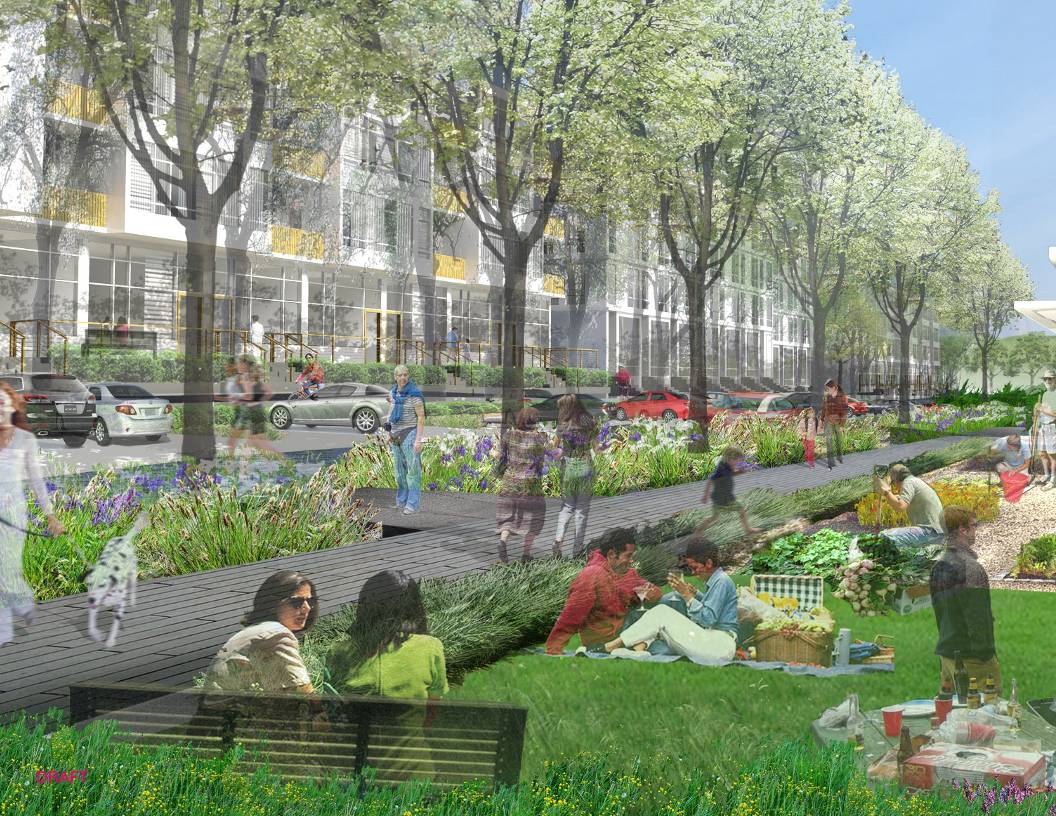
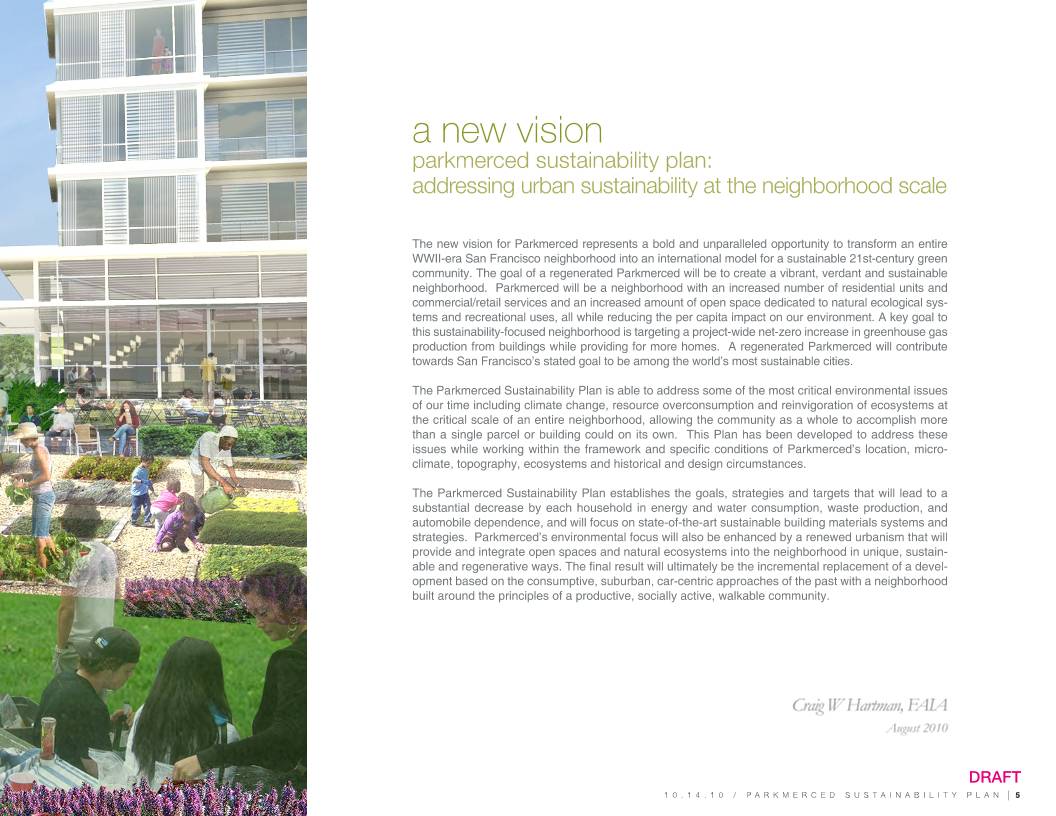


 设备数据采集
 工程招标采购
 搞笑表情
搞笑表情 微信头像
微信头像 CWMS冷库管理系统
 美女图片
美女图片 APP小游戏
 PPT模板
PPT模板 WMS仓库系统
 软件开发
软件开发